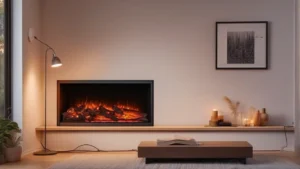
The best direct vent gas fireplace for most readers is the Superior DRL3555TEN because it pairs battery-backup ignition with a remote and a clean-face 55-inch design for natural gas installs. If you want the most flexible small-space option, the Majestic MDV3732 is the safer bet because it comes in propane or natural gas.
What to remember
Choose by venting first, then by size. A great-looking unit is useless if the termination path does not fit your wall or roof.
Battery backup matters if you want heat during outages. Millivolt or electronic ignition with backup beats a model that needs steady power.
Propane and natural gas are not interchangeable unless the model says so. Check the fuel label before you plan the install.
For smaller rooms, a compact firebox is easier to place and cheaper to run than a giant centerpiece.
Use a licensed pro for gas hookup and venting unless your local code says otherwise.
Say your living room is 18 by 20 feet, the ceiling is 8 feet, and you want steady heat without tying the room to a furnace that groans every time the wind shifts. A direct vent fireplace can do that, but only if the vent path, fuel type, and ignition match the space.
The wrinkle is that the prettiest box on the floor is not always the easiest one to install. Direct vent fireplaces need the right wall or roof termination, the right gas line, and the right clearance to combustibles. The wrong match turns into a cold, expensive sculpture.
Best for Living rooms and open-plan spaces where power outages matter
The DRL3555TEN pairs a 55-inch clean-face design with electronic ignition that includes battery backup, so the pilot stays lit even when the grid goes down. You get a full-function remote and a powerful burner system that throws tall flames through crushed black glass. Built for natural gas only, which suits most homes with an existing gas line.
Width 55 inchesFuel Natural gasIgnition Electronic with battery backupBurner Powerful system with tall flamesMedia Crushed black glass
Why it made the cut
Battery backup keeps the pilot running during outages
Full-function remote included
55-inch width fits larger walls without looking lost
Clean-face design works with modern and traditional rooms
Good to know
Natural gas only; propane installs need a different model
Crushed glass media may not suit buyers who want a log set
Skip it if If you’re on propane or want a smaller fireplace for a bedroom or den, look further down.
Best for Smaller rooms where fuel type matters or propane is the only option
The MDV3732 comes in both natural gas and propane versions, which makes it the go-to when you’re on a tank or might switch fuels later. IntelliFire ignition cuts gas waste and starts reliably, and the adjustable flame height lets you dial in ambiance or heat. Compact footprint suits bedrooms, offices and tighter living rooms.
Fuel Natural gas or propaneIgnition IntelliFire systemFlame Variable height adjustmentDesign Compact for smaller spacesVenting Direct vent technology
Why it made the cut
Available for natural gas or propane
Adjustable flame height for different moods and heat output
IntelliFire ignition reduces gas consumption
Compact design fits smaller spaces
Good to know
No battery backup mentioned for power outages
Smaller size produces less heat than 55-inch models
Skip it if If you want the widest possible viewing area or need backup ignition, the Superior models deliver more.
Best for Natural gas installs where you don’t need a remote or backup power
The DRL2055TEN shares the same 55-inch clean-face design and crushed black glass as the DRL3555TEN, along with electronic ignition and battery backup for outages. You lose the full-function remote, so flame and heat adjustments happen at the unit. Still a solid pick if you’re fine walking to the fireplace.
Width 55 inchesFuel Natural gasIgnition Electronic with battery backupBurner Powerful system with tall flamesMedia Crushed black glass
Why it made the cut
Battery backup for continued operation during outages
55-inch width for larger rooms
Powerful burner with tall flames
Clean-face design blends into any decor
Good to know
No remote control included
Natural gas only; no propane version
Skip it if If you want to adjust the flame from the couch, spend a bit more for the DRL3555TEN.
A direct vent gas fireplace pulls combustion air from outside through one chamber of a sealed two-pipe system and exhausts combustion gases outdoors through the other, so it doesn’t draw heated room air up the chimney or compete with your furnace for oxygen. The vent system is sealed end to end, which is why these units work in tight homes and why the venting path must follow the fireplace manufacturer’s listing exactly.
You’ll find approved horizontal termination kits for sidewall venting and vertical kits that run up through the roof, depending on the model and your layout. Each fireplace listing specifies maximum vent length, the number of elbows allowed, minimum clearances to windows and property lines, and termination height above grade or roofline. An installer can’t guess those figures from BTU rating alone or swap in generic pipe—the vent components carry the same safety listing as the firebox.
Propane and natural gas models use the same direct vent principle and the same two-pipe coaxial or colinear vent systems. The fuel choice affects regulator size and orifice, not the venting method.
Myth
Any exterior wall makes installation easy.
Fact
Termination clearances to windows, doors, air intakes, property lines and combustible surfaces are code minimums that often rule out the obvious wall. You’ll also need access behind the firebox for gas pipe, electrical and the vent connector, and enough run to stay within the maximum vent length the listing allows.
Gas hookup and vent installation are licensed work in most jurisdictions. The gas line requires a permit and pressure test, and the vent termination must meet local code and the manufacturer’s clearances. A direct vent fireplace isn’t a workaround for code—it’s an appliance with specific install rules that keep combustion gases outside and carbon monoxide out of the room.
Never improvise the vent
Using unapproved vent pipe, exceeding the listed vent length, or skipping required clearances can send exhaust back into the home or ignite nearby combustibles. Follow the manual and use only the vent kit the manufacturer lists for that model.
Measure before you fall in love
Check the fireplace’s vent-length limit, termination clearances and framing dimensions against your wall before ordering. A 55-inch linear unit with a 40-foot maximum horizontal run won’t fit a room where the only exterior wall puts the termination three feet from a window.
How To Size The Firebox To The Room
Width and heat output are separate decisions, and a bigger face won’t necessarily warm you better. A 55-inch fireplace like the Superior DRL3555TEN commands attention in a great room, but its BTU rating—not its width—determines whether it’ll hold temperature on a January night. You’re sizing for two things: the visual scale you want and the cubic feet you need to heat.
Worked example
Say your living room measures 18 feet by 20 feet with an 8-foot ceiling. That’s 2,880 cubic feet. In a well-insulated space with standard construction, a fireplace rated around 25,000 to 30,000 BTU will maintain comfort as a primary source. Open that room to a kitchen and entryway, or raise the ceiling to 10 feet, and you’ll want closer to 35,000 to 40,000 BTU to avoid running flat-out all evening.
Room18 × 20 ft, 8 ft ceiling
Volume2,880 cu ft
Target range25,000–30,000 BTU
Insulation matters more than square footage alone. An older home with single-pane windows and minimal wall insulation can need 50 percent more capacity than a newer build with the same floor plan. Cathedral ceilings, tile or hardwood floors, and exterior walls all pull heat faster than a snug interior room with carpet.
For compact spaces—bedrooms, dens, finished basements under about 400 square feet—the Majestic MDV3732 fits without overwhelming the wall. Larger living areas or open-concept layouts suit the 55-inch Superior models, which deliver both presence and the output to match. Propane and natural gas versions produce the same heat at equivalent input ratings; propane fireplace size follows the same room-volume math, so don’t oversize just because you’re burning LP.
30–35 BTU per cu ft
Rule of thumb for insulated rooms
Multiply your room’s cubic footage by this range to estimate minimum output. Drafty or high-ceiling spaces need the higher end or more.
Power outages change the equation if you’re counting on backup heat. Millivolt and battery-backup ignition systems let a fireplace run when the grid drops. The Superior DRL2055TEN and DRL3555TEN both include battery backup, making them the best no-electricity options in this lineup. Millivolt pilots stay lit without house power, but you’ll trade the convenience of electronic ignition and some thermostatic control.
In short
Match BTU output to room volume and insulation, not just floor area. A 55-inch face suits large spaces; a 37-inch box works in rooms under 400 square feet.
Which Features Separate The Best Picks
Battery backup and intermittent pilot ignition do the same job: keep you warm when the power goes out. Battery backup runs the blower and ignition off four D-cells or a rechargeable pack, so the fireplace lights and circulates heat without grid power. Intermittent pilot ignition uses a standing-pilot flame that stays lit and doesn’t need electricity to open the gas valve, though you’ll lose the blower. If outages are common where you live, one of these features matters more than a few extra inches of glass.
Natural gas and propane models are not interchangeable. Propane burns hotter and requires different orifices and valve pressure; swapping fuels without a manufacturer-approved conversion kit voids the listing and creates a carbon monoxide risk. Product 1, the Majestic MDV3732, ships in both fuel versions, so you order the one that matches your supply. Products 2 and 3, the Superior DRL units, are natural-gas-only unless Superior publishes a propane variant for that series. Don’t assume you can convert a gas-specific fireplace yourself.
Product 3, the Superior DRL3555TEN, includes a remote and battery backup, which makes it the best overall pick for natural gas installs in rooms up to about 1,500 square feet. Product 1 suits smaller spaces and anyone on propane who wants a clean 37-inch look. For the quietest operation, look for a model with variable-speed blowers and a lower BTU ceiling; none of these three advertises decibel ratings, so plan to run the blower on low if bedroom noise matters. Smart controls are still rare in this category. Most direct vent fireplaces use a thermostat remote or a wall switch, not Wi-Fi modules, so if app control is a must, check the manufacturer’s accessory list before you order.
Feature
Why It Matters
Check Before You Buy
Fuel type
Natural gas or propane, not both
Confirm your supply and order the matching model
Ignition
Battery backup or intermittent pilot for outages
Decide if you need heat without grid power
Width
37″ to 55″ fits different wall spans
Measure the wall and framing opening
Remote
Adjusts flame and blower from the couch
Included with Product 3, optional on others
Four features that narrow the field faster than style alone.
Clean-face versus framed
Both Superior units offer a modern clean-face design with no visible trim, which suits contemporary builds. If you’re matching traditional millwork, look for a model with a decorative front or plan to frame the opening yourself.
Safety And Certification Come Before Style
Metal buildings are not off-limits, but they do turn a fireplace install into a framing and clearance puzzle. Direct vent fireplaces need non-combustible clearances around the firebox and vent termination, plus solid framing to carry the weight and secure the vent pipe. Steel-sided shops and pole barns often lack interior wall cavities and rated framing members, so you’ll build a chase or a freestanding surround that meets the manufacturer’s listing and your local code. Combustion air still pulls from outside and exhaust still vents through the sealed pipe, but the wall and roof do not care how nice the mantel looks—they care that the vent penetration is flashed, sealed and far enough from combustible sheathing.
Indoor use demands a fireplace listed for indoor residential or commercial installation, with required barrier screens or glass doors if the manual calls for them. Barrier screens are not optional styling add-ons; they’re part of the safety listing when surface temperatures exceed code limits for accessible surfaces. Gas connections, vent pipe routing and termination caps are licensed work in most jurisdictions, usually covered by the same plumbing or mechanical permit that governs furnace installs. Trying to skip the permit or the inspection leaves you with an unlisted install that your insurer can refuse to cover.
Sealed combustion is not zero maintenance
Direct vent means the firebox is sealed from room air, but soot, dust and spider webs still clog the burner, pilot and vent. Annual inspection and cleaning by a qualified technician keep the flame blue and the carbon monoxide outside where it belongs.
Every direct vent fireplace carries a safety listing from UL, CSA or an equivalent lab, printed on a data plate inside the firebox or on the carton. That listing ties the fireplace to a specific set of clearances, vent pipe diameter, maximum vent run and termination height above grade. Violating any of those specs voids the listing and the warranty. If you’re replacing an older unit, confirm that the new firebox fits the existing framing and that the vent pipe is the same diameter and material; mixing brands or vent systems without checking compatibility is a common mistake that fails inspection.
Propane supply and setback
Propane tanks larger than 100 pounds sit outside with code-required setback from the building and ignition sources. Your propane supplier will confirm the tank size and line pressure before the fireplace goes in, so loop them into the planning early.
What To Do Before You Order
Confirm your fuel type first. Gas service already in the house—natural gas or propane—dictates which model you can run. Converting a home from one fuel to another costs thousands and rarely makes sense for a single appliance.
1
Check the gas line and meter capacity
Natural gas fireplaces need a half-inch supply line in most cases, and your meter must have headroom for the BTU load. Propane models draw from your existing tank. Both require a licensed plumber or gas fitter to size and run the line.
2
Measure the room and the rough opening
Write down ceiling height, room length and width, and the framed opening dimensions if you’re working with an existing chase. Compare those numbers to the minimum clearances and firebox dimensions in each model’s installation manual before you buy.
3
Map the vent route to an exterior wall
Direct vent systems terminate through an outside wall or up through the roof. Walk the path from the fireplace location to the nearest exterior surface and count bends, vertical rise and total run. Most manuals cap horizontal vent length at 40 feet with deductions for each elbow.
4
Confirm electrical requirements
Battery-backup models like the Superior DRL3555TEN work during outages, but they still need 120 V for the blower and wall-switch circuit. Millivolt systems run without electricity but lose the fan. Know which trade-off suits your area.
5
Check local code and permit rules
Call your building department or visit their website. Many jurisdictions require a permit for gas appliance installs and a final inspection before you light it the first time.
Before you click buy
Fuel type matches the house
Installation manual downloaded and read
Vent route sketched and measured
Electrical circuit confirmed or planned
Permit requirements checked
If the vent path crosses a floor joist, the gas line needs upsizing, or you’re not sure how to frame the barrier screen, call a licensed installer now. Most will walk the site and quote the job before you order the unit, and that hour saves returns, wrong parts and fireboxes that don’t fit.
In short
Match the fireplace to the fuel and space you already have, not the other way around. Download the install manual, measure the vent route and the opening, then call a pro if any step feels uncertain.
Questions People Ask
What is a direct vent gas fireplace?
A direct vent gas fireplace is a sealed-combustion appliance that draws air from outside through one chamber of a coaxial pipe, burns gas in a firebox behind glass, and exhausts combustion gases outdoors through the other chamber. Because it never mixes indoor air with combustion, it needs no chimney and poses no carbon monoxide risk to the room. Most models mount in a framed wall chase and run on natural gas or propane.
What are the venting requirements for a direct vent gas fireplace?
The manufacturer’s installation manual specifies horizontal or vertical termination, minimum and maximum run lengths (often 40 feet for horizontal, longer for vertical), and the number of elbows allowed before derating. Termination clearances from windows, doors, property lines and air intakes are set by the listing and local code. All runs use the manufacturer’s listed vent pipe; adapters and generic components void the warranty and the safety listing.
Can you install a direct vent gas fireplace in a metal building?
Yes, but you’ll need to frame a non-combustible chase that meets the unit’s clearance-to-combustibles specifications, which can be as little as half an inch to the firebox sides or as much as several inches depending on the model and surrounding materials. Steel studs, cement board and a listed termination cap handle the structure and code requirements. Confirm your building permit and insurance coverage before you start.
What size direct vent propane fireplace do I need?
Match the BTU range to your insulation and climate, not just square footage: a well-insulated 400-square-foot room in a mild climate may need only 10,000 BTU, while a drafty 300-square-foot space in Montana may want 20,000 BTU or more. Width matters for proportion and viewing angle, not heat. Most direct vent fireplaces modulate down to half output, so buying a bit more capacity than you need gives you headroom on the coldest nights without overheating the room the rest of the winter.
Which direct vent gas fireplace works without electricity?
Any model with an intermittent pilot ignition system or a millivolt standing pilot will light and modulate without wall power, though you lose the blower and remote features. Models with battery backup ignition—like the Superior DRL3555TEN and Napoleon HDX52—keep electronic control and the remote during an outage by running the ignition and gas valve on AA or D-cell batteries. The blower still goes dark unless you add an inverter.
Do direct vent gas fireplaces need a barrier screen or door set?
Most jurisdictions and manufacturers now require a barrier screen on any unit where the glass surface can exceed 172°F, which includes nearly every direct vent fireplace sold. The screen mounts an inch or two in front of the glass to prevent contact burns, especially around children and pets. Some models include the screen with the unit; others offer it as an add-on accessory.
Is propane or natural gas better for a direct vent fireplace?
Natural gas costs less per BTU in most of the U.S. and needs no tank or delivery, so it’s the simpler choice where a utility line already reaches the house. Propane delivers more BTU per cubic foot and works anywhere you can site a tank, making it the only option in rural areas without piped gas. Either fuel performs identically once the orifice and valve are set for it; just confirm which version you’re ordering, because converting between the two voids most warranties and requires a factory kit.