For most Sprinter van conversions, the best pick is a 5 kW diesel air heater with altitude compensation, thermostat mode, and a quiet fuel pump. A well-insulated 144-inch van needs about 2,202 W at 14°F, while a 170-inch van needs about 2,733 W, so size matters before the first cold snap.
The essentials
A well-insulated 144-inch Sprinter needs about 2.2 kW at 14°F, so a 2.5 kW unit can be enough.
A well-insulated 170-inch Sprinter needs about 2.7 kW at 14°F, so a 5 kW unit is the safer buy.
A 5 kW heater is a different heater from a 2.5 kW model; you cannot safely “turn up” the smaller one to match it.
Fuel consumption around 0.18 to 0.36 L/h is common on many 5 kW-class heaters, but runtime changes with tank size and outside temperature.
Most factory Sprinter auxiliary heaters are coolant pre-heaters, not living-space heaters.
Choose the wrong heater and you pay twice: once for the box, then again for the comfort you still don’t have. Oversize one and you’ll fight short-cycling, extra noise, and sloppy fuel use. Undersize it and the van stays cold while the pump ticks away like a tiny metronome with opinions.
Sprinters add one more wrinkle: insulation quality, altitude, and fuel routing all change what works. A factory KL1 fuel tap makes the install cleaner, but the heater still needs proper exhaust routing, a CO alarm, and enough clearance around the intake and outlet.
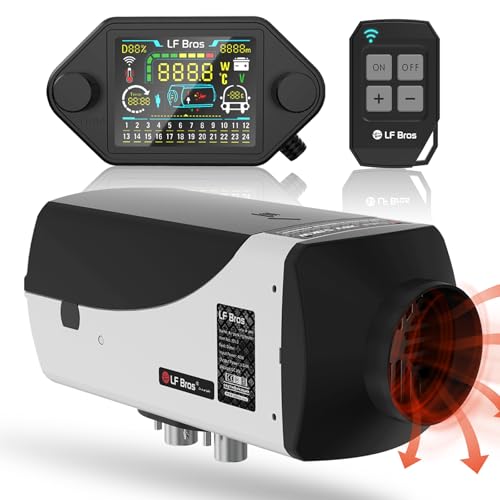
Best for Most Sprinter conversions needing 5 kW heat and quiet overnight operation
The 5 kW output fits the middle ground for many van builds, while temperature mode lets the heater reach a set temperature instead of running at one power level. Plateau mode, a silent fuel pump, and a muffler with an internal bending tube suit high-altitude camps and sleepers who don’t want every pump pulse in the cabin. A 24-hour timer adds useful control for morning preheating.
Heat output 5 kWAltitude support Tested at 17,000 feet; plateau modeControl method T4S LCD switch; 24-hour timerWeight 9.24 lbVoltage —
Why it made the cut
5 kW output with thermostat and power modes
Plateau mode tested at 17,000 feet
Silent fuel pump and quieter muffler design
Good to know
No fuel tank capacity is listed
The split design needs more installation planning than an all-in-one unit
Skip it if Skip it if you need a heater with a listed built-in fuel tank or a simple portable setup.
Best for Well-insulated Sprinters that need a compact 2.2 kW heater kit
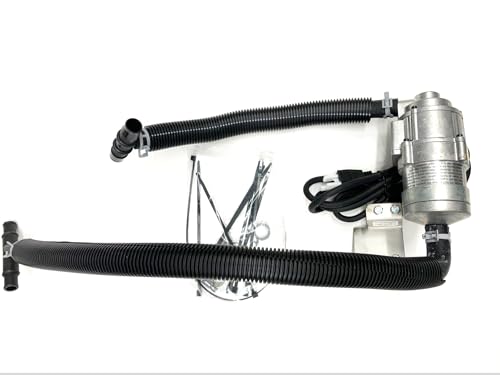
The 2.2 kW output matches a smaller, well-insulated build better than an oversized 8 kW unit. Butler Technik designed this kit for Espar Airtronic heaters in Sprinter, ProMaster, motorhome, and RV installations, and the included Easy Start Pro adds a dedicated control option. Its 12 V setup suits a van electrical system.
Best for High-altitude builds needing automatic adjustment and remote preheating
Automatic altitude compensation works up to 18,045 feet, so you don’t have to manually adjust the heater as elevation changes. Bluetooth app control, a remote with a 98-foot range, and a 10 L tank make preheating and fuel planning straightforward. The 8 kW output is better suited to larger or colder builds than a compact, well-insulated van.
Heat output 8 kWFuel tank capacity 10 L / 2.6 galAltitude support Automatic adjustment up to 18,045 feet / 5,500 metersControl method Bluetooth app, remote, and LCDFuel consumption 0.16–0.62 L/h
Why it made the cut
Automatic altitude compensation to 18,045 feet
Bluetooth app, LCD, and remote control
10 L fuel tank and 0.16–0.62 L/h consumption range
Good to know
8 kW may be more output than a small, well-insulated Sprinter needs
The listed applicable range is 215–269 square feet
Skip it if Skip it if your van is small and well insulated, or if you want a heater sized closer to 2.2 kW or 5 kW.
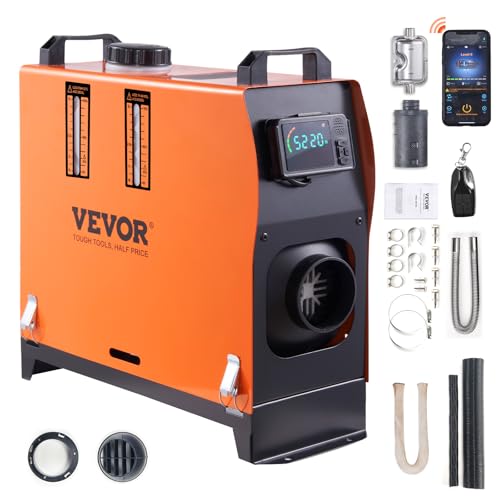
Best for Van owners wanting a portable 8 kW unit with a 12–24 V input
The 12–24 V input gives this all-in-one heater wider electrical compatibility than a 12 V-only model. Its 5 L tank, fuel gauge, leak-proof fuel cap, and heat-insulated exhaust shield address practical concerns in a portable installation. Remote control and an LCD that adjusts from 32–104°F make preheating simple, while altitude support reaches under 9,843 feet.
Heat output 8 kWFuel tank capacity 5 L / 1.3 galAltitude support Under 9,843 feetControl method Remote control and LCDVoltage DC 12–24 V
Why it made the cut
Works with DC 12–24 V systems
5 L tank with fuel gauge
Remote control and 32–104°F LCD adjustment
Good to know
Altitude support is limited to under 9,843 feet
8 kW output may be excessive for a smaller insulated van
Skip it if Skip it if you camp above 9,843 feet or need automatic altitude compensation at higher elevations.
Best for 2017–2018 3.0 L Sprinters that need easier cold-weather engine starts
This is an engine block heater, not a cabin air heater, so it belongs on the list only for cold-start help. The kit is made for Mercedes Sprinter 3.0 L V6 OM642 engines built from 2017 through 2018 and is intended to provide faster, safer starts and instant engine heat in sub-zero temperatures. The listed average installation time is about 1 hour.
Application Mercedes Sprinter 3.0 L diesel V6 OM642Compatible years 2017 through 2018Control method —Fuel tank capacity —Heat output —
Why it made the cut
Custom fit for 3.0 L V6 OM642 Sprinters
Supports cold-weather engine starting
Listed average installation time of about 1 hour
Good to know
Does not heat the van’s living space
Fits only the listed 2017–2018 3.0 L V6 application
Skip it if Skip it if you’re shopping for overnight cabin heat rather than help starting the diesel engine.
Size the heater around your van’s heat loss, not the biggest number on the box. A well-insulated 144-inch Sprinter needs about 2,202 W at 14°F, while a well-insulated 170-inch van needs about 2,733 W. That points the shorter van toward a 2.5 kW heater and the longer van toward a 5 kW model, with insulation quality able to change the answer.
2,202 W
Estimated heat needed for a well-insulated 144-inch Sprinter
The comparable 170-inch van needs about 2,733 W at the same temperature, so length and insulation both matter before you choose heat output.
Decision
What to check
Why it matters
Heat output
2.5 kW or 5 kW design
A heater that runs near its useful range heats more sensibly than an oversized unit cycling constantly.
Insulation
Wall, floor, roof and window coverage
More heat escapes through thin panels and glass, especially during a cold night.
Altitude
Altitude compensation
The heater adjusts fuel and combustion air for thinner mountain air.
Noise
Fuel pump ticking and muffler design
A quiet fan is little comfort if the pump clicks beside your bed.
Fuel setup
Built-in tank or Sprinter fuel tap
The choice affects installation space, refueling and how neatly the system integrates.
Controls
Thermostat, Bluetooth app and remote
Convenience features help you manage heat; they don’t correct poor sizing.
Use the heater’s design and the van’s heat loss together, rather than shopping by wattage alone.
Myth
A 5 kW diesel heater is just a 2.5 kW heater turned up.
Fact
A 5 kW heater is a distinct design with greater heating capacity. A 2.5 kW model can’t safely be turned up to produce 5 kW, so choose the output you need instead of treating the rating like a volume knob.
Insulation is the reason two Sprinters of the same length can need different heaters. A well-insulated van holds heat in, while bare metal, uncovered windows and thermal bridges let the heater run longer. The 2,202 W and 2,733 W figures above describe well-insulated vans at 14°F; they aren’t a promise that every conversion will match them.
Worked example
Say your 144-inch Sprinter has good wall and roof insulation, covered windows and a closed cab divider. The measured heating need at 14°F is about 2,202 W, so a 2.5 kW heater has a sensible match. A poorly insulated version of that same van loses heat faster, which may justify stepping up only after checking the manufacturer’s output range and installation limits—not simply buying an 8 kW label because it looks muscular.
144-inch SprinterAbout 2,202 W at 14°F when well insulate
170-inch SprinterAbout 2,733 W at 14°F when well insulate
Practical match2.5 kW for the shorter van; 5 kW for the
Altitude compensation earns its place if you camp in the mountains, because combustion changes as the air gets thinner. Thermostat mode can also reduce temperature swings by letting the heater modulate or cycle toward a set temperature. Bluetooth app control is handy before bed, while a remote control with roughly 98 to 100 feet of range can start the heater from outside the van or a nearby campsite.
Treat those controls as convenience features, not sizing tools. An app won’t make an undersized heater catch up in a long van, and altitude compensation won’t fix a poorly routed exhaust or intake. The fuel arrangement matters too: a built-in tank keeps the heater self-contained, while a factory KL1 fuel tap on a diesel Sprinter can simplify connection to the vehicle’s fuel supply. Fuel capacity and runtime deserve their own calculation.
Noise deserves a place beside heat output on your checklist, especially when you sleep inches from the equipment. The combustion fan has a sound, but the small fuel pump’s repeating tick is a common complaint with VEVOR heaters; mounting it carefully and using a muffler can make the system easier to live with. The VEVOR 8KW Diesel Heater and the LF Bros 5KW Split Pro Diesel Heater with Timer offer different paths through that decision, but neither control screen replaces a quiet installation.
Choose In This Order
Start with the van length and insulation, then check altitude compensation, pump noise, fuel setup and controls. If the numbers land between sizes, improve insulation before buying a heater that will spend its life cycling on and off.
In short
A 144-inch well-insulated Sprinter points to about 2.5 kW, while a 170-inch version points to 5 kW based on the measured 14°F heat needs. Pick altitude compensation and thermostat mode for the conditions you use, and judge Bluetooth control, remote range and pump noise as comfort extras.
Size Your Heater For A 144 Or 170 Sprinter
For a Sprinter van, plan on a 2.5 kW diesel air heater for a well-insulated 144-inch van and a 5 kW heater for a 170-inch van or weaker insulation. At 14°F, the measured demand is about 2,202 W in the 144 and 2,733 W in the 170, so the larger van has less spare capacity on a small heater.
2,202 W
Heat demand for a well-insulated 144-inch Sprinter at 14°F
That figure points to a 2.5 kW heater, which has enough output above the measured load without being wildly oversized.
Sprinter setup
Measured demand
Practical heater choice
144-inch, well insulated, 14°F
About 2,202 W
2.5 kW
170-inch, well insulated, 14°F
About 2,733 W
5 kW
Either length with weak insulation
Higher than the figures above
5 kW, after checking the installation and controls
Use insulation quality as the tiebreaker when the van falls between heater sizes.
A 2.5 kW heater suits the 144-inch case because its rated output sits above the calculated demand. A 5 kW heater is the safer match for a 170-inch Sprinter, where the measured load already exceeds 2.5 kW at 14°F. The goal is enough reserve for a cold night, an opened door, and the heat that escapes through glass and metal.
Worked Example
Say your 144-inch Sprinter has thin wall insulation, several uninsulated metal sections, and noticeable drafts around the rear doors. The well-insulated reference point is about 2,202 W at 14°F, but your van will lose heat faster than that example. Choose a 5 kW heater with thermostat mode rather than asking a 2.5 kW unit to run at full output all night. Insulation and air sealing may reduce the load later, but you shouldn’t size today’s winter heat around a renovation you haven’t finished.
Van144-inch Sprinter
Reference demandAbout 2,202 W at 14°F
Poor-insulation choice5 kW diesel air heater
A 5 kW Heater Isn’t A Turned-Up 2.5 kW
A 5 kW model has a different burner and air-moving capacity; a 2.5 kW heater cannot be safely adjusted to produce 5 kW. The larger heater gives a 170-inch or poorly insulated van room to recover heat, but its controls still need to regulate output rather than run full blast every minute.
Oversizing brings its own annoyance: the heater reaches the set temperature quickly, cycles more often, and can make the fuel pump and fan more noticeable. Undersizing causes the opposite problem; the burner runs flat out, yet the rear doors, cab area, or floor still develop cold spots. Bigger isn’t automatically better. A heater that can modulate near your usual winter load is easier to live with.
Use The Van’s Weakest Area
Base the decision on the least insulated part of the conversion, not the thickest wall panel. If the cab, sliding door, or rear doors remain mostly bare metal, treat that heat loss as part of the sizing problem.
For the question “how many kW do I need for a Sprinter van?”, use 2.5 kW for a well-insulated 144 and 5 kW for a 170 or a conversion with weak insulation. A 5 kW heater is also the more forgiving choice if you camp below 14°F, but proper duct routing and insulation still determine how evenly that output reaches the living space.
Check Fuel, Runtime, And Tank Setup
A diesel heater does use the Sprinter’s main fuel tank when connected through the factory KL1 fuel tap, but its draw is small compared with the van’s driving fuel use. At the commonly cited medium-setting rate of about 12 hours per gallon, one gallon gives roughly one night of heat; a built-in tank gives you a separate reserve instead.
A Sprinter diesel heater typically burns about 0.18 to 0.36 L/h, depending on its heat setting, insulation and outdoor temperature. One gallon is 3.785 L, so 3.785 ÷ 0.36 gives about 10.5 hours at a heavy load, while 3.785 ÷ 0.18 gives about 21 hours at a light load. The 12-hour-per-gallon figure lands near the middle and makes a useful planning number, not a promise carved into the dashboard.
In short
A heater tapped into the Sprinter’s diesel supply won’t normally drain the main tank quickly, but cold weather increases its fuel use. Plan from 0.18 to 0.36 L/h, then keep a reserve for the morning you least want to visit a fuel station.
Fuel setup
Approximate runtime
Practical use
5 L built-in tank
About 14 to 28 hours
Short trips and ordinary overnight stops
10 L built-in tank
About 28 to 56 hours
Longer off-grid stays and colder weather
Sprinter main tank through KL1 tap
Depends on heater use and vehicle fuel level
A clean setup for regular travel without carrying a separate tank
Runtime uses the stated 0.18 to 0.36 L/h range; actual cold-weather runtime will be shorter at higher output.
A 5 L tank is fine for a short trip, especially if you can refuel the van the next day. Choose 10 L if you camp off-grid in colder weather and don’t want the heater’s fuel level deciding when breakfast ends. The LF Bros 5KW Split Pro Diesel Heater with Timer suits a buyer who wants a separate tank arrangement, while a VEVOR 8KW Diesel Heater can make more sense when its included tank and controls match your layout.
Factory KL1 fuel taps on diesel Sprinters simplify the connection because the heater can draw from the vehicle’s diesel supply rather than needing a loose portable tank inside the conversion. That setup saves refill trips, but the tap, fuel line and heater pump still need to be installed exactly as the heater and Sprinter instructions specify; the connection isn’t a shortcut around proper fuel-system work.
Worked Example
Say a 5 L tank feeds a heater running at 0.25 L/h on a cool night. The arithmetic is 5 ÷ 0.25 = 20 hours of theoretical runtime. In colder weather, the heater may spend more time at a higher output, so the real figure can fall toward the lower end of the range. Keep fuel in the tank rather than planning to use every last drop.
Tank5 L
Assumed consumption0.25 L/h
Theoretical runtime20 hours
Cold Weather Changes The Math
Runtime drops when the heater works harder. Don’t size a tank from the lowest advertised consumption, and don’t run the built-in tank completely dry if you can avoid it; the heater may need priming before it produces heat again.
Before Choosing The Fuel Setup
Confirm whether the heater includes a 5 L or 10 L tank.
Check that your diesel Sprinter has the factory KL1 fuel tap available for the planned connection.
Use the 0.18 to 0.36 L/h range when estimating runtime, then allow extra fuel for colder nights.
Keep the fuel tank and lines accessible for inspection without placing diesel equipment in a living or sleeping area.
Noise, Controls, And Altitude In Real Use
Diesel heaters in vans typically produce a low mechanical hum and a ticking sound from the fuel pump. Bluetooth app control usually works within about 98 to 100 feet, but walls, weather, and how far the van is parked can reduce that range. At higher altitudes, thinner air means less oxygen, so heaters with adjustable air-fuel settings perform better to avoid soot buildup and shutdowns.
Listen For The Pump, Not Just The Heater
The fuel pump is the most common minor noise complaint, especially during startup and low-output operation. Each metered pulse makes a click that can travel through the Sprinter’s metal floor and framing, even when the combustion fan itself sounds reasonable.
A muffler reduces exhaust noise, but it can’t silence a pump mounted directly against the body. Rubber isolation mounts, correct pump angle, flexible fuel line and keeping the pump away from the sleeping platform usually matter more to your ears. Split units can also put more of the noisy hardware outside the living area than all-in-one units, while an all-in-one package is simpler to position but may keep the tank, pump and fan closer to you.
Good Controls
Thermostat mode can hold a steadier cabin temperature than leaving the heater at one fixed output.
Bluetooth app control lets you preheat the van without reaching for the heater panel.
Altitude compensation can adjust combustion for mountain campsites on supported models.
Limits To Expect
Bluetooth range is short compared with cellular remote control and can be unreliable through the van’s steel body.
A quiet muffler won’t remove fuel-pump ticking.
Altitude compensation isn’t universal, so the product listing and controller menu need checking before a high-country trip.
Altitude Is A Specification
Some diesel heaters list automatic altitude compensation up to 18,045 feet. That feature changes the fuel and combustion-air balance as oxygen thins; it isn’t the same as a heater merely having a high heat-output number. Without suitable compensation, a heater may smoke, foul its burner or lose reliable operation above its normal elevation range.
Bluetooth app control is reasonably convenient at camp, but treat it as a nearby remote rather than a guarantee. The typical stated range is about 98 to 100 feet in open conditions; Sprinter steel, interior partitions, terrain and wet weather can shrink that distance. Keep the supplied controller usable, because a phone app that won’t connect is cold comfort at 2 a.m.
Quiet The Installation
Before permanent mounting, run the heater at low output and listen from the bed, not beside the unit. If the pump click is loud, isolate its bracket and move it away from thin interior panels before finishing the build.
Thermostat mode is worth prioritizing for overnight use because the heater can reduce or cycle its output around the target temperature instead of running flat out. Check how the specific controller handles that mode: some units reduce heat, while others switch the burner off and restart it, which can make startup noise more noticeable.
Useful for quieter living space
LF Bros 5KW Split Pro Diesel Heater with Timer
The LF Bros 5KW Split Pro Diesel Heater is the more sensible product card to inspect if separating the heater hardware from the cabin matters more to you than the compact packaging of an all-in-one unit.
Install a diesel heater with the combustion intake and hot exhaust outside, the heated-air outlet inside, and a working CO alarm in the living area. In a Sprinter, that usually means mounting the heater through the floor or in a protected exterior location, routing the exhaust away from the van body and anything combustible, then sealing every floor penetration against fumes, water and road spray.
1
Choose the mounting spot
Check both sides of the floor before drilling for wiring, fuel lines, brake components and structural members. Keep the heater serviceable, protect it from standing water, and follow the heater’s required clearances and mounting orientation.
2
Route combustion air
Run the combustion-air intake to clean outside air, with its opening protected from road spray, snow and mud. Keep that intake separate from the exhaust outlet and from any cabin-air intake; the heater must burn outside air and discharge combustion gases outside.
3
Route the exhaust
Point the exhaust outlet outside and away from doors, windows, roof vents and the heater’s own intake. Keep the pipe run away from insulation, wiring, plastic, wood cabinetry and other combustible materials, using the supplied heat protection and muffler as directed. Hot exhaust under a van is a small pipe with a large attitude.
4
Connect fuel carefully
A Sprinter’s factory KL1 fuel tap can provide a cleaner connection than dipping a tube into the tank, but use the correct vehicle-specific fitting and route the fuel line away from exhaust heat and sharp edges. Secure every connection, check for leaks, and don’t improvise a fitting that can loosen over bumps.
5
Seal and test the system
Seal the heater plate and every floor opening with materials suitable for the temperature and weather exposure. Run the heater through startup, steady operation and shutdown while checking for diesel smell, exhaust smell, unusual heat at nearby surfaces, loose clamps and fuel seepage.
CO Protection Is Mandatory
A diesel heater belongs in a ventilated installation with a working carbon-monoxide alarm; treat the alarm as mandatory equipment, not decoration. Mount the alarm inside the cabin near the sleeping area and according to the alarm maker’s instructions, but don’t place it directly beside the heater, exhaust outlet or a vent that can dilute the reading. Test it before the first trip and keep its batteries fresh.
Many premium models, including some VEVOR 8KW versions, include built-in CO alarms and overheat protection, with overheat limits around 518°F on some models. Those features can shut a unit down when a fault is detected, but they can’t fix a crushed exhaust, a leaking fuel line or an exhaust pipe aimed at a window.
Before The First Cold Night
Exhaust exits outside and points away from doors, windows, vents and intake openings
Combustion-air intake and exhaust outlet are clear of snow, mud and road spray
Exhaust pipe and muffler are isolated from insulation, wiring and cabinetry
Fuel connections are dry, secured and protected from abrasion
CO alarm is installed inside the living area, tested and audible from the sleeping berth
The heater starts, runs and shuts down without diesel or exhaust odor inside
Myth
The Sprinter factory auxiliary heater can heat the living space while you’re parked.
Fact
Most factory auxiliary heaters are coolant pre-heaters. They warm engine coolant for cold starts and may help the vehicle’s own HVAC system, but they don’t replace a diesel air heater designed to deliver heat into the conversion. Treat an auxiliary heater as a separate system.
Useful for a separated install
LF Bros 5KW Split Pro Diesel Heater with Timer
The LF Bros 5KW Split Pro Diesel Heater with Timer suits a layout where the heater and fuel hardware need separate placement; that can make floor access and exhaust routing easier, provided its manual’s clearances and installation instructions fit your Sprinter.
Cheap Chinese diesel heaters can be reliable for multiple winters, but quality control, documentation, spare-parts access, and customer support vary sharply between sellers. A Sprinter’s factory auxiliary heater usually won’t heat the living space because it’s generally a coolant pre-heater, not a standalone cabin heater. That makes support and serviceability nearly as important as heat output on day one.
Myth
Cheap Chinese diesel heaters cannot survive a real winter.
Fact
Some budget models, including VEVOR heaters, do hold up through multiple winters. The weaker point is consistency: one unit may arrive with clear wiring and a usable controller, while another from the same product family may have poor instructions, mismatched connectors, a troublesome fuel pump, or limited help when a fault appears.
Quality control problems usually become obvious during installation or the first cold snap. Check that the wiring diagram matches the supplied harness, the controller speaks the same language as the heater, hose fittings seal properly, and the seller can identify replacement parts by model. A ceramic igniter, fuel pump, controller, and blower are different parts; a listing that only promises a vague replacement kit isn’t much help when one fails at 2 a.m.
An All-In-One Tank Model
Fast installation when you want a removable heater
Built-in fuel tank and controls keep the package compact
Useful for temporary builds or occasional trips
A Split System
The tank takes living-space room
Fuel filling and spill control happen inside or near the van
A failed integrated part can make the whole package awkward to service
When To Skip The Built-In Tank
Choose a split system if the heater will be permanent, you have a clean route to a dedicated tank or the Sprinter’s KL1 fuel tap, or you need dependable winter service. The LF Bros 5KW Split Pro Diesel Heater suits that approach better than an all-in-one tank model; a VEVOR 8KW Diesel Heater All in One is more appealing when quick, self-contained setup matters more than tidy long-term integration.
Factory features can sound better than they work for this job. A Sprinter auxiliary heater may warm engine coolant before driving and help the vehicle’s own HVAC system produce heat, but that doesn’t make it a diesel air heater for a parked living area. The van still needs a purpose-built heater with its own combustion circuit and interior air outlet; check the exact factory system before counting it as part of your winter heating plan.
Check Before You Order
Can the seller supply the fuel pump, ceramic igniter, controller, blower, and wiring harness separately?
Does the manual show a wiring diagram that matches the pictured connectors?
Is the warranty handled by a reachable seller rather than an unclear marketplace listing?
Will the installation use a split fuel setup, or can you safely live with the all-in-one tank’s location?
Does the product’s actual output suit your Sprinter instead of relying on a large number in the name?
Spend a few minutes checking those answers before comparing app control or remote range. A quiet pump and altitude compensation make a heater nicer to live with, but a replacement pump you can identify and obtain is what keeps winter from turning into an unplanned science project.
More Questions, Answered
How do I size a diesel heater for a 144-inch Sprinter van?
A well-insulated 144-inch Sprinter needs about 2,202 W at 14°F, so a 2.5 kW diesel air heater is the close fit. Choose a 5 kW unit instead if insulation is weak, the van has large windows, or you regularly camp below that temperature; use thermostat mode to prevent excessive cycling when conditions are mild.
How do I size a diesel heater for a 170-inch Sprinter van?
A well-insulated 170-inch Sprinter needs about 2,733 W at 14°F, making a 5 kW heater the safer choice. The extra capacity gives you faster warm-up and more reserve for doors opening, wet gear, and colder nights, provided the heater can turn down without frequent short cycling.
Is a 5 kW diesel heater just a 2.5 kW heater turned up?
No. A 5 kW heater has a larger combustion and air-moving capacity; a 2.5 kW model can’t safely be adjusted to produce 5 kW. Treat the ratings as different heater sizes, not two settings on the same machine.
Does a diesel heater drain the Sprinter main fuel tank a lot?
No, its fuel use is small compared with the engine, especially when connected to the factory KL1 fuel tap. As a useful example, a heater running about 12 hours per gallon on medium setting uses roughly one gallon over that period, though cold weather, heat setting, and insulation change the result.
What is the noise level of a diesel heater in a van?
The combustion fan makes a low mechanical hum, while the metering pump usually produces the sharper ticking sound people notice from the sleeping area. Exact noise varies by model and installation, so isolate the pump from the body with its supplied mounts or vibration-damping hardware and route the exhaust through the muffler where provided.
How reliable is Bluetooth app control on a Sprinter diesel heater?
Bluetooth app control is useful near the van, with a typical range of about 98 to 100 feet in open conditions. Walls, metal body panels, and terrain can shorten that range, so keep the heater’s regular controller available instead of treating the phone app as your only way to start or stop heat.
Can the factory auxiliary heater heat the living space in a Sprinter van?
Usually no. The factory auxiliary heater is generally a coolant pre-heater for the engine and cabin heating system, not a standalone air heater for the converted living area. A separate diesel air heater is the practical choice unless your conversion includes purpose-built ducting and controls that use the vehicle’s heating circuit.
Related guides
top diesel heatersA broader buying guide for comparing diesel heater options.
I am a mechanical engineer and love doing research on different home and outdoor heating options. When I am not working, I love spending time with my family and friends. I also enjoy blogging about my findings and helping others to find the best heating options for their needs.