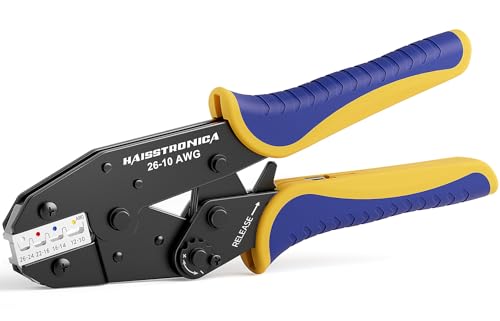
The Haisstronica HS-8327 stands out as the best crimping tool for heat-shrink connectors thanks to its precise ratcheting mechanism, ergonomic handles, and compatibility with AWG 26-10 connectors, ensuring secure, waterproof crimps every time.
Key takeaways
A ratcheting crimper with jaws designed for heat-shrink connectors creates uniform, waterproof seals without damaging the tubing.
Choose a tool covering AWG 26-10 for the broadest application on common heat-shrink terminals.
Ergonomic, non-slip handles reduce hand fatigue during repetitive crimps and speed up your work.
Adjustable compression wheels or star dials help fine-tune crimp force for different connector sizes, improving reliability.
Verify crimps visually and by pull test to meet ABYC or marine electrical standards for safety and durability.
Reliable crimps on heat-shrink connectors make the difference between a waterproof, vibration-resistant joint and a failure waiting to happen. Not every crimping tool fits the bill.
We compare top ratcheting crimpers designed specifically for heat-shrink terminals, focusing on jaw design, ratchet quality, and AWG compatibility to help you pick the right tool fast.
Crimping Tool Comparison for Heat-Shrink Connectors
Best for Reliable, waterproof crimps on AWG 26-10 connectors
The haisstronica HS-8327 stands out for its precise ratcheting mechanism that ensures a secure crimp every time, paired with ergonomic nylon handles for comfortable operation. Its jaws tightly secure connectors ‘like a solder,’ making it ideal for automotive or marine wiring. The quick-release lever adds ease of use when opening the jaws.
Best for Wiring projects needing both tool and heat shrink butt connectors
This kit combines the HS-8327 crimping tool with 200 heat shrink butt connectors in multiple sizes, making it a solid choice for someone who wants a complete starter set. It features the same precise ratchet mechanism and ergonomic handles as the standalone tool, plus color-coded markings for quick size identification.
Best for Users needing adjustable crimp force for various projects
The Plustool crimper offers a star wheel to adjust crimping height, tailoring compression force to your specific connector and wire gauge. It has cushioned, non-slip handles to reduce hand fatigue during repeated crimps. Its professional-grade die and ratchet ensure solid, uniform crimps with AWG 26-10 connectors.
AWG Range 26-10Ratchet Mechanism Professional ratcheting dieIncluded Connectors —Ergonomic Handles Cushioned, non-slip
Why it made the cut
Adjustable compression wheel for precise crimps
Cushioned ergonomic handles reduce fatigue
Professional ratcheting mechanism
Good to know
No connectors included
Slightly heavier than some competitors
Skip it if Not ideal if you want a kit with connectors or wire stripper.
Best for Marine and heavy-duty wiring projects requiring connectors and stripping
This comprehensive kit includes 280 heat shrink connectors, the HS-8327 crimping tool, and a wire stripper. It features a ratchet mechanism that automatically adjusts to connector size for safe, consistent crimps. The included connectors have a hot melt adhesive lining for waterproof, wear-resistant seals, perfect for marine environments.
Best for Marine-grade crimps needing tinned copper connectors
Sopoby’s tool includes 210 marine-grade heat shrink butt connectors with thick tinned copper barrels that minimize voltage drop and resist corrosion. The tool’s ratcheting mechanism secures crimps precisely, and the double wall connector design with hot melt adhesive improves waterproofing and pullout strength. Comfortable nylon handles ease repeated use.
Which Crimping Tools Work Best for Heat-Shrink Connectors
Crimping tools designed for heat-shrink connectors differ fundamentally from those made for insulated or non-insulated terminals because the jaws must protect the delicate polyolefin tubing and the adhesive liner inside. Using a tool with jaws that are too harsh or the wrong shape can crush or tear the tubing, ruining the seal and exposing the wire to corrosion.
A ratcheting crimper is essential here. It guarantees you complete each crimp cycle fully before releasing, ensuring a consistent, secure connection. It also reduces hand fatigue during repetitive jobs by requiring less force while maintaining precision.
Compatibility with the typical American Wire Gauge (AWG) range of 26 to 10 is another must. Crimp tools that feature color-coded die nests corresponding to the connector colors speed up the process and reduce errors. For example, red dies for 22-16 AWG, blue for 16-14, and yellow for 12-10.
Ergonomic handles with a comfortable grip are more than a convenience. They let you apply steady pressure without straining your hands, which matters when you’re crimping dozens of terminals.
Feature
Why It Matters
Jaw design specific to heat-shrink connectors
Prevents damage to polyolefin tubing and adhesive liner
Ratcheting mechanism
Ensures full crimp cycles and reduces hand fatigue
AWG 26-10 compatibility
Matches common heat-shrink connector sizes
Color-coded die nests
Speeds identification and reduces mistakes
Ergonomic handles
Improves comfort and control during use
Key features to look for in heat-shrink crimping tools.
Myth
Any ratcheting crimper will work equally well on heat-shrink terminals.
Fact
Jaw design differences mean many cheaper ratcheting crimpers damage the heat-shrink jacket or deliver poor crimps, so choose a tool made specifically for these connectors.
HVAC Crimping Tool Use
If you’re working on HVAC wiring, pick a crimping tool with a ratchet and die sizes that cover 26-10 AWG. This ensures secure, waterproof crimps that hold up to vibration and moisture exposure.
How to Crimp Heat-Shrink Terminals Correctly
1
Strip the Wire
Remove insulation carefully without nicking or cutting strands, leaving enough exposed copper to fit fully inside the connector barrel.
2
Insert the Wire
Push the stripped wire fully into the copper barrel of the heat-shrink terminal until it bottoms out, ensuring a reliable electrical connection.
3
Select the Correct Die
Use the die size that matches the connector’s color code and AWG rating. Using the wrong size can cause weak crimps or damage.
4
Crimp with the Ratchet
Squeeze the ratcheting crimper handles until the tool releases automatically. This guarantees a full crimp cycle and consistent compression on the barrel.
5
Heat the Connector
Apply heat evenly over the heat-shrink tubing with a heat gun to activate the adhesive liner and shrink the tubing. This seals the connection against moisture.
6
Inspect and Test
Check the crimp for uniformity—no crushed tubing or gaps. Perform a pull test by tugging the wire to confirm mechanical strength.
Avoid Wire Damage
Nicking wire strands during stripping weakens the conductor and can lead to failure under vibration or load. Use the right stripping tool and technique.
Before You Start
Correct wire gauge and connector size
Appropriate die installed in crimping tool
Clean, undamaged wire and connector
Heat gun set to proper temperature for polyolefin tubing
Which Crimp Types Suit Different Heat-Shrink Connectors
Not all crimps fit every heat-shrink connector. The shape of the crimp — hexagonal, oval, or indented — affects how snugly the connector grips the wire and protects the heat-shrink tubing.
Oval crimps are preferred for heat-shrink connectors because their shape compresses evenly without pinching the delicate polyolefin tubing. This uniform pressure preserves the tubing’s waterproof seal while securing the copper barrel tightly around the wire.
Hexagonal crimps, common on insulated terminals, can damage heat-shrink tubing by cutting into it. Indented crimps create sharp impressions and risk puncturing the heat-shrink layer. Avoid using crimping tools designed for insulated terminals on heat-shrink connectors for this reason.
Crimp Type
Connector Shape Fit
Heat-Shrink Tubing Compatibility
Oval
Butt splice, ring, spade
Preferred for even compression and tubing protection
Hexagonal
Mostly insulated terminals
Not recommended; damages tubing
Indented
Some ring connectors
Avoid; risk of puncturing tubing
Common Crimp Types and Their Suitability
Match the crimp type to your connector style and wire gauge. For example, a butt splice with AWG 16 wire pairs best with an oval crimp die sized for that gauge. Some crimping tools come with interchangeable dies so you can switch between oval and hexagonal crimps depending on the connector.
If you’re working in HVAC or dealing with heat-shrink terminals regularly, consider an HVAC crimping tool that offers these interchangeable dies. It lets you handle various connector shapes and sizes without risking a bad crimp or damaged tubing.
Myth
Using smaller connectors than recommended makes crimps stronger
Fact
Crimp strength depends on proper matching of wire gauge, connector, and crimp shape. Smaller connectors can pinch, causing weak crimps or damage to heat-shrink tubing.
Troubleshooting Common Crimp Failures on Heat-Shrink Terminals
Crimp failures usually come down to tool misuse, wrong die size, or skipping ratchet cycles on the crimper. Loose crimps often result from incomplete ratchet cycles or using a die that’s too large for the wire gauge.
Damage to the heat-shrink tubing happens when the crimping tool’s jaws aren’t designed for heat-shrink connectors or when you overtighten. Some crimpers have jaws that crush or cut the tubing instead of compressing it evenly.
If the connector slips off the wire, the barrel wasn’t compressed enough. This is a mechanical failure that defeats the purpose of the waterproof seal and electrical continuity.
1
Visual inspection
Look for uniform crimps without sharp edges, crushed tubing, or gaps between barrel and wire.
2
Pull force test
Gently tug the wire; if it slides or the crimp loosens, it’s a failure.
Discard any connectors that fail these tests. Reusing deformed or loose connectors risks shorts or corrosion later.
Crimping Tool Maintenance
Keep jaws clean and free of debris
Check jaw alignment regularly
Lubricate ratchet mechanism per manufacturer’s instructions
Replace worn or damaged dies promptly
Avoid Reusing Failed Connectors
A failed crimp compromises mechanical strength and the waterproof seal. Never try to fix a bad crimp by re-crimping or reusing the same connector.
Using an HVAC crimping tool with a proper ratchet and jaw design for heat-shrink connectors reduces failures. Remember, crimping shrink tubing means applying enough force to compress the barrel without crushing the tubing itself. If you struggle to get a good crimp, check that your tool matches the connector and wire size exactly and that you complete the ratchet cycle fully.
Safety and Certification for Heat-Shrink Crimping Tools
A crimping tool for heat-shrink connectors must meet specific standards to ensure reliable, durable connections under stress and in harsh environments.
ABYC standards require crimps on 14 AWG wires to withstand at least 30 pounds of pull force, which guarantees mechanical security for marine and automotive applications.
Ratcheting mechanisms are essential because they apply consistent pressure through the entire crimp cycle, reducing user error and preventing under- or over-crimping that compromises waterproof seals.
30 pounds
Required pull force per ABYC for 14 AWG crimps
This standard ensures crimps hold under vibration, tension, and mechanical abuse common in vehicles and boats.
Look for crimping tools clearly marked with wire gauge sizes and color codes that match the heat-shrink connectors you’re using. This helps avoid mistakes that damage the polyolefin tubing or copper barrel.
Ergonomic handles improve your grip and reduce hand strain during repetitive crimps, especially useful for HVAC technicians working in tight spaces or over long shifts.
HVAC Crimping Tool Choice
Choose a tool with a ratchet mechanism and ergonomic handles labeled for the AWG range you commonly use; this reduces fatigue and ensures consistent crimps on heat-shrink terminals.
Always verify that both the connectors and the crimping tool comply with relevant marine or automotive electrical codes. Equipment certified for these standards will deliver waterproof, vibration-resistant connections critical for safety.
Confirm Before You Crimp
Tool has ratchet mechanism for consistent force
Wire gauge sizes and color codes match your connectors
Handles are ergonomic for comfort and control
Connectors and tool comply with marine or automotive electrical standards
Ignoring these safety and certification details risks mechanical failure or water ingress, leading to corrosion and electrical faults on cold nights when you least want surprises.
If your crimp tool lacks these features, you may find the crimps fail prematurely, forcing costly repairs or unsafe conditions in HVAC systems or vehicle wiring.
What makes a crimping tool suitable for heat-shrink connectors?
A crimping tool for heat-shrink connectors must have jaws shaped to compress the copper barrel without damaging the polyolefin tubing or adhesive lining. It needs a ratcheting mechanism for consistent pressure and dies calibrated for the connector’s AWG range. Tools designed for insulated terminals usually won’t protect the heat-shrink jacket, leading to leaks or weak crimps.
How do I know if my crimp is strong enough on a heat-shrink terminal?
Check that the crimp meets or exceeds the pull force required by standards like ABYC, which calls for at least 30 pounds on 14 AWG wires. A uniform, tight crimp with no visible gaps or crushed tubing is a good sign. Visual inspection alone isn’t enough; testing the connection with a pull test or a gauge can confirm strength.
Can I reuse a heat-shrink connector if the first crimp fails?
Heat-shrink connectors are not designed for reuse once crimped because the copper barrel and adhesive lining deform permanently. If the first crimp fails, discard the connector and use a new one. Reusing can compromise the seal and mechanical strength, risking corrosion and electrical failure.
What AWG wire sizes should a versatile heat-shrink crimping tool cover?
A good all-around heat-shrink crimping tool should handle at least AWG 26 to 10, covering most automotive and marine wiring needs. This range fits common connector kits and ensures compatibility with both small gauge signal wires and larger power cables. Tools limited to narrower ranges can force multiple crimpers or reduce reliability.
Do ratcheting crimpers really improve crimp quality and consistency?
Yes, ratcheting crimpers apply uniform pressure and prevent incomplete crimps by locking the jaws until the cycle finishes. This reduces user fatigue and ensures each crimp meets mechanical specifications. Non-ratcheting tools rely on hand force alone, which can vary and cause weak or uneven crimps.
I am a mechanical engineer and love doing research on different home and outdoor heating options. When I am not working, I love spending time with my family and friends. I also enjoy blogging about my findings and helping others to find the best heating options for their needs.