
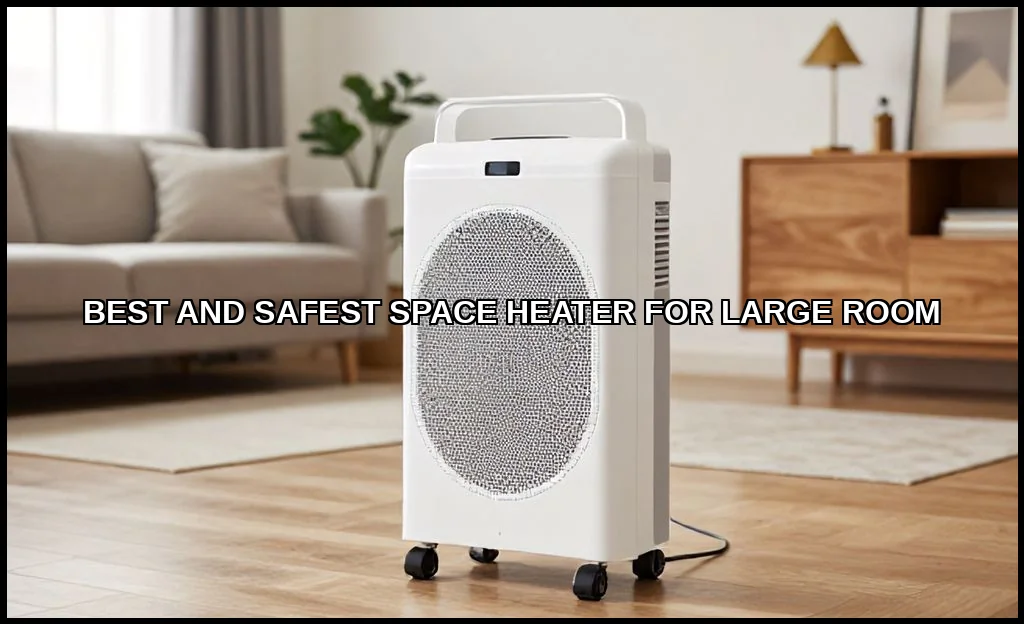
Finding the best and safest space heater for a large room isn’t just about cranking up the heat. It’s a balancing act. You need serious power, yes, but you also need intelligent safety features that work silently in the background. The “best” heater warms your space efficiently and reliably. The “safest” one gives you peace of mind, especially in busy households or while you sleep.
Large spaces like living rooms, drafty basements, or open-plan areas present unique challenges. A small, underpowered unit will just waste electricity. You need a model designed for the job, with the right certifications and built-in protections. Let’s break down exactly what to look for, from wattage to warranty.
Critical Safety Features You Must Have
Safety isn’t a luxury; it’s non-negotiable. Modern heaters pack sophisticated tech to prevent accidents. Ignoring these features is a risk you simply shouldn’t take. The Consumer Product Safety Commission (CPSC) treats portable heater safety seriously, and you should too. Their official safety guide is a must-read resource.
Non-Negotiable Certifications & Protections
First, look for the UL (Underwriters Laboratories) mark. This independent certification means the heater’s electrical components have been rigorously tested. It’s your first line of defense. Beyond that, these three features are absolute deal-breakers:
- Tip-over automatic shut-off: If the heater is knocked over, it cuts power instantly. Essential for homes with kids or pets.
- Overheat protection: An internal sensor shuts the unit down if internal temperatures get dangerously high, preventing a potential fire.
- Cool-to-the-touch housing: The exterior, especially grilles and handles, should remain safe to touch even when the heater is running at full blast. This prevents burns.
Think of these as your safety trifecta. If a model misses even one, walk away. Period.
Matching Heater Type & Wattage to Your Room Size
This is where math meets comfort. The biggest mistake is buying a heater without enough power. A common question we get is, how many watts do I need to heat a 300 sq ft room? Let’s clear that up.
Understanding Wattage and Square Footage
As a rule, you need roughly 10 watts of heating power for each square foot of floor space. This is a baseline for a standard 8-foot ceiling and average insulation. Heres a quick reference:
| Room Size (Square Feet) | Recommended Minimum Wattage |
|---|---|
| 150 sq ft | 1500 watts |
| 300 sq ft | 1500-3000 watts |
| 500 sq ft | 4000-5000 watts |
For a large or drafty living room, you’ll want a high wattage heater on the upper end of that range. Many models offer dual power settings (e.g., 1500W/750W) for flexibility.
Heater Types: Pros, Cons, and Best Uses
Not all heaters work the same way. Your room’s layout and your personal needs dictate the best type.
- Ceramic Heater: Uses a ceramic element and a fan to blow hot air. Heats up quickly, great for fast, focused warmth. Modern ceramic heaters are often very safe with excellent tip-over and overheat protection. They can be noisy, however.
- Oil Filled Radiator: Heats oil sealed inside columns, which then radiates heat. It provides silent, even, lasting warmthperfect for all-night use in a bedroom. It remains warm long after it’s off. People often ask, are oil-filled heaters safer than ceramic? They are generally very stable and have no exposed heating element, but always verify they have the core safety features.
- Infrared Heater: Emits infrared light that heats objects and people directly, not the air. It feels like sunshine. Excellent for spot heating in a drafty room or a poorly insulated space, as it’s less affected by air movement.
Top Contenders: Detailed Reviews & Comparisons
Based on safety, power, and user feedback, here are top-performing categories for large rooms. Remember, the best space heaters balance performance with robust safety engineering.
1. The Powerful Ceramic Tower: Dr Infrared Heater Portable Space Heater
This is a frequent champion for large spaces. It uses a combination of infrared quartz tube and ceramic convection heating. Why it stands out:
- High Wattage Heater: 1500 watts, suitable for up to 1000 square feet on its high setting.
- Excellent safety suite: tip-over automatic shut-off, overheat protection, and a durable cool-to-the-touch cabinet.
- Features like a programmable thermostat and a 12-hour auto-shutoff timer enhance both comfort and safety.
- It’s relatively quiet for its power output, making it a good living room companion.
You can check the latest model and pricing for the Dr Infrared Heater on Amazon.
2. The Silent Sustainer: De’Longhi Oil-Filled Radiator
For consistent, all-day warmth without a fan noise, oil-filled radiators are hard to beat. The De’Longhi Dragon is a classic.
- Provides radiant, even heat that lingers. Ideal for someone wondering what is the safest type of space heater for a bedroom? This is a top answer.
- Completely silent operation. The lack of a fan is a major perk for bedrooms or home offices.
- Multiple heat settings and an adjustable thermostat control allow for precise temperature management.
- Its design is stable and low to the ground, reducing tip-over risk, and it includes the essential safety features.
Buyer’s Guide: How to Choose & Use Safely
Choosing the right unit is step one. Using it correctly is what keeps your home safe. Heres your action plan.
Final Selection Checklist
- Verify Safety Certifications: Look for UL certification. Don’t settle for less.
- Match Wattage to Your Room: Use the 10-watts-per-square-foot rule. For drafty rooms, add 10-20%.
- Prioritize Core Safety Features: Confirm tip-over automatic shut-off, overheat protection, and a cool-to-the-touch exterior.
- Consider the Thermostat: An adjustable thermostat control is key for efficiency. It cycles the heater on/off to maintain a set temperature, saving energy.
- Think About Placement & Portability: Does it have handles? Wheels? You’ll be moving it.
Smart Usage for Maximum Safety & Efficiency
Even the safest heater can be misused. Follow these rules religiously:
- Always plug the heater directly into a wall outlet. Never use an extension cord or power stripthey can overheat.
- Maintain a 3-foot “kid-and-pet-free” zone around the heater. Keep it away from curtains, furniture, and bedding.
- Place it on a hard, level surface. Never on a rug, carpet, or table.
- Unplug it when not in use. This is simple but often forgotten.
- For specialized needs, like a garage or workshop, you might explore options like the best battery operated heater for cord-free convenience in areas without outlets.
The quest for the best and safest space heater for a large room ends with informed choices. It’s not about finding the single perfect product for everyone, but the perfect product for your specific square footage, safety concerns, and heating style. Focus on verified safety techUL certification, tip-over and overheat shut-offs, and cool exteriors. Match the heater’s wattage to your room’s size. Whether you choose the rapid heat of a ceramic tower or the silent, radiant warmth of an oil-filled radiator, let those principles guide you. Your large room can be both comfortably warm and unquestionably safe. Now you have the blueprint to make it happen.
