

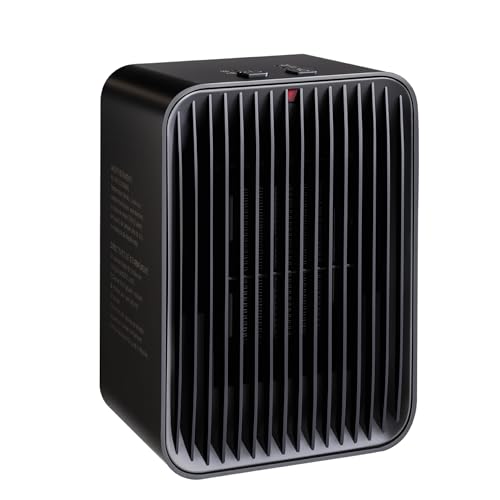


Choosing a 500 watt electric space heater means focusing on personal or desk heating rather than whole-room warmth. These low-watt models excel at close-range comfort but won’t replace a 1500 watt heater in a bedroom or living room.
Many shoppers make the mistake of expecting a 500 watt heater to warm an entire room, which leads to disappointment and wasted energy. Knowing what these heaters can and cannot do saves money and hassle.
500 Watt Heater Comparison
| Model | Best for | Heat Output (Watts) | Safety Features | Noise Level (dB) | Portability | Price |
|---|---|---|---|---|---|---|
| Amazon Basics Portable Ceramic Space Heater 520W | Top Pick | 520 | Cool-touch housing | — | 1.7 lbs | View on Amazon |
| Amazon Basics Ceramic Mini Space Heater 500W | Compact | 500 | Tip-over protection | 48 | 1.4 lbs | View on Amazon |
| WINHL Portable Electric Heater with Oscillation | Oscillating | — | Overheat, tip-over shutoff | — | — | View on Amazon |
| GiveBest Portable Space Heater 2-in-1 Fan and Heater | Versatile | — | Tip-over, overheat shutoff | — | — | View on Amazon |
| DREO Portable Electric Heater with Thermostat | Precise Control | 1500 | Tip-over, overheat, flame retardant | 34 | — | View on Amazon |
Best 500 Watt Electric Space Heaters for Personal and Desk Use
Amazon Basics Portable Ceramic Space Heater 520W
Amazon Basics Ceramic Mini Space Heater 500W
WINHL Portable Electric Heater with Oscillation
GiveBest Portable Space Heater 2-in-1 Fan and Heater
DREO Portable Electric Heater with Thermostat
Key Qualities of a 500 Watt Heater for Personal Heat
A 500 watt electric space heater is best for heating a small personal area, like a desk or a single chair, rather than an entire room. It uses about one-third the power of a typical 1,500 watt heater but delivers noticeably less heat, making it ideal for close-range warmth where you need it most.
Most 500 watt heaters use ceramic heating elements, which heat up quickly and provide direct radiant warmth. Oil-filled models at this wattage exist but warm slower and hold heat longer, better for steady background warmth than quick bursts.
Safety is a must for heaters this small because users often place them close by. Look for a tip-over switch that cuts power if knocked over and overheat protection to shut off if internal temps get too high. These features help especially when elderly people or kids are around.
Noise levels vary a lot: some ceramic heaters have quiet fans, while others are nearly silent. This matters if you want a heater safe for bedrooms or offices without disturbing sleep or concentration.
Portability and size are key advantages. A 500W heater is usually compact and light enough to sit on a desk or bedside table, unlike larger units. That makes them easy to move to where you need a little extra heat.
If you’re looking for electric heaters at Walmart or elsewhere, check that the model includes these safety features and matches the room size you expect to heat. For bedrooms or elderly users, a heater rated safe for indoor use with certified safety cutoffs is essential. In short, 500 watt heaters are electric space heaters meant for close-range, personal heat rather than whole-room warming.
How to Size and Use a 500 Watt Heater Effectively
A 500 watt heater is best suited for small spaces or personal zones rather than large rooms. It can warm an area within about 3 feet effectively, making it ideal for desks, offices, or a single chair.
Place a 500 watt heater within 3 feet of your seating area to feel its warmth effectively. Because its heat output is limited, it won’t warm a whole bedroom adequately but excels at keeping you comfortable up close, especially in small or drafty spots.
Energy consumption is easy to calculate. Running a 500 watt heater for 8 hours uses 4 kWh (0.5 kW × 8 hours). At 17 cents per kWh, that’s about 68 cents per night. This is roughly one-third the cost of a 1500 watt heater running the same time, but you get less heat.
A 1500 watt heater is better for whole-room heating. It can raise a standard bedroom’s temperature significantly, while a 500 watt model will only add localized warmth. If you try to heat a large or drafty room with 500 watts, you’ll notice little effect.
In poorly insulated spaces or near drafty windows, a 500 watt heater struggles to maintain warmth. Use it as a personal zone heater, not a primary heat source for a chilly room.
If energy efficiency is your priority, 500 watt heaters consume less power but deliver heat over a smaller area. Consider how close you’ll be to the heater and whether you need personal warmth or whole-room comfort before choosing this wattage.
For a clear next step on heater size and performance, see our review of the 500w small space heaters that balance energy use and comfort in small areas.
Safety and Certification Features to Look For
Look for heaters with UL, ETL, or CSA certification, which means they meet safety standards. Essential safety features include a tip-over switch that cuts power if the heater falls and overheat protection that shuts it off if it gets too hot. These reduce fire risks, especially around kids and pets.
For bedrooms and use by elderly people, choose heaters with UL, ETL, or CSA certification. These marks mean the unit has passed strict safety tests, reducing risks when you’re sleeping or less able to respond quickly. Quiet operation also matters here—low noise levels let you rest or concentrate without distraction or stress.
Avoid plugging a 500 watt heater into an extension cord or power strip. Even at 500 watts, the current draw (about 4.2 amps at 120 V) demands a direct wall outlet to prevent overheating of cords and connectors. Keep at least 3 feet of clearance around the heater to avoid combustible materials catching fire.
When using a 500 watt heater, safety precautions include positioning it on a flat, stable surface away from water and clutter. Never leave it unattended for long periods, especially around children or pets. Check the manufacturer’s manual for any additional warnings specific to the model you own.
Comparing Heating Technologies in 500 Watt Heaters
At 500 watts, heating technology affects how fast, steady, and quiet your heater runs. Ceramic heaters warm up quickly by heating a ceramic element and blowing air over it, making them effective for instant personal heat. However, they cool down fast once off, so warmth disappears quickly.
Oil-filled radiators use heated oil inside metal fins to provide a slower, more stable heat that lingers after the heater shuts off. They run quietly since they don’t rely on a fan, making them ideal for bedrooms or offices where noise matters. Their downside is slower initial warm-up.
PTC (Positive Temperature Coefficient) heating elements self-regulate their temperature, offering efficient, stable warmth without overheating. In 500 watt models, they strike a good balance between quick heat and energy use. Noise is typically low unless paired with a fan.
Fan-forced heaters push warm air with a fan to spread heat faster. This helps even distribution but adds noise, which may be distracting at low wattage where the fan sound stands out more. Choosing a model with quiet operation or variable fan speed can help.
Noise and heat output differences are more noticeable at 500 watts than at 1500 watts because low power limits how hot the heater and air get. Ceramic and PTC heaters generally provide quieter, more direct heat, while fan-forced models are noisier but can cover a wider area despite the low wattage.
Features and Controls That Improve Use and Comfort
A digital thermostat on a 500 watt electric space heater lets you dial in your preferred room temperature with precision, avoiding both chills and wasted energy. Unlike simple on/off controls, it cycles the heater to maintain a steady warmth, which is important since 500W heaters produce limited heat and benefit from careful management.
Oscillation spreads heat over a wider area by slowly rotating the heater’s warm air output. This feature can make a small space feel evenly warm rather than hot spots near the heater. For a 500 watt heater, oscillation compensates for the limited overall heat output by improving distribution in personal or desk zones.
Remote control adds convenience and safety, letting you adjust settings without getting up or moving the heater. For a 500W model used at a desk or bedside, a remote can be a real comfort upgrade, especially in cold rooms where you want to avoid exposing bare skin to cold air while fiddling with buttons.
Timers help save energy by allowing you to limit how long the heater runs. You can set it to warm your space just before you arrive or fall asleep and shut off automatically, preventing unnecessary power use. This is particularly useful for 500 watt heaters in bedrooms or offices where you want consistent but controlled warmth.
Not all 500W heaters include these features, though. Many budget or ultra-compact models stick to basic controls to save cost and size, so check product specifications if digital thermostats, oscillation, remote controls, or timers matter to you.
More Questions, Answered
What is a 500 watt electric space heater best used for?
Can a 500 watt heater warm a standard bedroom effectively?
How close should I keep a 500 watt heater for best heat?
Are 500 watt heaters safe around children and pets?
Do 500 watt heaters use much electricity compared to 1500 watt models?
Which heating technology is quietest in a 500 watt heater?

I am a mechanical engineer and love doing research on different home and outdoor heating options. When I am not working, I love spending time with my family and friends. I also enjoy blogging about my findings and helping others to find the best heating options for their needs.
Related guides

Transform Your Space with These Electric Fireplace Logs
For homeowners, best-rated electric fireplace logs for wood burning create warmth and ambiance effortlessly. These electric fireplace logs…
The Hidden Gems of Flush Mount Electric Heaters You Need to See
For homeowners, the best flush mount electric heater enhances comfort without compromising style. The Infratech 39" Stainless Steel…
USB Space Heaters for Cars: Defrost Aid or Gimmick?
Ever wish your car could warm up instantly? Our guide to the best USB space heater for car…