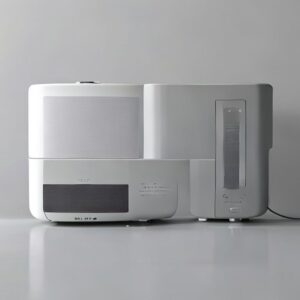
For most people searching for energy efficient oil filled radiators, the best fit is product 3: it offers 600 W, 900 W and 1,500 W settings, a thermostat, tip-over protection and quiet fanless heat. Choose product 4 instead if you want a tower heater with oscillation, remote control and an ECO mode.
What to remember
Choose product 3 for adjustable, fanless heat in a medium-sized room.
Product 4 lists coverage of 106–167 sq ft and has an ECO mode, remote and oscillation.
A 1,500 W heater running continuously for 8 hours uses 12 kWh; multiply that by your electricity rate.
Plug an electric space heater directly into a wall outlet and keep 3 feet of clearance.
Say your bedroom is 12 by 14 feet and you want quiet heat overnight. A 1,500 W radiator can warm the room, but its thermostat and your electricity rate determine what it costs to run.
The right pick depends on room size, controls and where you need warmth. A 12 V car defroster is a different tool, not a substitute for a household heater.
Best Efficient Heaters for Different Rooms
#1Best Overall
DUMOS Oil-Filled Radiator, 1500W
Best for Bedrooms, offices and medium rooms needing quiet adjustable heat
The 600 W, 900 W and 1,500 W settings let you match output to the room instead of running full power every time. Its adjustable thermostat, fanless design and tip-over and overheat protection suit bedrooms, offices and other noise-sensitive spaces.
Heat settings 600 W, 900 W and 1,500 WRoom coverage 10-15㎡Thermostat -5 to 60°CSafety Overheat protection and tip-over safety switchMobility Four universal wheels and carry handle
Why it made the cut
Three heat settings
Fanless and quiet
Tip-over and overheat protection
Four casters and carry handle
Good to know
Must plug directly into a grounded wall outlet
Coverage is limited to spaces of 10-15㎡
Skip it if Skip it if you want oscillation, a remote or a tower-style heater.
Best for 106-167 sq ft rooms where remote control and oscillation matter
Choose this 1,500 W ceramic tower when you want heat aimed around the room rather than a stationary radiator. The remote, oscillation, thermostat, timer and ECO mode give you more control from a sofa or bed.
Heat settings High, Low and ECO modeRoom coverage 106-167 sq ftControls Touch control, remote control, thermostat and 8-hour timerSafety Overheating and tip-over switch protectionVoltage 110 Volts
Why it made the cut
Remote control and oscillation
ECO mode and thermostat
8-hour timer
Tip-over and overheat protection
Good to know
Ceramic fan operation is listed at 50dB
Not an oil-filled radiator
Skip it if Skip it if you need completely fanless heating for a quiet bedroom.
Best for Large rooms needing wall-mounting, scheduling or app control
The all-metal mica panel offers 180° coverage and a 10-second heat-up, while the exposed temperature sensor and adjustable thermostat help manage room temperature. Remote, digital-panel, WiFi and Alexa controls suit users who want schedules or smart-home adjustments.
Heating coverage 180° panoramic heatingHeat-up time 10 secondsControls Remote, digital panel, WiFi app and AlexaThermostat Adjustable thermostatMounting Portable stand or wall mount
Why it made the cut
Portable or wall-mounted
WiFi app and Alexa control
180° heating coverage
Whisper-quiet operation
Good to know
Not an oil-filled radiator
The data does not state a wattage or room-size figure
Skip it if Skip it if you need a clearly stated heat setting or oil-filled construction.
Best for 12V cars, trucks, RVs, golf carts and UTVs needing defrosting
This 800 W PTC ceramic heater is designed for windshield defrosting, defogging and deicing in 12 V vehicles. Overload and insulation protection add useful safeguards, but its wiring and battery connection make it a vehicle heater—not a room heater.
Power 800 WVoltage 12 VHeating type PTC ceramicSafety Switch overload protection and insulation protectionUse Windshield defrosting, defogging and deicing
Why it made the cut
800 W PTC ceramic heating unit
Designed for defrosting and defogging
Overload and insulation protection
Fits 12 V vehicles
Good to know
Requires installation and battery wiring
Not for heating an indoor room
The vehicle battery must be 12 V
Skip it if Skip it for a bedroom, office or any standard wall-outlet heating job.
Best for Small outdoor areas such as pet houses, chicken coops and greenhouses
The 30 W solar panel heater fits small spaces where sunlight is available and grid power is inconvenient. USB and DC ports, a 100 cm cable and automatic overheating shut-off make it useful for temporary setups.
Power 30 WPower source SolarPorts USB and DCCable length 100 cmSafety Automatic shut-off system
Why it made the cut
Solar powered
USB and DC ports
100 cm cable
Automatic overheating shut-off
Good to know
Only 30 W
Needs sunlight
Designed for small outdoor areas, not rooms
Skip it if Skip it if you need dependable heat after dark or for a living space.
Energy efficient oil filled radiators are electric-resistance heaters: each kilowatt-hour becomes heat at the heater, while the oil stores and releases that heat gradually. Oil-filled electric heaters can feel steadier and quieter, but the oil doesn’t make each kWh produce more heat.
A thermostat can lower electricity use by switching the heating element off after the room reaches its set temperature. Choosing 600 W or 900 W instead of 1,500 W also limits the draw, though the room will warm more slowly. That is why the cheapest most efficient electric heater depends on the heat your room actually needs and how long it runs.
Model
Controls and output
Best fit
Dumos Oil Filled Radiator
600 W, 900 W and 1,500 W settings; adjustable thermostat
Quiet, fanless warmth in a medium room; stated for 10–15 square metres
PELONIS Oscillating Ceramic Tower
High, Low and ECO modes; thermostat; oscillation; remote control
A tower format with moving airflow; stated coverage of 106–167 square feet
Ballu Mica Infrared Space Heater
Energy-cost saving claim supplied, but no percentage is established
Consider its heat distribution and controls; don’t accept an unverified savings figure as proof
Ceramic, mica and oil-filled electric heaters all use resistance heating; compare the controls and stated coverage.
Myth
Oil stores heat, so an oil-filled radiator is more electrically efficient.
Fact
The oil smooths the heat after the element cycles off, but it doesn’t increase heat made per kWh. Pick oil-filled for quiet, fanless heat and gradual release; pick the PELONIS if oscillation, a remote and ECO mode matter more.
That also answers how efficient oil filled radiators, oil radiators and oil filled electric heaters are: efficient at turning electricity into heat, with savings coming from thermostat cycling, lower settings and sensible runtime. A ceramic heater is energy efficient in the same basic sense; its fan can spread heat differently, but the heater type alone doesn’t promise lower bills.
Good for
Quiet heat without a fan
A thermostat and multiple power settings
Gradual heat after the element switches off
Not for
No magic reduction in electricity use per kWh
Slower warm-up than some fan heaters
Room fit still depends on output and insulation
Match Wattage to the Room
Match the heater’s wattage to the room’s heat loss, because a small heater isn’t automatically more efficient—it may simply run constantly and still fail to hold the set temperature.
The supplied coverage figures aren’t interchangeable: the Dumos is described for 10–15 square metres, while the PELONIS lists 106–167 square feet. No coverage figure is supplied here for the Ballu, CYDZSW or Hyuduo, so don’t invent one from the wattage or product title.
What to compare
Why it matters
Wattage
Shows the maximum electrical draw and available heat
Heat settings
Lets you limit output after the room warms
Stated coverage
Provides the maker’s stated room-size range; check the units
Thermostat
Can cycle the element off instead of running continuously
Tip-over protection
A basic safety feature to verify before buying
Use the same checkable details for heaters sold at Walmart or anywhere else; a retailer listing doesn’t guarantee efficiency.
Worked Example
A 1,500 W heater running at full output for 8 hours uses 1.5 × 8 = 12 kWh. At an assumed electricity rate of $0.17 per kWh, that is 12 × $0.17 = $2.04 for the night. A thermostat may reduce actual use by cycling the element off, so the full-output figure is a ceiling for that run time.
Power1,500 W = 1.5 kW
Runtime8 hours
Energy12 kWh
Assumed rate$0.17 per kWh
Searches for an electric heater efficiency chart or the most efficient mini heater often miss the useful comparison: wattage and runtime set the bill. The 30 W Hyuduo solar panel heater isn’t a substitute for heating a household room, and the 12 V CYDZSW car heater is for a vehicle rather than a room.
Set a Winter Temperature You Can Afford
For the best temperature for a heater in winter, start your home’s thermostat at 68°F while you’re awake if that feels comfortable, then lower it when you’re asleep or away. That USA heater setting is a practical starting point, not a rule for every household or heater.
A home thermostat target and a portable heater’s thermostat control do different jobs. Product 3, the Dumos Oil Filled Radiator Heater, lists its control range in Celsius; don’t convert that listed range into a promised room temperature, because placement, insulation and airflow change what you feel.
Start Here
Set the household thermostat to 68°F when occupied, then adjust for your comfort, health needs and the home’s heat loss. Follow the portable heater’s own manual for its thermostat and operating limits.
Lowering the target reduces the heat your home needs, but a portable heater warms its immediate area rather than serving as a whole-home heating system. Keep the setting lower in an occupied bedroom or office only if that room remains comfortable and safe.
PELONIS’s ECO mode is described as adjusting heating with ambient temperature. That can help the heater respond to room conditions, but the product data doesn’t support a specific bill reduction, so treat ECO as a control setting rather than a savings guarantee.
Check Safety Before You Plug In
Safe efficient electric space heaters plug directly into a wall outlet, sit at least 3 feet from anything that can burn, and stay attended unless the manufacturer says that specific model is designed for unattended or sleeping use. Never use an extension cord or power strip.
Before Startup
Plug the heater straight into a wall outlet.
Keep at least 3 feet of clearance around the heater.
Check for tip-over and overheat protection.
Look for a UL, ETL or CSA listing on the heater or packaging.
Read the model’s instructions before leaving it on while sleeping or away.
Do Not Trust the 12 V Claim Alone
The CYDZSW product is described as an 800 W, 12 V car defroster, but the supplied data doesn’t establish that it can safely draw that power from a vehicle battery or cigarette-lighter socket. At 800 W ÷ 12 V, the simple arithmetic is about 67 amps before losses—far beyond what many vehicle accessory sockets are designed to supply. Don’t recommend or wire it on that basis.
Use the vehicle’s factory defroster to clear the windshield while driving. Any aftermarket device must stay clear of your view, controls and airbag areas; a portable 12 V heater won’t be a reliable whole-car quick-warming solution.
The car heater also isn’t a personal desk heater or a household heating device. Choose a properly listed indoor electric heater for a room, and don’t assume a product’s listing or card proves certification when the supplied data doesn’t say so.
Questions People Ask
How efficient are oil-filled radiators?
Oil-filled radiators convert nearly all the electricity they use into heat at the point of use. The oil doesn’t create extra heat; it stores heat and releases it after the element cycles off, which can make room temperature steadier and reduce noisy on-off swings.
Are oil-filled space heaters more efficient than ceramic heaters?
Neither type has a built-in efficiency advantage: both are electric-resistance heaters, so 1,500 watts costs the same to run for the same time. Pick an oil-filled model for quiet, gradual heat, or a ceramic model when faster airflow matters; the thermostat and correct wattage affect real-world use more than the heating material.
What is the most efficient electric heater for a small room?
A correctly sized electric heater with a reliable thermostat is the most efficient practical choice for a small room. An oil-filled radiator suits bedrooms and offices where quiet, steady heat matters, while a lower-wattage heater can use less electricity if it maintains your set temperature without running continuously.
Can a 12V car heater defrost a windshield?
A 12V car heater can help clear a small patch, but its limited electrical power makes it much slower than the vehicle’s built-in defroster. Use the factory defroster when possible, keep the windshield and vents clear, and never use a plug-in heater where it can interfere with driving or visibility.