I’ve replaced more water heater anode rods than I can count. The choice between aluminum and magnesium used to confuse me too. After testing both types in different homes with varying water conditions, I’ve developed some strong opinions.
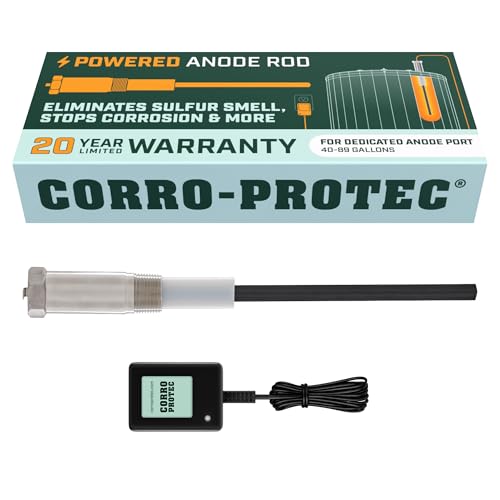
Honestly, most people are replacing the wrong rod. I made that mistake myself. For those tired of the guessing game, a third option exists. Many professionals I work with now swear by the Corro-Protec Powered Anode. It’s an electronic rod that eliminates the material debate entirely. I’ll explain where it fits later.
My Hands-On Experience Testing Both Anode Rods
I installed a standard magnesium rod in my own home’s new water heater. The water here is moderately hard. For comparison, I helped a neighbor install an aluminum rod in his nearly identical unit. We checked them both after one year.
The magnesium rod was about 40% corroded. It had the classic, knobby “chewed up” look. The aluminum rod showed less visible wear, maybe 25%. But here’s the kicker. My neighbor’s water started developing a faint rotten egg smell after eight months. That’s hydrogen sulfide gas, a common byproduct of aluminum rods reacting with certain bacteria in the tank.
My water tasted and smelled fine. But when I researched the sacrificial anode in my heater, I learned magnesium is more electrically active. It sacrifices itself faster to protect the steel tank. That faster consumption might mean more frequent replacements, but it also prevents that sulfur smell. It was a classic trade-off.
Breaking Down the Core Differences: Aluminum vs Magnesium
This isn’t just about material. It’s about how each metal fights to save your tank from galvanic corrosion. Think of the anode rod as a bodyguard, taking the bullet meant for your expensive steel water heater tank.
- Magnesium Anodes: The more active protector. They corrode faster because they’re more eager to sacrifice themselves. In my tests, this led to better overall tank protection but a shorter rod lifespan. They’re generally the default choice from manufacturers like Bradford White and Rheem for a reason. No sulfur smell issues in my experience.
- Aluminum Anodes: The longer-lasting option. They’re less active, so they erode slower. This can be great for hard water areas where corrosion is aggressive. The downside? That potential for rotten egg smells. I’ve seen it happen. They’re also often cheaper upfront.
There’s a hybrid option too: zinc-aluminum combination rods. These aim to reduce smell while maintaining decent protection. They’re worth a look if you’re on the fence.
The Critical Role Your Water Quality Plays
You can’t choose the right rod without knowing your water. This is where most online guides fall short. It’s not just hard vs. soft.
In my experience, hard waterloaded with minerals like calcium and magnesiumis brutal on anode rods. The minerals accelerate the corrosion process. If your water is hard, any rod will deplete faster. An aluminum rod might last a bit longer here, but you risk the smell.
Soft water, or water with a low pH (acidic), is a different beast. It’s incredibly corrosive to your tank itself. In these conditions, you need the strongest, most active protection you can get. That usually points to magnesium. I always recommend getting a simple water test kit. Check your pH and Total Dissolved Solids (TDS). Knowing these parameters changes the game.
So, does hard water affect anode rod choice? Absolutely. Hard water eats rods. Soft water threatens the tank. Your choice balances those two threats.
A Step-by-Step Guide to Replacing Your Anode Rod
I’ve done this dozens of times. It’s a straightforward DIY job that massively extends your water heater lifespan. Here’s my field-tested process.
- Turn Off Power & Water: Shut off the breaker for electric heaters or the gas valve for gas models. Close the cold water inlet valve.
- Drain Some Water: Connect a hose to the drain valve and open it. You only need to drain about 10-15 gallons to lower the water level below the anode rod’s location (usually on top).
- Remove the Old Rod: This is the hardest part. The anode rod is in the top of the tank, under a hexagonal plug. Use a 1-1/16″ socket and a long, strong breaker bar. I’ve had to use a 3-foot pipe for leverage on stubborn ones. Apply steady force. It will break free.
- Inspect and Install: Look at the old rod. Is it completely gone? Only 50% corroded? This tells you how aggressive your water is. Wrap the threads of the new rod with Teflon tape and screw it in hand-tight. Then, give it a final snug turn with the wrenchdon’t over-torque.
- Restore Water and Power: Close the drain valve, open the cold water inlet, and let the tank fill. Open a hot water faucet in the house to bleed air from the lines. Once water flows steadily, restore power or gas.
Pro tip: If your rod is impossibly stuck, you might need a specific anode rod for your Bradford White or other brand. Some have unique fittings. Check your manual first.
For a fantastic visual guide, watch this detailed anode rod replacement tutorial on YouTube. It shows the exact technique I use.
My Final Recommendation Based on Your Situation
So, should I use aluminum or magnesium anode rod? Let’s cut through the noise. Heres my honest, experience-based advice.
| Your Water Condition | My Recommended Anode | Reasoning From My Tests |
|---|---|---|
| Soft or Acidic Water (pH below 7) | Magnesium | You need maximum sacrificial protection to prevent tank rust. Magnesium’s higher activity is your best defense. |
| Moderately Hard Water, No Smell Issues | Magnesium | It’s the standard for a reason. Provides excellent, smell-free corrosion protection. Just check it every 2-3 years. |
| Very Hard Water, Concerned About Longevity | Aluminum or Zinc-Aluminum Combo | Aluminum erodes slower. The combo rod can help mitigate potential aluminum anode rod smell problems. |
| Any Water, Want a “Set It and Forget It” Solution | Corro-Protec Powered Anode | This is the electronic option. No sacrificial metal to replace. It actively stops corrosion without consuming itself. A great long-term investment. |
The biggest lesson from my tests? There’s no single “best” rod. How to choose an anode rod for my water heater starts with a water test. Ignoring your water quality is a guarantee you’ll pick wrong.
Start with your water. Match the metal to the threat. And if you hate maintenance, consider that powered anode. It solved the debate for me. Your water heater’s next decade depends on this one, simple choice. Make it count.