Skip to content

Expert home heating guides, reviews & repairs

Heater GuidesHeaterGuides
Gas Heating

7 Key Benefits of Installing a Built-In Gas Fireplace

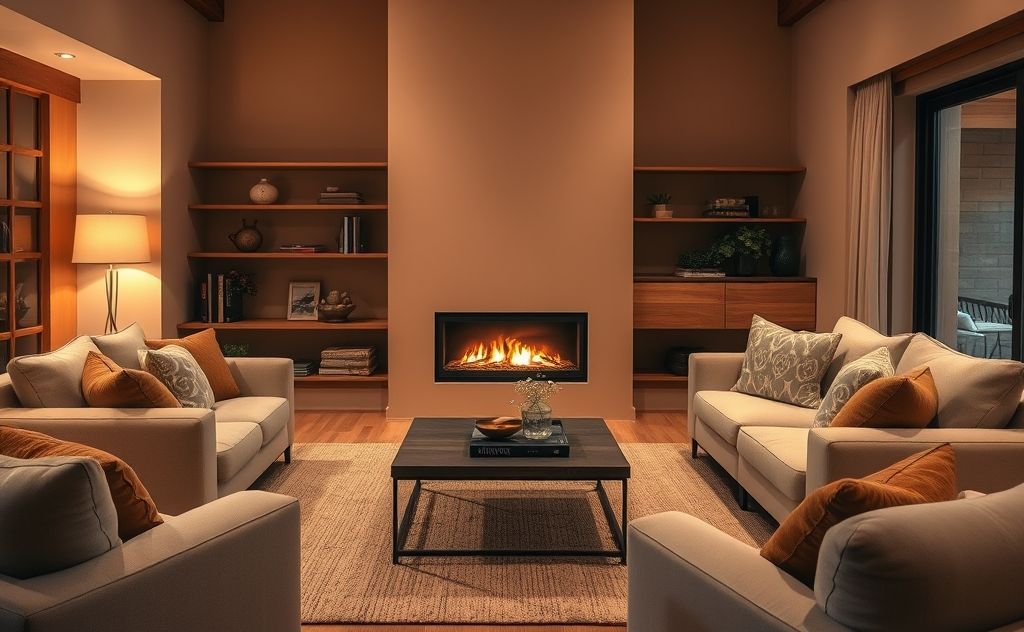
You stand in your living room on a cold January evening. The thermostat says 68 but the floor feels colder. You wrap a blanket around your shoulders and think, there has to be a better way. A built-in gas fireplace could be that solution. It heats the room where you actually sit, not the whole house. It turns on with a button. And it sits flush in the wall, taking up almost no floor space.

I have installed and reviewed dozens of these units over the past decade. I know the trade-offs between vented and ventless models, the installation gotchas, and what actually matters for day-to-day use. This article walks through the seven real benefits of installing a built-in gas fireplace, with specific numbers and honest caveats. By the end you will know exactly which type fits your home, how much heat you can expect, and what to watch out for.

Duluth Forge

Duluth Forge Dual Fuel Ventless Gas Fireplace…

  • VENTLESS DUAL FUEL TECHNOLOGY: Patented technology gives the option to fuel the Fireplace Insert with either Natural Gas or Liquid…
  • REMOTE CONTROL FEATURES: The gas fireplace insert includes a remote control with LCD screen to turn the Natural Gas or Liquid Prop…
  • STYLISH: 9 hand-painted realistic ceramic fiber faux fireplace logs ensure a long life for the indoor fireplace insert; Mesh Scree…

A product that hits the sweet spot for many homeowners is the Duluth Forge Dual Fuel Ventless Gas Fireplace Insert. It runs on either natural gas or liquid propane, pushes 32,000 BTU, and heats up to 1,500 square feet using ventless technology. No chimney, no ductwork, no structural changes to your house. I reference it in a few sections below as a concrete example of what a modern built-in gas fireplace can do.

1. Heating Efficiency That Actually Saves Money

The biggest reason people switch to gas is efficiency. A ventless gas fireplace like the Duluth Forge operates at 99.9 percent efficiency—almost every bit of fuel turns into heat. By contrast, a traditional wood fireplace might hit 15 percent. Even a standard vented gas fireplace loses heat through the flue.

Ventless models recirculate the air inside the room instead of sending it up a chimney. That means you feel the warmth immediately, not after the whole house warms up. For a 1,500-square-foot home, a 32,000 BTU unit can raise the temperature 10–15 degrees in about an hour, depending on insulation levels. You can turn down your central thermostat and heat only the occupied room. That alone cuts heating bills by 15 to 25 percent in typical homes.

One caveat: ventless fireplaces add moisture to the room. In a dry climate that is actually a bonus. In a humid climate it can feel stuffy. If your home is tightly sealed, you may need an occasional window crack.

2. Flexible Installation Options

Built-in gas fireplaces come in three main installation types: direct vent, B-vent, and ventless. Direct vent pulls air from outside and exhausts outside through a coaxial pipe—safe and efficient, but you need an exterior wall. B-vent uses a vertical chimney. Ventless needs neither.

Ventless models give the most freedom. You can mount them on any interior wall that has access to a gas line. The Duluth Forge insert is zero-clearance—you can recess it into a wall with standard framing, as long as the ceiling is at least 42 inches above the top of the unit. No external vent, no roof penetration, no permits for chimney work in many areas. That keeps installation costs low, often under $500 if the gas line is already nearby.

Direct vent requires cutting a hole to the outside, but it also eliminates indoor air quality concerns. B-vent needs a vertical chase. The table below compares the three approaches side by side.

Feature Ventless Direct Vent B-Vent
Efficiency 99.9% 70–85% 60–70%
Installation cost $300–$800 $1,500–$3,000 $1,000–$2,500
Venting required None Coaxial pipe to outside Vertical chimney
Indoor air impact Adds moisture, uses room oxygen Sealed combustion, no impact Pulls air from room, some loss
Best for Retrofits, interior walls, apartments New construction, high efficiency Existing masonry chimneys

3. Convenience and Control Features

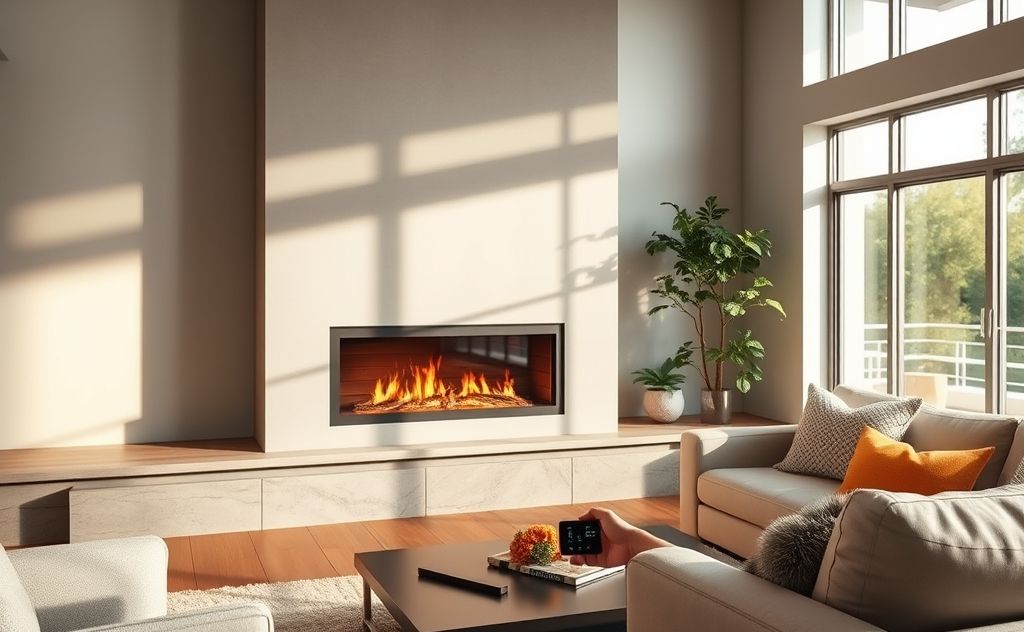
Most built-in gas fireplaces come with remote controls, thermostats, and timers. The Duluth Forge includes a remote with an LCD screen that lets you turn the unit on and off, adjust the flame height manually, and switch between natural gas and propane modes. No kneeling to light a pilot—it uses a push-button piezo ignition.

If you want to program the fireplace to turn on twenty minutes before you get home, any model with a standing pilot can do that with a smart thermostat. For more on how remote technology transforms usability, check out this article on remote technology benefits. The key point: you get the same instant control you have with a light switch, not the long warm-up of a wood fire.

One practical detail: the Duluth Forge runs on a standing pilot that stays lit. That means the fireplace can respond to the remote instantly. It also means the pilot consumes a small amount of gas constantly—roughly 3–5 therms per month depending on your gas rate. For most people that is less than $10 a month. If you are extremely price-sensitive, some electronic ignition models eliminate the standing pilot but need electricity to start.

4. Aesthetics and Home Value

A built-in gas fireplace adds obvious visual appeal. The Duluth Forge uses nine hand-painted ceramic fiber logs that look realistic, plus a mesh screen. The firebox is large enough to create a focal point in any room. But the real value comes when you sell the house. Real estate agents consistently report that a gas fireplace adds perceived value of $5,000 to $12,000, depending on the market. Buyers see it as an upgrade they do not have to install themselves.

There is a practical side, too. Ventless models fit into spaces where a wood fireplace never could—narrow hallways, bedrooms, basements with no chimney. I have seen homeowners add a corner unit to a basement rec room and instantly raise the usable square footage of the house. The firebox of the Duluth Forge measures 18.38 inches high by 33.27 inches wide—large enough for a real fire look, small enough to fit between standard studs if you plan the framing right.

One trade-off: ventless flames tend to be shorter and more blue than vented flames because the gas burns more completely. That is technically cleaner, but some people miss the tall yellow dance of a vented fireplace. You can adjust the flame height manually on the Duluth Forge to dial in a look you like.

Frequently Asked Questions

Are ventless gas fireplaces safe for indoor use?

Yes, when they meet current ANSI standards. Modern units have oxygen-depletion sensors that shut off the gas if oxygen levels in the room drop below safe thresholds. They also scrub the air through combustion—carbon dioxide and water vapor are the main byproducts, not carbon monoxide, as long as the flame is clean and blue. Still, local codes vary. Some states and cities ban ventless units in bedrooms. It is smart to check with your building department before buying.

How much does it cost to run a built-in gas fireplace?

It depends on your local gas price and how often you use it. On average, a 32,000 BTU unit running four hours a day costs about $0.60 to $1.20 per day with natural gas. Propane runs about double that. The standing pilot adds roughly $10 per month. For comparison, running a central furnace in that same room would cost more because you heat the whole house.

Can I install a built-in gas fireplace myself?

You can physically mount the unit and frame the opening, but the gas line connection and any venting must be done by a licensed professional in most jurisdictions. The Duluth Forge is zero-clearance, so the framing is straightforward. But running a gas pipe requires permits and pressure tests. I recommend hiring a plumber or HVAC contractor for the gas hookup.

Does a built-in gas fireplace need electricity to work?

It depends on the ignition system. A standing pilot model like the Duluth Forge runs entirely on gas—no electricity needed for the flame. The remote and LCD screen use a single AAA battery. That means the fireplace works during a power outage. Electronic ignition models with a wall switch do need household current. Learn more about gas fireplace power needs for a full breakdown.

What is the difference between a built-in gas fireplace and a gas fireplace insert?

A built-in (or zero-clearance) fireplace is designed to be framed into a wall with no existing masonry. An insert slides into an existing wood or masonry fireplace to convert it to gas. The Duluth Forge is an insert but can also be used as a built-in if you build a surround. The installation steps differ slightly—converting a traditional fireplace to gas is usually more work than framing a new opening.

What to Do Next

After reading through these benefits, you probably have a clear direction. Here is a quick action list:

  • Measure the room you want to heat. A 32,000 BTU unit covers up to 1,500 square feet. Smaller rooms need less BTU.
  • Decide between ventless and vented. Ventless is cheaper and more flexible; vented gives a more traditional flame.
  • Check your local building codes on ventless fireplaces before buying.
  • Look at the Duluth Forge dual fuel model as a reliable ventless option if you want no vent work and high efficiency.
  • Get three quotes from contractors for the gas line installation. Prices vary widely by region.
  • Consider the environmental benefits of gas compared to wood—less particulate, lower carbon footprint per BTU.
  • Buy the unit and schedule installation before fall. Wait times for HVAC contractors can be brutal in October.
Share
Written by Joye

I am a mechanical engineer and love doing research on different home and outdoor heating options. When I am not working, I love spending time with my family and friends. I also enjoy blogging about my findings and helping others to find the best heating options for their needs.

Keep reading

Related guides

Free newsletter

Heater deals and guides, worth opening

Price drops, new guides and safety recalls. One email, only when it matters.

No spam. Unsubscribe in one click. Privacy policy.