Best Bedroom-Safe Space Heaters Using About 12 Cents an Hour
On this page 8 sections
- Bedroom-Safe Space Heaters Compared
- Top Bedroom-Safe Space Heaters Ranked by Safety and Quietness
- How to Choose a Space Heater for Bedroom Safety
- Sizing and Running Costs for Bedroom Space Heaters
- Why Quiet Operation Matters for Bedroom Comfort
- Placement and Use Tips to Maximize Safety in Bedrooms
- Bedroom Heater Safety Details Often Overlooked
- Questions People Ask
Bedroom-Safe Space Heaters Compared
| Rank | Model | Best for | Heating Power (W) | Safety Features | Noise Level (dB) | Price |
|---|---|---|---|---|---|---|
| 1 | DREO Quiet Space Heater 1500W with RemoteBest Overall | Most bedrooms needing quiet, precise, and safe heating | 1500 | Child lock, tip-over, overheat, flame retardant | 34 | View on Amazon |
| 2 | Lasko Oscillating Digital Ceramic Tower Heater 1500WBest Remote Control | Users wanting full remote control and timer for bedroom use | 1500 | Overheat protection, cool-touch exterior | — | View on Amazon |
| 3 | JIBUFI 17 Inch Space Heater 1500W with TimerBest Timer and Energy Saving | Those needing multiple power levels and an intelligent thermostat with remote | 1500 | Tip-over shutoff, overheat protection, flame retardant | — | View on Amazon |
| 4 | Amazon Basics Ceramic Space Heater 1500WBest Compact | Small rooms or offices needing a simple, portable heater | 1500 | Tip-over, overheat protection | 43 | View on Amazon |
| 5 | DREO Space Heater 1500W Portable with RemoteBest for Heat Reach | Rooms needing fast heat with wide air circulation and quiet operation | 1500 | Tilt detection, overheat protection, flame retardant | 34 | View on Amazon |
Choosing a space heater for your bedroom requires balancing safety, quiet operation, and efficient heating. The right model provides warmth without disturbing sleep or posing risks to children or pets.
This guide focuses on heaters designed specifically for bedrooms, highlighting key safety features, noise levels, and practical controls to help you pick a model that fits your space and peace of mind.
Top Bedroom-Safe Space Heaters Ranked by Safety and Quietness

DREO Quiet Space Heater 1500W with Remote

Lasko Oscillating Digital Ceramic Tower Heater 1500W
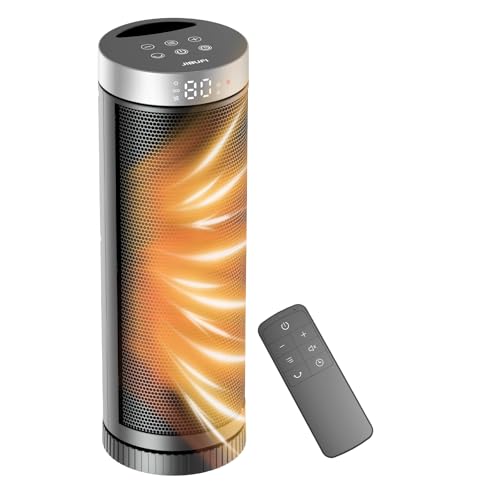
JIBUFI 17 Inch Space Heater 1500W with Timer

Amazon Basics Ceramic Space Heater 1500W

DREO Space Heater 1500W Portable with Remote
How to Choose a Space Heater for Bedroom Safety

The safest bedroom space heaters combine multiple protective features designed to prevent accidents and injuries while you sleep or relax. Tip-over switches are crucial—they cut power instantly if the heater falls, stopping fires before they start. Most models built for bedrooms include this feature.
Cool-touch exteriors are another key safety element. Even if the heater runs at high temperatures inside, the outside should stay safe to touch. This lowers burn risks for seniors, children, or pets who might brush against the unit.
Child locks prevent kids from turning the heater on or changing settings accidentally. This is essential in family bedrooms or any space children share. Overheat protection also stops the heater from running too hot, which could cause damage or fire.
Look for space heaters that are ETL or UL certified. Those marks mean the model has passed rigorous safety tests and complies with national electrical safety standards. Certification is the most reliable sign a heater is safe for indoor bedroom use.
Seniors and anyone sensitive to heat should prioritize heaters with precise thermostats and cool-touch surfaces. Electric resistance heaters are generally safe when equipped with these features. Avoid heaters without tip-over switches or with exposed heating elements.
 Winter Heating Bill CutterSee what every heater in your home really costs, heat the rooms you use, and cut the waste in 30 days.Cost-per-hour tables for every heaterThermostat schedule and draft-proofing planRunning-cost and bill calculator (Excel)
Sizing and Running Costs for Bedroom Space Heaters
You size a bedroom heater by the room’s square footage and your insulation quality. For a typical 150 sq ft bedroom, a 1,000-1,500 watt heater works well. The wattage converts to BTUs by multiplying watts by 3.41, so 1,500 W equals about 5,115 BTUs. That covers a small to medium bedroom efficiently without overspending on energy.
Running costs depend on wattage, hours used, and electricity price. A 1,500 W heater running 8 hours at 17 cents per kWh uses 12 kWh (1,500 ÷ 1,000 × 8), costing about $2.04 per night. Using a lower setting or heater with an eco mode reduces this cost. Remember, space heaters supplement your main heating, not replace it.
Programmable thermostats save energy by maintaining a steady temperature and turning the heater off when the room reaches the set warmth. This prevents wasted power from overheating the space and running all night unnecessarily.
Smaller heaters with multiple heat levels offer flexible warmth and efficiency. You can dial down the power when you only need a little heat, reducing electricity use. Some models also combine convection and radiant heat to warm quickly and evenly.
When choosing a small space heater, confirm its wattage and thermostat controls match your bedroom’s size and your comfort preferences. Energy efficiency depends more on how you use the heater than the type—it’s about controlling runtime and temperature precisely.
For most bedrooms, a heater rated for 1,000 to 1,500 watts with an adjustable thermostat and timer is the best balance of comfort and running cost.
Programmable features can cut costs significantly over the heating season by avoiding unnecessary runtime. That’s why many bedroom-safe heaters emphasize these controls alongside safety features.
Choosing the right size heater ensures you don’t waste energy heating beyond the room’s needs or struggle with inadequate warmth, which leads to running the heater longer and using more power.
For more on how to match heater wattage to room size and save on electricity bills, see best heaters for bedrooms.
Why Quiet Operation Matters for Bedroom Comfort
Quiet operation matters because loud heaters can disturb sleep or concentration. Ceramic heaters with PTC elements and oil-filled radiators typically run under 50 decibels, about the sound of a quiet conversation. Fans and oscillation add noise, so models with adjustable fan speeds or fan-off modes help keep noise down.
Many ceramic heaters rely on a fan to move warm air, which produces a noticeable humming sound. It’s usually around 40 to 50 decibels, enough to be distracting if you’re a light sleeper. Models using brushless DC motors cut that fan noise significantly, running much quieter without losing airflow.
Oil-filled radiator heaters have no fan at all, so they operate in near silence. They warm the room more slowly by radiating heat from the hot metal fins. If you want peace and quiet, oil-filled radiators are often the best bet, especially if you’re fine with a gradual warm-up.
Oscillating heaters spread heat more evenly by slowly turning side to side, but the oscillation motor adds extra noise. That can push the sound level above 40 decibels, which some find disruptive during deep sleep phases.
The best bedroom space heaters quiet enough for most sleepers rely on brushless motors or are oil-filled radiators. A model like the DREO Quiet Space Heater strikes a balance with near-silent operation and effective heat output. When noise matters most, look for manufacturer noise ratings or user reviews before you buy.
Placement and Use Tips to Maximize Safety in Bedrooms
Place your heater on a flat, stable surface away from foot traffic and flammable materials. Keep at least 3 feet clearance around it. Avoid blocking vents or air intakes to maintain airflow and safety. In bedrooms, position the heater so it warms the area you occupy most without blowing directly on bedding or curtains.
Never plug space heaters into extension cords or power strips. Those can overheat and cause fires. Always plug the heater directly into a wall outlet rated for the heater’s amperage to handle the load safely.
Tip-over protection is crucial for bedrooms. It shuts off the heater if it falls, reducing fire hazard. Still, don’t leave a space heater running unattended while you sleep unless the manufacturer specifically says it’s safe for overnight use with built-in safety features.
Avoid placing heaters in humid areas like bathrooms unless the heater is rated for wet locations. Moisture and electricity don’t mix well and can cause electrical hazards or damage the unit.
Position your heater on a stable, level surface to prevent tipping. Keep it away from high-traffic areas or places where pets and kids can knock it over. A remote control helps you adjust settings without approaching the heater, adding a layer of safety.
If your bedroom is small, a compact heater with automatic shutoff features is best. That keeps the risk low and the heat focused without wasting energy or compromising safety.
Bedroom Heater Safety Details Often Overlooked
Tip-over switches cut power if the heater falls, preventing fires. Overheat protection shuts the unit off if internal temperatures get too high. Check if your heater has these features and test them regularly. Never use extension cords or power strips with space heaters; plug directly into a wall outlet rated for the heater’s amperage.
Ventless gas or propane heaters have no place in a bedroom, even when labeled for indoor use. They consume oxygen, release water vapor and combustion byproducts, and raise carbon monoxide risk in a closed room where you sleep for eight hours. FEMA’s heating fire safety guidance is clear: turn space heaters off when leaving the room or going to bed, and never use fuel-burning models where ventilation is poor. If you want backup heat during a power outage, choose a battery-powered electric blanket or a vented unit installed by a professional.
Lights on displays that stay bright all night can disrupt sleep for people sensitive to light. Many heaters don’t offer a way to dim or turn off these lights, which can be a problem in bedrooms. Look for models where the display either dims or switches off after a short period. Covering the lights with tape works but shouldn’t be necessary for heaters designed specifically for bedroom use.
Surface temperature separates a safe bedroom heater from one that brands bedding or burns a toddler’s hand. Look for models rated cool-touch or those that stay below 160°F on the exterior during continuous high-heat operation. Cool-touch exteriors let you move the heater mid-cycle without gloves and reduce fire risk if curtains or laundry land against the grille.
Certification marks — UL, ETL, CSA — mean the heater passed flammability and electrical safety tests conducted by an independent lab. A heater without one of those marks may work fine for a season, or it may short out, melt its own housing, or fail to shut off when tipped. Cheap imports skip testing to cut costs; the $15 difference buys components and a shutoff mechanism that actually function under stress.