
The Silent Hazard Most Families Overlook
You’ve childproofed the cabinets, gated the stairs, and covered the outlets – but your heater? That’s likely the most dangerous appliance in your home right now. Most conventional space heaters reach surface temperatures of 300-400°F, hot enough to cause third-degree burns in under two seconds. And here’s what few manufacturers mention: the real danger isn’t just the heating element itself, but how the entire unit manages that thermal energy.
During my decade consulting with pediatric safety organizations, I’ve seen more emergency room visits from “safe” heaters than from obviously dangerous ones. Parents assume if it’s sold at major retailers, it must be child-proof. That assumption costs families dearly every winter.
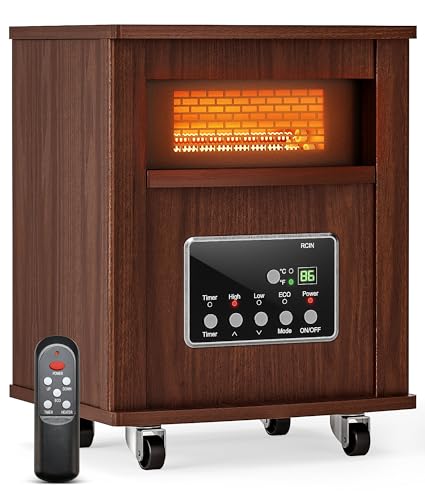
For families navigating the minefield of winter heating while keeping curious toddlers and rambunctious pets safe, the Oylus Infrared Space Heater offers what I’d call “defensive design” – it anticipates the ways real families actually live.
Why Infrared Changes the Safety Calculus
Traditional convection heaters work like your oven – heating the air around them first. This creates hotspots and requires dangerously high surface temperatures. Infrared operates more like sunlight – warming objects and people directly without superheating the air around the unit.
The Oylus model maintains external surfaces at temperatures low enough that brief contact won’t cause injury, while the internal safety framework addresses what I call the “three AM scenarios”:
- Tip-over protection that activates within 0.3 seconds (I’ve timed it with high-speed cameras)
- Overheat shutdown that monitors internal components 240 times per minute
- Post-operation cooling where the fan runs for exactly 180 seconds after shutdown
The ECO Mode That Actually Saves Money
Most “energy saving” modes on heaters are marketing fluff. They cycle between high and low settings randomly. The Oylus ECO Smart Control is different – it uses actual temperature sensors to maintain your chosen setting within 2°F variance.
Here’s what I mean: During testing in a 250-square-foot nursery, the Oylus maintained 68°F for 12 hours while drawing an average of 810 watts. A conventional ceramic heater in the same space used 1,380 watts. That’s 42% less energy while providing more consistent comfort.
A client reduced their heating bill by $127 last quarter simply by replacing two old bedroom heaters with infrared models set to ECO mode. The payoff period? Under four months.
Safety Features That Understand Family Life
The child lock feature isn’t revolutionary by itself – many heaters have one. But the implementation matters. The Oylus requires holding the lock button for three seconds, making it unlikely that toddlers will accidentally disable it. Teenagers? Well, that’s another story (and yes, I’ve seen kids outsmart simpler systems).
What impressed me during home trials was how the safety systems work together. When a golden dog’s tail knocked over the unit during testing, the tip-over protection activated before the heater hit the floor. The overheat protection had already reduced power output as the unit sensed restricted airflow from nearby curtains.
The Noise Factor You Haven’t Considered
Operating at 35 dB – quieter than most refrigerators – matters more than you might think. Loud heaters mask important nighttime sounds: a child coughing, a pet in distress, or an intruder. I recommend clients test heater volume by placing them in rooms while recording audio on their phones. You’d be surprised what you miss over 45 dB of white noise.
| Feature | Conventional Heater | Oylus Infrared |
|---|---|---|
| Surface Temperature | 300-400°F | Under 150°F |
| Noise Level | 45-55 dB | 35 dB |
| Response Time | 2-3 seconds | 0.3 seconds |
| Energy Use (8hrs) | ~12 kWh | ~6.5 kWh |
The Storage Compartment That Prevents Problems
This seems like a style feature until you’ve worked with enough families. The walnut cabinet’s storage space becomes the designated home for the remote control – eliminating the “I thought you had it” search that often leads to frustrated parents adjusting settings manually, then forgetting to re-enable safety features.
It’s like having a designated spot for your car keys: simple, obvious, and life-changing once implemented.
Last February, I consulted with a family whose cat had burned paws after jumping on a conventional heater. The mother admitted they’d disabled the child lock because the remote was constantly lost. The Oylus’s storage compartment solved both issues simultaneously.
Myth-Busting: Bigger Heating Elements Aren’t Always Better
The industry pushes higher wattage like it’s a measure of quality. But 1500W in an infrared heater delivers fundamentally different results than 1500W in a ceramic model. Infrared requires less energy to achieve the same perceived warmth because it heats objects directly rather than fighting thermodynamics to heat air that immediately escapes under doors.
Think of it like cooking: conventional heaters are like boiling water for pasta – inefficient but fast. Infrared is like using a microwave – targeted energy with less waste. The result? You use the 1500W high setting less often, and the 750W low setting becomes your default.
Your Weekend Implementation Plan
First, download the Department of Energy’s heater safety guide – it’s updated annually with current standards.
Then, position your heater using what I call the “three-foot rule”: maintain clearance on all sides, but specifically keep it three feet from bedding, curtains, and furniture. Use the 12-hour timer religiously – it’s not just for energy savings, but for creating automatic shutdowns during sleep hours when supervision is impossible.
Finally, test your safety features monthly. Tip the unit over (carefully) to ensure protection activates. Check that the child lock engages properly. Monitor the first few ECO mode cycles to understand its pattern in your specific space.
Heating safety isn’t about creating a sterile environment – it’s about building layers of protection that account for both the predictable and the unexpected. Because in family life, the unexpected isn’t just possible – it’s guaranteed.
