
Selecting the right portable propane heater can be the difference between a productive job site and a shivering crew, or a comfortable camping trip and a frigid night. Two brands consistently dominate this conversation: Mr. Heater and DEWALT. Each brings a distinct philosophy to the table, targeting slightly different needs within the broad categories of workspace heating and construction site heater applications. This head-to-head analysis cuts through the marketing to compare their flagship forced-air models based on real-world specifications and performance.
We’re focusing on two powerful contenders: the Mr. Heater 60,000 BTU Forced Air Propane Space Heater and the DEWALT 70,000-BTU Outdoor Portable Forced Air Propane Heater. While both are designed for serious heating, their approaches to fuel delivery, control, and portability reveal key distinctions. Understanding these differences is critical for making an informed purchase, whether your priority is raw power for a barn or flexible operation on a remote site.
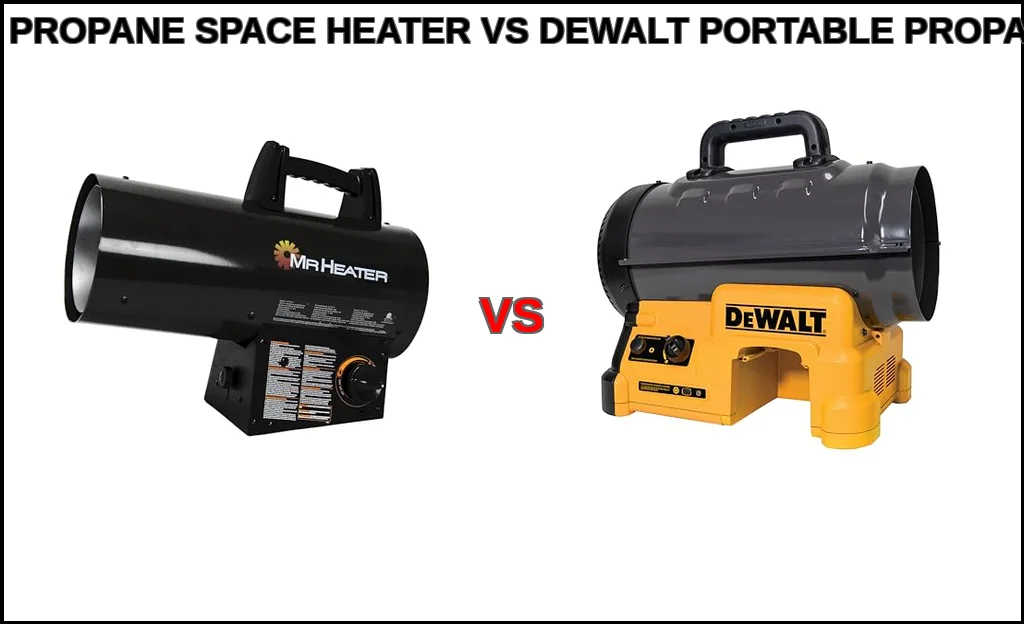
Head-to-Head Comparison: Key Specifications
Before diving into nuanced performance, a side-by-side look at the core specs establishes a baseline. This propane heater comparison starts with the numbers that define their capability.
| Feature | Mr. Heater 60,000 BTU | DEWALT 70,000 BTU |
|---|---|---|
| BTU (British Thermal Unit) Output | Variable 30,000 – 60,000 BTU | 70,000 BTU/HR |
| Max Heated Area | Not Specified | Up to 1,750 sq ft |
| Ignition Type | Not Specified | Push-Button (Battery-Assisted) |
| Fuel Hose Included | Yes, 10 ft. hose and regulator | Not Specified |
| Runtime Per Tank | Not Specified | Up to 6 hours |
| Handle Design | Large glove-friendly handle | Ergonomic handle |
| Special Features | Adjustable heating angle | Quiet Burn technology, Cordless battery capability (20V MAX) |
| Check current price on Amazon | Check current price on Amazon |
The table immediately highlights a fundamental divergence. The Mr. Heater offers variable output, a significant advantage for fuel management and temperature control. The DEWALT provides a higher maximum output and quantifies its coverage area, appealing to those needing to heat large, open spaces quickly.
Performance & Heating Capacity Analysis
Raw BTU output is just one part of the performance story. How that heat is delivered and controlled matters immensely for efficiency and comfort.
Heating Power and Control
The DEWALT model delivers a formidable 70,000 BTU/HR, claiming to heat areas up to 1,750 square feet. This makes it a powerhouse for large workshops, construction zones, or agricultural buildings. Its “Quiet Burn” technology suggests a focus on reducing operational noisea valuable feature for enclosed spaces or longer durations.
Conversely, the Mr. Heater’s variable output, ranging from 30,000 to 60,000 BTU, provides superior versatility. You can dial down the heat for milder days or smaller spaces, conserving propane. The adjustable heating angle is a practical touch, allowing you to direct warmth precisely where it’s needed, whether at floor level or across a room. For a detailed look at other top performers, see our guide to the best portable propane heaters available.
Missing Entity Considerations: Noise and Altitude
Most portable propane heater reviews overlook two critical performance factors: noise level and altitude adjustment. The DEWALT explicitly mentions “Quiet Burn,” implying a lower decibel (dB) outputa major plus for indoor workshops or sites where communication is key. Neither product listing discusses altitude compensation. Propane heaters can run inefficiently or unsafely at high elevations; users in mountainous regions should verify this capability independently, as it impacts both performance and safety.
Safety Features & Certifications Compared
With any propane device, safety is non-negotiable. This is especially true when considering an indoor safe propane heater for spaces like a garage or workshop. Both brands have reputations to uphold, but their listed features tell different stories.
The provided data for these specific forced-air models does not list explicit safety features like an oxygen depletion sensor (ODS) or a tip-over safety switch. This is a crucial distinction from their smaller, radiant-style heaters like the Mr. Heater Buddy series, which are marketed for indoor use with such protections. Forced-air heaters of this size and output are typically designed for well-ventilated, industrial, or outdoor use.
- Mr. Heater’s description explicitly states it’s “Perfect for well ventilated construction sites, barn…” This is a clear indicator of its intended environment.
- DEWALT’s title labels it an “Outdoor Portable” heater, setting clear expectations.
Always look for relevant safety certifications like CSA certification. More importantly, never use a heater not explicitly rated for indoor use in an enclosed space due to the risk of carbon monoxide (CO) poisoning. Proper ventilation is mandatory. For heaters built with indoor safety in mind, explore our curated list of the best portable indoor propane heaters.
Addressing the Carbon Monoxide Question
A major missing entity in most comparisons is specific Carbon Monoxide (CO) output data. While proper use in ventilated areas mitigates risk, consumers have no way to compare the low-emission performance of one model against another. This data gap places the onus on the user to follow all safety guidelines rigorously. The official source for workplace safety standards provides essential context for managing environmental risks on job sites.
Portability, Design & Ideal Use Cases
Portability isn’t just about weight; it’s about how easily you can move, set up, and power the unit. This is where the Mr. Heater vs DEWALT debate gets interesting, as their designs cater to different workflows.
Physical Design and Handling
Both units prioritize transport. Mr. Heater uses a “large glove-friendly handle,” ideal for workers wearing thick gloves in cold conditions. DEWALT employs an “ergonomic handle,” which may focus on balanced, comfortable carrying. The Mr. Heater includes a 10-foot hose and regulator, meaning it’s essentially ready to connect to a propane tank right out of the boxa significant convenience.
The Cordless Advantage
DEWALT’s most innovative feature is its “corded or cordless capabilities,” operating with a 20V MAX battery (sold separately). This is a game-changer for true portability. Imagine heating a remote section of a site without a generator, or providing quick heat in a location without accessible power. It transforms the heater from a stationary appliance into a truly mobile tool. For a camping heater scenario where power is absent, this feature, while likely overkill for a tent, could be invaluable for heating a large canopy or shelter.
Defining the Ideal User
So, which is better Mr. Heater or DEWALT propane heater for garage? If your garage is well-ventilated and you value variable heat control and a complete kit (hose included), the Mr. Heater is a strong contender. However, for pure, cordless flexibility in a large space, the DEWALT is unique.
- Choose the Mr. Heater 60,000 BTU for: Variable heat control, projects where a power outlet is available, users who want the hose and regulator included, and directed heat via its adjustable angle.
- Choose the DEWALT 70,000 BTU for: Maximum heating power for very large areas (1,750 sq ft), job sites without readily available electricity, and integration with the DEWALT 20V battery ecosystem for ultimate tool-free portability.
Fuel Efficiency, Runtime & Value Analysis
Long-term cost isn’t just the sticker price; it’s the cost of operation. Fuel efficiency and runtime determine how often you’ll be swapping heavy propane tanks.
Runtime and Efficiency Insights
The DEWALT provides a specific runtime figure: up to 6 hours on a single tank at its maximum 70,000 BTU output. This is a concrete data point for planning. The Mr. Heater does not list a runtime, but its variable burner is its primary efficiency feature. By running at 30,000 BTU instead of 60,000 BTU, you could theoretically double your runtime, making it a potentially most fuel efficient portable propane heater for camping or long-duration work if used on the lower setting.
Without standardized efficiency ratings, comparing them directly is challenging. The higher-output DEWALT will consume fuel faster at full blast. The Mr. Heater gives you the tool to manage that consumption actively.
Price & Final Recommendation
Value is measured in capability per dollar. The Mr. Heater often presents a lower initial cost and includes the necessary hose and regulator, providing excellent out-of-the-box value. You’re paying for a straightforward, powerful, and adjustable heat source.
The DEWALT commands a premium for its higher peak output, innovative battery option, and stated quiet operation. You’re investing in maximum power, cordless freedom, and a feature set designed for professional, mobile use. It’s a strong candidate for the best job site heater where flexibility is paramount.
The Final Verdict:
Your specific need dictates the winner in this propane space heater buying guide showdown.
- For Controlled Power and Complete Kits: The Mr. Heater 60,000 BTU is your best bet. Its variable output is a major advantage for fuel efficiency and comfort control in a variety of well-ventilated settings, from workshops to barns. The included hose makes it ready to run immediately.
- For Maximum Power and Cordless Freedom: The DEWALT 70,000 BTU is the superior tool. If you need to heat a very large area fast, operate far from power outlets, or value integrated battery tool systems, its unique feature set justifies the investment. It’s built for the most demanding, mobile professional environments.
Always prioritize the stated use case. Neither of these forced-air giants is a replacement for a properly certified indoor radiant heater. Assess your space, your power access, and your need for heat modulation. Both are exceptional tools, but they excel in different chapters of the same manual.
