Skip to content

Expert home heating guides, reviews & repairs

Heater GuidesHeaterGuides
Filter Replacement

Dirty HVAC Filters: Hidden Costs & Health Risks

You probably changed your air filter the day you moved in, then forgot it existed. That’s normal. But three months later, your energy bill creeps up, the bedrooms feel stuffy, and someone in the house keeps sneezing. The filter you ignored is the common thread.

This article walks through the dirty HVAC filter problem as a risk audit. You’ll learn exactly what a clogged filter does to your wallet, your equipment, and your family’s respiratory health. We’ll cover the physics of airflow, the real dollar figures, and a replacement schedule that actually fits your life. You’ll walk away knowing how to spot trouble early and fix it in five minutes.

Amazon Basics

Amazon Basics 14x20x1 Air Filter, MERV 8…

  • ENHANCED AIR QUALITY: Merv 8 rating air filters effectively captures household irritants like lint, dust, and pollen, to help prov…
  • ENHANCED AIR QUALITY: Merv 8 rating air filters effectively captures household irritants like lint, dust, and pollen, to help prov…
  • DURABLE CONSTRUCTION: Made with a beverage board frame and wire mesh support, this home air filter provides reliable, long-lasting…

If you need a solid baseline filter right now, the Amazon Basics 14x20x1 MERV 8 filter is a reasonable starting point. It captures lint, dust, and pollen down to 3 microns, and the six-pack covers a year of regular changes. It’s not the fanciest filter on the market, but it’s a dependable default for most homes.

dirty hvac filters hidden costs health risks

The Silent Saboteur: Why Your Filter Matters More Than You Think

Your HVAC filter has one job: protect the equipment from debris. It also cleans the air you breathe, but that’s a side benefit. The filter sits between the return duct and the blower. Every particle that enters your system must pass through it.

When that filter clogs, the blower has to work harder to pull air through. Think of breathing through a straw. A clean straw takes little effort. A straw clogged with peanut butter makes your lungs strain. Your blower motor is doing the same thing, and it’s not built for that kind of abuse.

Most people assume a dirty filter only affects air quality. In reality, it’s a mechanical problem first. The increased resistance changes the pressure inside your ductwork, which we’ll dig into shortly.

The Hidden Health Costs: More Than Just Allergies

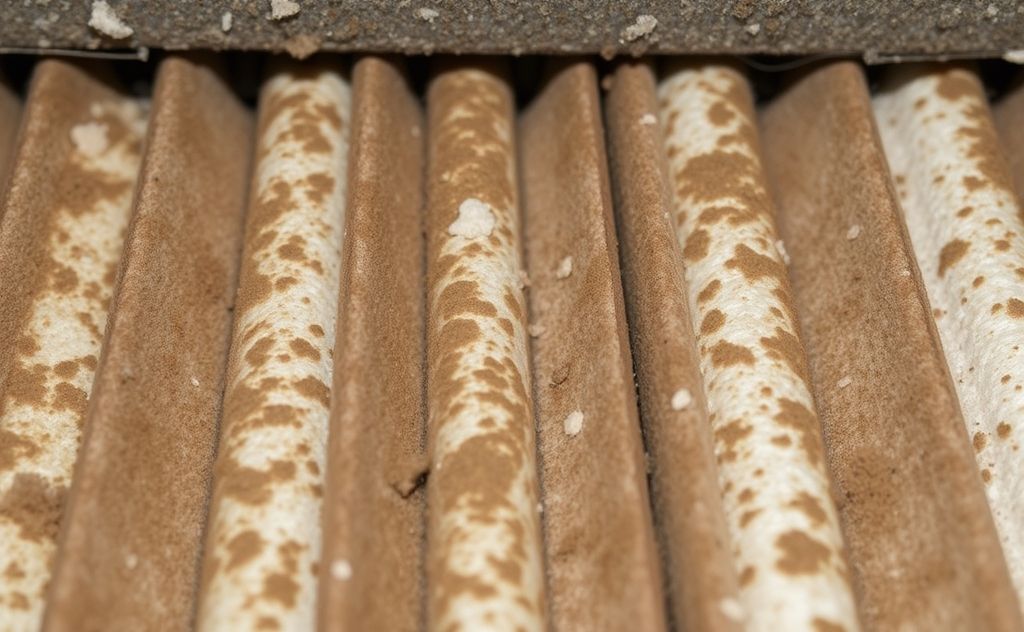
Indoor air quality drops fast when your filter is saturated. The filter stops trapping particles and becomes a source of them. Dust, pet dander, pollen, and skin flakes accumulate on the media, then get blown back into your living space when the blower cycles on.

For healthy adults, that means a runny nose and itchy eyes. For children, the elderly, or anyone with asthma, the consequences are more serious. A clogged filter allows allergens to circulate freely, which can trigger asthma flare-ups and allergy symptoms that linger for weeks. Studies consistently link poor filtration to increased respiratory irritation, especially during peak allergy seasons.

Mold, Bacteria, and the Dirty Sock Syndrome

Here’s the part nobody mentions: moisture. Your evaporator coil gets cold during cooling season, and condensation forms on it. That moisture drips into the drain pan, but it also raises the humidity inside the air handler. A dirty filter restricts airflow so much that the coil stays colder than designed, which means more condensation.

That damp, dark environment is a breeding ground for mold and bacteria. When the system turns on, you get that musty, sour smell that technicians call dirty sock syndrome. Mold growth on the coil isn’t just unpleasant. Spores get distributed through the ducts, and mold exposure can cause headaches, fatigue, and respiratory infections in sensitive people.

The Unexpected Link to Carbon Monoxide Safety

This one surprises most homeowners. If you have a gas furnace, a severely clogged filter can lead to incomplete combustion. The blower pulls less air through the heat exchanger, which changes the oxygen supply to the burner. When combustion is starved for air, the flame produces more carbon monoxide than it should.

Carbon monoxide is colorless and odorless. Low-level exposure causes flu-like symptoms that people dismiss. High levels can be fatal. Dirty HVAC filters aren’t the leading cause of CO poisoning, but they’re a preventable contributing factor. If your carbon monoxide detector sits near the furnace, check it regularly. And never run a gas furnace with a filter so clogged that you can see visible dirt through the media.

The Financial Drain: Calculating the Real Price of Neglect

Let’s talk dollars. A pack of basic filters costs $15 to $30. A new blower motor costs $400 to $800 installed. A compressor replacement runs $1,500 to $2,500. The math is not subtle.

Energy Waste: The 5-15% Rule

Industry data shows that a dirty filter can increase your HVAC energy consumption by 5% to 15%. That doesn’t sound catastrophic, but it compounds. On a $200 monthly heating bill, a 10% waste costs you $20 per month. Over a four-month winter, that’s $80 wasted on nothing. Add summer cooling, and you’re throwing away $150 to $200 per year.

Here’s the kicker: the more clogged the filter gets, the worse the waste becomes. The efficiency loss isn’t linear. A filter that’s 50% clogged wastes less than one that’s 90% clogged. The last few weeks before you finally change it are the most expensive.

The $10,000 Compressor Failure (and Other Repair Bills)

Restricted airflow stresses the entire refrigeration cycle. The compressor has to work harder to move refrigerant, and it runs hotter than designed. Over a summer of continuous operation, that overheating causes premature wear. Compressor failure is the most expensive repair in residential HVAC, often exceeding $2,500 including labor.

Even before that catastrophic failure, you’ll see smaller bills. The blower motor bearings wear out faster. The capacitor that starts the motor fails more often. Service technicians will charge you a diagnostic fee just to tell you the filter is dirty. That fee alone often equals the cost of a year’s worth of filters.

One honest caveat: not every system failure traces back to the filter. But technicians consistently rank dirty filters among the top three causes of premature equipment failure. It’s the cheapest insurance you can buy for a $10,000 system.

The Mechanical Impact: How Clogged Filters Kill Your System

Your HVAC system is a closed loop of moving air. The blower pushes air through the ducts, and the return duct pulls it back. The filter sits in that return path, so it controls everything downstream.

The Static Pressure Problem: Straining the Blower Motor

Static pressure is the resistance to airflow in your duct system. A clean filter adds a small, designed amount of resistance. A clogged filter adds extra resistance the system wasn’t built for. The blower motor responds by drawing more current to spin faster, which generates more heat inside the motor windings.

That heat degrades the motor’s insulation over time. Eventually, the motor overheats and trips its thermal overload protector. The system shuts down, often in the middle of a heatwave. You reset it, it runs for a few hours, then trips again. That cycling is brutal on the motor and the control board. Replacing a blower motor is a $500 to $900 job.

Frozen Coils and Refrigerant Damage

In cooling mode, restricted airflow across the evaporator coil causes the coil temperature to drop below freezing. The condensation on the coil turns to ice. As ice builds up, it acts as an insulator, making the coil even colder. Eventually, the entire coil becomes a block of ice, and the system can’t cool your home at all.

Running the system with a frozen coil can slug liquid refrigerant back into the compressor. That’s a mechanical shock that can crack valves or break internal components. A compressor that suffers refrigerant slugging is usually toast. That’s the $2,500 repair we mentioned earlier.

You can spot a frozen coil by checking the large copper line running from the outdoor unit. If it’s covered in frost while the indoor unit runs, you have an airflow problem. Turn the system off immediately and let it thaw before changing the filter.

The Right Filter for the Right Job: MERV Ratings Explained

MERV stands for Minimum Efficiency Reporting Value. It’s a scale from 1 to 16 that measures how well a filter captures particles of different sizes. The higher the number, the finer the particles it catches.

Here’s the trade-off most people miss: higher MERV filters have denser media, which creates more airflow resistance. A MERV 13 filter catches more allergens, but it can restrict airflow enough to cause the same problems as a dirty filter. Your blower motor wasn’t designed for that extra drag.

MERV Rating Particle Size Captured Best For Airflow Restriction
MERV 1-4 Pollen, dust mites, sand Basic equipment protection Minimal
MERV 5-8 Mold spores, pet dander, lint Most homes; good balance Low to moderate
MERV 9-12 Fine dust, smoke, some bacteria Homes with allergy sufferers Moderate to high
MERV 13-16 Bacteria, smoke particles, virus carriers Hospital-grade; only if system supports it High; often requires ductwork upgrades

For a standard residential system, MERV 8 is the sweet spot. It catches the particles that cause allergies without choking your blower. If you have severe allergies, MERV 11 or 12 might work, but check your furnace manual first. Many manufacturers void warranties if you use filters above a certain MERV rating. The role of filters in HVAC function goes deeper than most homeowners realize.

Your Dynamic Replacement Schedule: A Seasonal Checklist

The old advice says change your filter every 90 days. That’s a starting point, not a rule. Your actual schedule depends on your home and lifestyle.

  • One person, no pets, no allergies: Every 90 days during peak seasons, every 6 months otherwise.
  • Two people, one cat or dog: Every 60 days. Pet dander and fur clog filters fast.
  • Three or more people, or anyone with asthma: Every 30 to 45 days.
  • Wildfire smoke or heavy construction nearby: Check monthly. Smoke particles are fine and load filters quickly.
  • Spring and fall: Change before you switch between heating and cooling. Pollen and leaf debris are heavy in spring.

Here’s a practical trick: write the date on the cardboard frame of the new filter with a marker. You’ll never wonder when you installed it. If you want a digital reminder, set a recurring calendar event. Smart home hubs can also remind you, but a simple calendar works fine.

If you’re weighing options, the debate between washable vs disposable filters comes down to convenience versus maintenance. Washable filters save money over time but require thorough drying to prevent mold. Disposable filters are simpler and more consistent.

The 5-Minute Action Plan: What to Do Right Now

If you suspect your filter is clogged, don’t wait for a technician. Do this now.

  1. Turn off the system. At the thermostat, set it to Off. This prevents further strain on the blower.
  2. Locate the filter. It’s either in the return air grille, the air handler cabinet, or a slot near the furnace. Slide it out.
  3. Hold it up to a light. If you can’t see light through the media, it’s clogged. If you can, check for visible dust buildup and dark spots.
  4. Replace it with the correct size. The size is printed on the cardboard frame. A 14x20x1 filter is actually 13.75 x 19.75 x 0.75 inches. Don’t force a slightly larger filter into the slot.
  5. Check the heat exchanger. If your filter was severely clogged, look at the burner flames on your gas furnace. A healthy flame is blue. A yellow, flickering flame means incomplete combustion. Call a professional immediately if you see that.
  6. Reset the system. Turn the thermostat back on and listen for smooth airflow. If you hear whistling or rattling, the filter may be installed backward. The arrow on the frame should point toward the blower.

That’s the entire protocol. It takes longer to read than to do. If you’ve been neglecting your filter for months, the improvement in airflow will be noticeable within minutes.

For a deeper look at how clean filters reduce long-term repair costs, check this breakdown on clean systems and repair costs. The data is compelling.

What Actually Matters: Your Takeaway List

  • Change your filter every 30 to 90 days, depending on pets, occupants, and seasonal conditions. Write the date on the frame.
  • Use MERV 8 for most systems. Higher ratings restrict airflow and can cause the same damage as a dirty filter.
  • A dirty filter raises energy use by 5-15%. That’s $150 to $200 a year wasted in a typical home.
  • Blower motor replacement costs $500 to $900. Compressor failure runs $2,500 or more. Both are preventable with a $20 filter.
  • If your system freezes up or your furnace flame turns yellow, turn the system off and call a technician.
  • Check your carbon monoxide detector monthly, especially if you have a gas furnace. A clogged filter can contribute to incomplete combustion.
  • Keep a spare filter in the house. When you change one, buy the next pack so you’re never tempted to run the system without a filter.
Share
Written by Joye

I am a mechanical engineer and love doing research on different home and outdoor heating options. When I am not working, I love spending time with my family and friends. I also enjoy blogging about my findings and helping others to find the best heating options for their needs.

Keep reading

Related guides

Free newsletter

Heater deals and guides, worth opening

Price drops, new guides and safety recalls. One email, only when it matters.

No spam. Unsubscribe in one click. Privacy policy.