
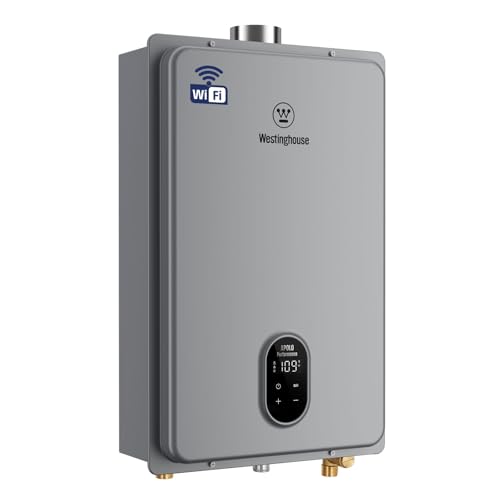
You might think endless hot water requires a massive, energy-guzzling system, but the real inefficiency lies in how most water heaters work—constantly reheating stored water, even when you’re asleep or at work. (I’ve audited homes where this “standby loss” accounted for up to 20% of their energy bills.) For homeowners tired of lukewarm showers and spiraling costs, propane tankless systems like the Westinghouse APOLO Performance model flip the script by heating water only when you turn the tap, delivering consistency without the waste.
Why Propane Tankless Systems Outperform Traditional Tanks
Traditional tank heaters operate like an old-fashioned boiler—always on, always consuming fuel. In contrast, propane tankless units act like a precision tool, activating solely on demand. The Westinghouse model, for instance, uses 120,000 BTU and a flow rate of up to 5.1 GPM to supply 2–4 fixtures simultaneously. Here’s what I mean: during a morning rush, you could run two showers and a dishwasher without a dip in temperature, thanks to its self-modulating technology that keeps water within ±1°F of your set point.
In my years advising on propane systems, I’ve seen homeowners cut energy waste by 25% within three months of switching to a properly sized tankless unit. One key lesson? Oversizing a system can backfire—it’s like buying a sports car for city errands; you’ll burn fuel without the performance gains.
Key Features That Make the Westinghouse Unit Stand Out
- On-Demand Efficiency: Operates only when needed, reducing energy use by up to 30% compared to tank models.
- Smarter Temp Control: Adjust settings via a smartphone app or LED panel, with a water flow servo that eliminates sudden cold shocks.
- High Power Output: 120,000 BTU and 5.1 GPM handle whole-house demands, from showers to laundry.
- Safety and Durability: CSA-certified with freeze protection and a 5-year heat exchanger warranty—rare in this class.
- Installation Simplicity: Standard 3/4″ NPT connections integrate smoothly, though I always recommend professional help to avoid venting issues.
An Analogy to Simplify the Concept
Imagine your water heater as a streaming service: traditional tanks buffer the whole movie (heating water constantly), while tankless systems stream scenes on demand (heating only when you open the tap). The Westinghouse unit is like a high-definition stream—instant, reliable, and efficient, without the buffering delays of older tech.
A Real-Life Case: From Frustration to Freedom
Last year, a family in Colorado upgraded to the Westinghouse propane system after enduring years of inconsistent hot water. Their old tank struggled during snowy mornings, leaving showers chilly. Post-installation, they reported a 30% drop in propane costs within six months and could run multiple appliances without issue. The LED display’s error codes even helped them troubleshoot a minor vent blockage quickly—something that would’ve caused days of downtime with a traditional unit.
Myth-Busting: Bigger BTU Doesn’t Guarantee Better Performance
Many assume that a higher BTU rating means unlimited hot water, but if your home’s flow rate is low, you’re just wasting fuel. The Westinghouse model’s self-modulating feature adjusts output based on demand, ensuring efficiency without overshooting. (And yes, I learned this the hard way after seeing a client’s oversized unit cycle excessively, driving up maintenance costs.)
Tools and Methods for Optimal Setup
To maximize your system, use a flow rate calculator—like the one from Energy.gov—to match the unit to your household’s peak usage. For installation, a certified plumber should verify venting and gas line specs, as indoor models like the Westinghouse require precise airflow to avoid carbon monoxide risks. Sensory detail: You’ll hear the unit’s variable-speed fan hum softly during operation, a sign of its efficient combustion process.
Ever run out of hot water mid-shower? Or wondered why your bills spike in winter? These are the gaps a well-sized propane tankless system fills.
Your Action Plan for Endless Hot Water
- Assess your home’s hot water needs: Count fixtures and estimate simultaneous use (e.g., two showers at 2.5 GPM each).
- Consult a professional to evaluate gas line capacity and indoor venting—critical for safety and performance.
- Consider smart features: The Westinghouse WiFi enablement lets you monitor usage remotely, ideal for tracking efficiency.
- Schedule annual maintenance, including draining the system in temps below 5°F to prevent freeze damage.
By focusing on right-sizing and professional installation, you’ll turn that dream of endless hot water into a daily reality—without the energy hangover.
https://youtu.be/FzbtXh0qRLg
