

Your garage gym feels like an icebox, stalling workouts. A dedicated space heater solves this fast.
A garage gym space heater provides targeted warmth for comfortable winter training. Top models like the Dreo Space Heater and Shinic Ceiling Heater deliver efficient heat. They create a consistent environment for better performance.
The Dreo offers portable convenience with a digital thermostat. The Shinic system simplifies overhead radiant heating for large spaces. Both provide safe, adjustable warmth that simplifies your routine.
We break down heating speed, safety features, and installation to help you choose the right model for your gym.
Dreo Portable Heater Thermostat Remote

Tired of dreading your winter garage gym sessions because your old heater can’t cut through the cold? The Dreo Portable Heater fixes it with its powerful PTC ceramic system that delivers focused, far-reaching warmth in seconds.
Why It Works
- Hyperamic 1500W PTC system solves the problem of weak, localized heat by projecting warmth up to 200% farther, ensuring your entire workout area is comfortable.
- Precision thermostat with 1°F increments directly addresses temperature guesswork, letting you set and maintain the perfect, energy-saving heat level from 41°F to 95°F.
- Enhanced tilt-detection sensor and V0 flame-retardant materials target safety anxieties in a busy garage, providing reliable tip-over and overheat protection for peace of mind.
Trade-offs
- The premium feature set comes at a higher cost than basic models, but the investment buys superior safety engineering, precise control, and quiet operation that cheaper heaters lack.
The Dreo is worth it for the frequent home athlete who refuses to let the cold interrupt their routine. It transforms a chilly garage into a dedicated, comfortable training space you’ll actually want to use.
To buy this product, click here.
Dreo 1500W Oscillating Space Heater

Dreo 1500W Oscillating Space Heater: 1500W PTC ceramic heating, 70-degree wide oscillation, built-in thermostat with ECO mode, and multiple safety certifications including tip-over and overheat protection.
Benefits
- Heats a 270 sq.ft. garage corner in seconds thanks to the powerful ceramic element.
- The 70-degree oscillation spreads warmth 20% wider, so you’re not stuck in one hot spot between sets.
- It runs at a library-quiet 34dB, so it won’t drown out your workout playlist or podcast.
- The smart ECO mode is a real money-saver, automatically toggling between 1000W and 1500W to hold your set temperature without wasting energy.
Drawbacks
- The manufacturer explicitly warns against using any extension cord, which can be tricky in a large garage with sparse outlets.
- While portable, its effectiveness depends heavily on the room’s insulation; a drafty, high-ceiling space will challenge any heater.
A practical pick for warming up your dedicated home gym or workshop before you start moving. It tackles the chill quickly and efficiently so you can focus on your routine.
Check the latest price from here.
Shinic 2-Pack Garage Heater
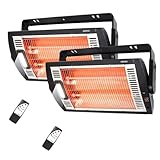
The Shinic 2-Pack Garage Heater is designed to provide targeted, efficient warmth in large, drafty spaces, making it an ideal space heater for garage gym, workshops, and patios. Its ceiling-mounted design with a 90-degree rotation saves crucial floor space while its dual 1500W/750W quartz tubes and integrated halogen work light tackle both heating and visibility issues.
Pros
- Exceptional Space Saving: Mounting on the ceiling completely frees up floor space, a major advantage for crowded garages or home gyms with equipment.
- Instant, Targeted Heat: The radiant quartz tubes warm people and objects directly, unlike cheaper alternatives that slowly heat the air, providing immediate comfort where you need it.
- Enhanced Usability: The remote control, 5 mode settings, and adjustable heating angle offer precise, convenient operation from anywhere in the room.
- Dual-Function Design: The bright halogen work light is a game-changer for evening projects or early morning workouts, eliminating the need for separate lighting.
- Robust Safety Features: With overheat protection, a grounded plug, ETL listing, and metal housing, this unit is built for safe operation in demanding environments.
Cons
- Permanent Installation Required: This isn’t a portable plug-and-play heater; it requires secure mounting to a ceiling or beam.
- Radiant Heat Limitation: It heats best within its direct line of sight. Areas behind large objects or outside its 90-degree arc will stay cooler.
The performance of this space heater for garage gym is impressive. The two-pack offers fantastic value for warming multiple zones. The heat feels direct and substantial, cutting through chilly air quickly during a workout. Its real strength is transforming an unusable cold space into a productive area year-round.
The Shinic heater delivers outstanding value for anyone needing reliable, hands-off warmth in a specific zone. It’s best suited for DIYers, fitness enthusiasts with a home gym, or workshop owners who want to reclaim their floor space and enjoy instant heat with the bonus of task lighting.
To get this product, click here.
Outdoor Electric Patio Heater

The adjustable power settings set this Outdoor Electric Patio Heater apart for garage gym use. With dimensions of 34 inches tall and a robust aluminum alloy frame, its 1500W carbon infrared heating element delivers targeted warmth.
Key Advantages
- Instant, focused heat from dual carbon tubes warms skin and objects directly without wasting energy on the air.
- IPX5 waterproof rating means it can handle sweat splashes and humid conditions without risk.
- Three precise power levels (600W/900W/1500W) allow for fine-tuned temperature control during any workout intensity.
- The inherent safety of electric infrared heat, with tip-over and overheat protection, makes it trustworthy for unsupervised spaces.
Limitations
- Not ideal for rapid whole-room heating; it excels at personal zone heating rather than quickly warming a large, cold garage from scratch.
- The power cord is 6.6 feet long, which may require an extension cord depending on your outlet placement.
This heater is best for garage gym enthusiasts who want immediate, silent warmth right where they’re lifting or training. Its durable, weather-resistant build handles the tough environment perfectly. While positioned at #4 in our ranking due to its specialized infrared approach, it’s a top-tier choice for efficient, personal spot heating.
To know more about this product, click here.
FAQ about Space Heaters for Garage Gyms:
1: What type of space heater is optimal for a garage gym?
Infrared or forced-air propane heaters are often superior for garage gyms due to their capacity to generate immediate, radiant warmth in large, uninsulated spaces efficiently.
2: How do I calculate the necessary wattage or BTU for my space?
Calculate the square footage of your garage and select a heater providing approximately 10 watts per square foot, or consult the manufacturer’s BTU recommendations for your specific area’s climate.
3: Are electric garage heaters safe to operate around exercise equipment?
Modern electric heaters with essential safety features—like tip-over protection, overheat sensors, and cool-touch exteriors—are generally safe, provided they have adequate clearance from equipment and flammables.
4: What are the primary ventilation requirements for fuel-based heaters?
Fuel-burning heaters, like propane models, mandate significant ventilation to prevent dangerous carbon monoxide accumulation, making a partially open door or installed vent system imperative.
5: Can a garage gym heater impact my electricity bill substantially?
Electric heater operation increases energy consumption markedly. Utilizing a programmable thermostat to heat the space only during workout sessions mitigates excessive expenditure.
Conclusion
The Dreo Space Heater with digital display offers precise thermal management and programmable convenience, ideal for maintaining a consistent workout environment. Its focused heating and compact design provide reliable, direct warmth for targeted areas within your training space.
Alternatively, the Dreo model featuring wide 70-degree oscillation ensures a more comprehensive distribution of heat, effectively tempering the entire room. This capability makes it a superior selection for larger garage gyms where uniform ambient temperature is paramount for comfort and performance.

I am a mechanical engineer and love doing research on different home and outdoor heating options. When I am not working, I love spending time with my family and friends. I also enjoy blogging about my findings and helping others to find the best heating options for their needs.
Related guides

Small Space Heaters for Desktops: Safe & Effective Picks
Ever feel a chill at your desk? Find the best desktop space heater to stay warm and productive…
Indoor Natural Gas Space Heaters Explained: Power, Venting & Safety
What's the best indoor heater for real warmth? Compare top natural gas space heater options for cozy, efficient…
Wireless Indoor Space Heaters: Convenience or Compromised Power?
Ever wish your heater could follow you? Our wireless indoor space heater guide finds the perfect cord-free warmth…
