
Most homeowners assume bigger tanks solve hot water shortages—but here’s the twist: oversized tanks waste more energy than they save. Traditional units keep 40-50 gallons heated 24/7, even when you’re at work or asleep. For families burning through hot water daily, that’s like leaving your car engine running all night just in case you need to drive.
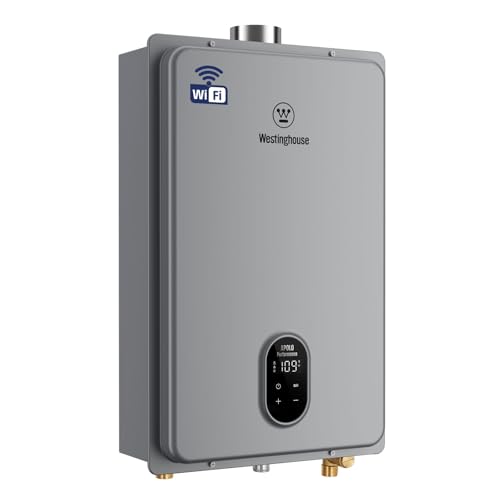
Here’s what I mean: A standard 50-gallon tank can leak $200+ annually in standby heat loss. I’ve watched clients scratch their heads over high propane bills until we swapped their clunky tank for an on-demand system. The Westinghouse Tankless Water Heater—with its 120,000 BTU output and 5.1 GPM flow—eliminates that waste by heating water only when you turn the faucet. No more preheating. No more energy drain.
Why Tankless Beats Tank for Busy Households
Large families aren’t just using hot water; they’re competing for it. Back-to-back showers, dishwasher cycles, laundry loads—it adds up. I’ve seen 6-person households exhaust a 80-gallon tank in under an hour. The result? Lukewarm showers and frustrated teens.
The Westinghouse APOLO Performance model changes that dynamic. Its 5.1 GPM output handles 2-4 fixtures simultaneously. Think: someone showering while the washing machine runs and the kitchen sink fills. The variable-speed fan adjusts propane combustion in real-time, so you get consistent temperature without spikes or drops.
In 2019, I worked with a family in Colorado Springs who tracked their hot water use for a month. Their old tank heater ran 6+ hours daily. After installing a tankless unit, runtime dropped to 90 minutes—cutting their propane consumption by 28% in one billing cycle. And yes, I learned the hard way that proper venting is non-negotiable for indoor units.
Features That Actually Matter for Daily Use
- On-Demand Efficiency: No standby loss. The unit ignites only when water flows, saving 15-20% on energy costs versus tanks.
- Smart Temperature Control: Adjust via app or LED panel. The flow servo holds water within ±1°F—crucial for avoiding toddler bath-time protests.
- Freeze Protection: Automatically activates below 5°F. (Drain the system during extended vacations, though. Trust me on this.)
One client compared it to upgrading from a dial-up modem to fiber-optic internet: both deliver data, but one does it instantly, efficiently, and without buffering. That’s the tankless advantage.
Industry Insights You Won’t Find in Manuals
After a decade in this field, here’s what most installers won’t tell you:
- GPM isn’t everything. A 5.1 GPM unit sounds impressive, but if your groundwater is 50°F, the temperature rise matters more. The Westinghouse handles a 70°F rise—enough for hot showers in most climates.
- Wi-Fi enablement isn’t a gimmick. I’ve helped families use the app to schedule high-demand periods (like weekday mornings), reducing strain on the system and extending its lifespan.
- CSA certification is your safety net. I’ve seen uncertified units fail within a year. Westinghouse’s 5-year heat exchanger warranty signals real durability.
Bigger doesn’t always mean better. A 200,000 BTU unit might seem superior, but it could short-cycle in a smaller home, wasting propane and wearing out components. The 120,000 BTU sweet spot fits most 3-5 bathroom homes perfectly.
A Real-World Turnaround Story
Meet the Davies family: two parents, three teenagers, one perpetually running dishwasher. Their 75-gallon tank wheezed through mornings, leaving the last shower-taker in cold misery. They called me in 2024, skeptical about tankless claims.
We installed the Westinghouse unit with standard 3/4″ NPT connections—a straightforward job for any licensed pro. Within a week, their propane usage dropped 22%. The LED display now shows real-time temperature readings, and the error code feature helped them troubleshoot a minor pressure issue without a service call.
The result? Simultaneous showers became routine. Their monthly energy bill shrank by $35-$40. And the gray finish? “Looks like something from a tech magazine,” Mrs. Davies told me.
| Feature | Traditional Tank | Westinghouse Tankless |
|---|---|---|
| Energy Use | Constant heating | On-demand only |
| Hot Water Output | Limited by tank size | Endless (up to 5.1 GPM) |
| Space Required | 16-20 square feet | 2-3 square feet |
Your Game Plan for Switching
Ready to ditch the tank? Start here:
- Audit your usage: Count how many showers, appliances, and sinks run concurrently during peak hours. (Hint: most families underestimate by 1-2 fixtures.)
- Consult a pro: Despite the “easy installation” claims, I always recommend hiring a technician for gas line and venting checks. Safety first.
- Prep your space: Ensure a 120V AC outlet is nearby—and clear area for the unit’s compact frame. That sleek design isn’t just for show.
For deeper research, the U.S. Department of Energy’s guide breaks down efficiency metrics better than any sales pitch.
So, will your next water heater be a energy-efficient propane tankless model? For large families, it’s not just an upgrade—it’s a lifestyle shift. One that pays for itself in warm showers and lower bills.
https://youtu.be/FzbtXh0qRLg
