

Extending your swimming season is a common goal for pool owners. An electric pool heater, like the BestTex 220-240V model, offers a straightforward solution. It’s a plug-and-play option for consistent warmth, bypassing the complexity of gas lines or the high upfront cost of a heat pump.
For smaller projects or targeted heating, like a spa or outdoor shower, a Portable Water Heater can be incredibly handy. It’s a versatile tool for on-demand hot water without permanent installation. But for your main pool, a dedicated unit like the BestTex is the way to go for reliable, whole-pool heating.
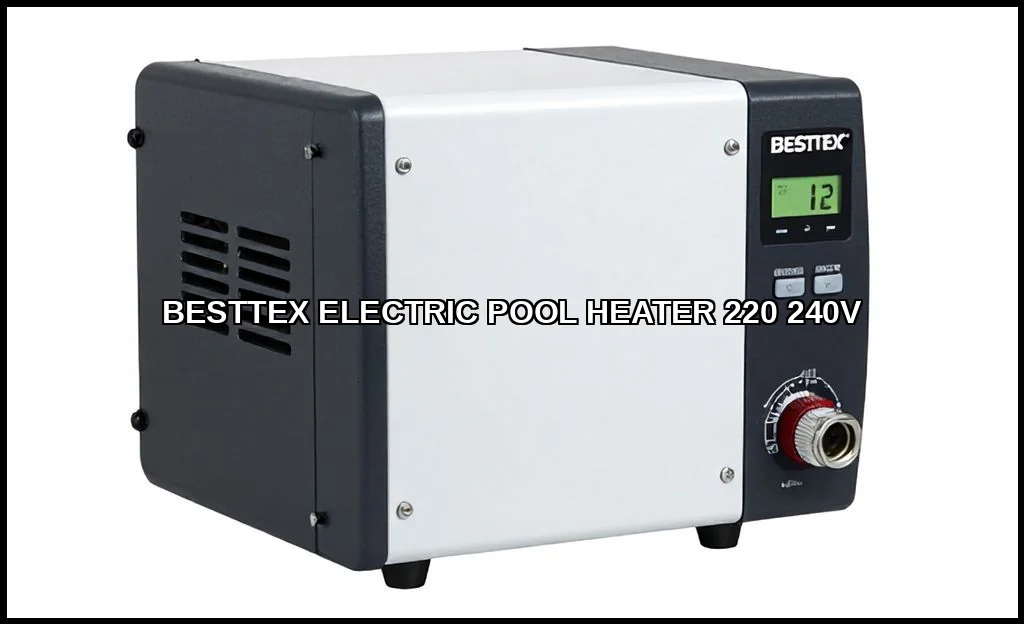
What is the BestTex 220-240V Electric Pool Heater?
This unit is an electric resistance pool heater. It uses a heating element, similar to a large kettle, to directly warm the water passing through it. Designed for 220-240V circuits, it’s a hardwired appliance meant for permanent installation. It’s a popular choice for its simplicity and relatively lower initial investment compared to other systems.
Think of it as the workhorse of electric heating. It doesn’t move heat like a heat pump; it creates it. This direct approach means it can heat water quickly, regardless of the outside air temperature. That’s a key difference from air-source heat pumps, which lose efficiency as the air gets colder.
Key Features and Technical Specifications
Understanding the specs is crucial for matching the heater to your pool. The kilowatt (kW) rating is the star of the showit dictates power and heating speed. Common BestTex models range from 3kW to 18kW. A higher kW rating heats faster but draws more current.
- Voltage & Amperage: Strictly 220-240V. You must verify your home’s electrical service can support the required amperage. A typical 11kW model needs about 48 amps. Always check the pool heater amperage on the unit’s data plate.
- BTU Output: This measures heating capacity. Electric heaters are often rated in kW, but you can convert (1 kW 3,412 BTU/hr). An 11kW unit outputs roughly 37,500 BTU. Compare this to gas heaters, which often start at 200,000 BTU.
- Construction: Look for corrosion-resistant materials like titanium or stainless-steel heating elements and a durable PVC or composite body. This is non-negotiable for constant water exposure.
- Safety Features: Built-in high-limit switches and flow sensors are standard. They shut the unit off if water flow stops or temperature gets dangerously high. GFCI protection is also a critical, often external, requirement for the circuit.
For a reliable hot water source elsewhere in your home, it’s worth reading about what makes a good traditional water heater. The principles of durability and efficient heat transfer apply across the board.
Installation Guide: Wiring, Placement, and Safety
Hardwired installation by a licensed electrician is not just recommended; it’s mandatory. This isn’t a plug-in appliance. The pool heater voltage requirements are specific and high-power. Incorrect wiring is a serious fire and shock hazard.
Step-by-Step Process
- Circuit & Breaker: Your electrician will run a dedicated circuit from your main panel. A common question is, what size breaker for BestTex 240v pool heater? For an 11kW unit, a 60-amp double-pole breaker is typical. The National Electrical Code (NEC) dictates this.
- Placement: Install the heater after the filter and pump, but before any chemical automation systems. It must be on a stable, level surface, protected from direct weather if possible. Allow ample clearance for airflow and service access.
- Plumbing: Use schedule 40 or 80 PVC. Include unions on both sides of the heater for easy removal. Install bypass valves if your system allowsthis lets you route water around the heater during maintenance.
- Wiring: The electrician will connect the dedicated circuit to the heater’s terminal block. A GFCI protection device, either a breaker or a disconnect box, is legally required within sight of the heater.
- Final Check: Once powered, the system must be purged of air. Water must flow freely through the heater before the element energizes. Most units have a flow switch that ensures this.
Performance: Heating Speed, Efficiency, and Operating Costs
This is where the rubber meets the road. How does it actually perform in your pool?
Heating Speed and Efficiency
Electric resistance heaters are 100% efficient at converting electricity to heat in the water. Every watt paid for becomes a watt of pool heat. Sounds perfect, right? The catch is the cost of that electricity. While efficient in operation, the source energy (electricity) is often more expensive per unit of heat than natural gas or propane.
Heating speed is linear. A smaller heater takes longer. You can estimate time using your pool’s volume and the heater’s BTU output. Expect a temperature rise of about 1-1.5F per hour for an average-sized pool with a mid-range unit.
Operating Cost Comparison
Let’s tackle the big question: is a BestTex electric heater more efficient than gas? In unit efficiency, yes. In cost efficiency, usually not. Gas heaters have lower operational costs in most regions because gas is cheaper than electricity per BTU. However, electric heaters have no venting requirements and lower maintenance.
Compare it to a heat pump, which can be 300-500% efficient by moving heat rather than creating it. For a detailed look at this technology, this authority guide from the DOE is an excellent resource. Heat pumps have higher upfront costs but much lower running costs in moderate climates.
| Heater Type | Upfront Cost | Operating Cost | Best For |
|---|---|---|---|
| BestTex Electric (Resistance) | Low | High | Smaller pools, spas, short-season extensions, areas with cheap electricity |
| Gas Heater (Natural Gas/Propane) | Medium | Medium-High | Fast heating regardless of air temp, larger pools, shorter heating periods |
| Heat Pump | High | Low | Long swimming seasons, mild climates, pools used regularly |
For consistent home hot water with similar efficiency logic, many turn to tankless systems. Exploring if a brand like navien is a good fit follows the same principle of weighing upfront cost against long-term performance.
Where to Buy and Final Recommendations
You can find BestTex heaters at major online pool supply retailers, specialty pool stores, and large home improvement centers. Always purchase from an authorized dealer to ensure warranty validity. Reading genuine BestTex heater reviews on these sites can reveal real-world performance nuances.
Making the Right Choice
So, is the BestTex 220-240V the right swimming pool heater for you? Consider this your buying guide.
- Choose it if: Your pool is small to medium (under 20,000 gallons). You have access to relatively inexpensive electricity (or solar). You value simple installation and low maintenance. You need a supplemental heater for a spa.
- Look elsewhere if: Your pool is very large. Your electricity rates are high. You live in a cold climate and want to heat often. You prioritize the lowest possible operating cost over the initial price.
Before finalizing, research BestTex pool heater troubleshooting common problems. Common issues often relate to error codes from flow switches or thermostat faultsusually simple fixes. Understanding these ahead of time sets realistic expectations.
The debate of electric vs gas pool heater isn’t about which is universally better. It’s about which is better for your pool, climate, budget, and usage patterns. The BestTex electric heater is a robust, simple tool. It excels in specific scenarios where its direct heating method and straightforward installation outweigh the higher cost per BTU. For many, that trade-off is absolutely worth it for those extra weeks of comfortable swimming.

I am a mechanical engineer and love doing research on different home and outdoor heating options. When I am not working, I love spending time with my family and friends. I also enjoy blogging about my findings and helping others to find the best heating options for their needs.
Related guides

The Hidden Gems of Gas Pool Heaters: 250,000 BTU Picks You’ll Love
Did you know that 80% of pool owners prefer the best gas pool heater 250,000 BTU for efficient…
Top Picks for the Hayward H250 Pool Heater Heat Exchanger You Didn’t Know You Needed
Frustrated with inefficient heating? The best Hayward H250 pool heater heat exchanger delivers warmth in no time. The…
Top 5 Raypak Pool Heaters That Will Transform Your Swimming Experience
70% of pool owners choose the Raypak pool heater for its reliability and efficiency. That’s why the Raypak…