For most readers choosing a stove to warm a home, the Ashley Hearth AW2520E-P is the strongest all-around pick: it’s rated for up to 2,500 square feet, produces up to 112,800 BTUs, and runs without electricity. Match the stove’s coverage to your floor plan and insulation, not the biggest number on the spec sheet.
The essentials
Choose the AW2520E-P for a wood stove rated for homes up to 2,500 square feet.
For rooms up to 1,500 square feet and scheduled controls, compare the Castle Serenity pellet stove.
A stove’s square-foot rating is a starting point; insulation, layout, and climate change how much heat reaches you.
Wood stoves work during outages, while pellet stoves need electricity to operate.
Check local code and the stove’s listed clearances before buying or installing.
The costly mistake is buying by the advertised square footage alone. A stove that’s oversized for a well-insulated room can make the near end uncomfortably hot while distant rooms stay cold.
The Best Stoves for Warming Your Home
#1Best All-Around
Ashley Wood Stove, 2,500 Sq. Ft.
Best for Homes with open layouts and up to 2,500 sq. ft. to heat
The 2.7 cu. ft. firebox accepts logs up to 21 inches, and the stove produces up to 112,800 BTUs for spaces rated up to 2,500 sq. ft. It needs no electricity, so it can keep producing heat during an outage; the secondary combustion system runs without a catalyst.
Rated coverage Up to 2,500 sq. ft.Maximum heat output 112,800 BTUsFirebox 2.7 cu. ft.; logs up to 21 inchesElectricity Not requiredAsh cleanup Removable ash pan with built-in ash port
Why it made the cut
No electricity required
Secondary combustion system without a catalyst
Includes adjustable legs and a pedestal base
Good to know
Freight delivery requires a valid phone number or email address
Rated coverage may exceed what a smaller or well-insulated home needs
Skip it if Skip it if your heated area is closer to 1,200 sq. ft.; the smaller model may be a better fit.
Best for Smaller homes or heated areas rated up to 1,200 sq. ft.
Its 1.3 cu. ft. firebox takes logs up to 18 inches, and the stove produces up to 68,000 BTUs for spaces rated up to 1,200 sq. ft. No electricity is required, while secondary combustion helps maximize heat output and reduce wood use without a catalyst.
Rated coverage Up to 1,200 sq. ft.Maximum heat output 68,000 BTUsFirebox 1.3 cu. ft.; logs up to 18 inchesElectricity Not requiredAsh cleanup Removable ash pan
Why it made the cut
No electricity required
Includes adjustable legs and a pedestal base
Removable ash pan
Good to know
Smaller firebox than the larger Ashley models
Freight delivery is curbside or driveway only
Skip it if Skip it if your home needs heat across a larger area; its rated coverage is up to 1,200 sq. ft.
Best for Homes up to 1,500 sq. ft. where scheduled thermostat control matters
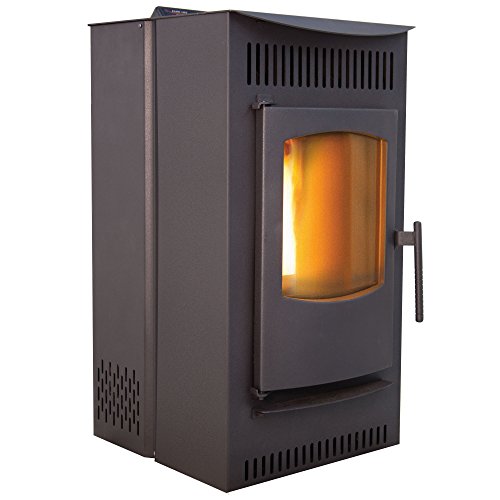
The 40 lb. hopper and 32,000 BTU output suit homes rated up to 1,500 sq. ft. Manual, thermostat, weekly, and Eco modes let you set a schedule or have the stove toggle on and off to maintain the desired room temperature. The included remote programs all operating modes.
Best for Homes rated for 2,000–3,000 sq. ft. with a preference for a large pellet hopper
Its 130 lb. hopper holds more pellets than the other listed pellet stoves, and automatic ignition handles startup. A fresh air kit is included, and the stove is approved for mobile homes.
Rated coverage 2,000–3,000 sq. ft.Hopper 130 lb.Fire pot SteelIgnition AutomaticFresh air kit Included
Why it made the cut
130 lb. hopper capacity
Automatic ignition
Fresh air kit included
Good to know
The product data does not give a heat-output figure
The product data does not specify whether electricity is required
Skip it if Skip it if you need a stated BTU output or confirmed outage operation before choosing a stove.
Best for Large homes with heated areas rated up to 3,200 sq. ft.
The 3.9 cu. ft. firebox takes logs up to 22 inches, and output reaches 152,000 BTUs for spaces rated up to 3,200 sq. ft. It needs no electricity, and its secondary combustion system works without a catalyst. Choose this size when the area you plan to heat warrants it, not simply because its output is the largest here.
Rated coverage Up to 3,200 sq. ft.Maximum heat output 152,000 BTUsFirebox 3.9 cu. ft.; logs up to 22 inchesElectricity Not requiredEPA status EPA Certified
Why it made the cut
No electricity required
3.9 cu. ft. firebox accepts logs up to 22 inches
Secondary combustion system without a catalyst
Good to know
Its rated coverage may be excessive for a smaller home
Freight delivery requires a valid phone number or email address
Skip it if Skip it if your heated area is well below its 3,200 sq. ft. rating; a smaller stove may suit the space better.
Warm the rooms you use by choosing a stove for your layout, fuel supply and available power—not by chasing the largest coverage claim. Square footage is only a starting point; insulation, room arrangement and how heat travels through the house all affect comfort.
For whole-home heating, a heat pump is often efficient, but its performance depends on climate, the house and installation. These recommendations cover solid-fuel stoves, not every efficient heating system. Choose a wood stove if you want heat during an outage and can count on a supply of firewood. Choose pellets for automatic ignition and programmable operation, knowing the stove needs electricity. Running costs depend on your home and local fuel and energy prices. A stove provides heat, not air conditioning.
Compare These Before You Buy
Rated coverage, treated as a guide
Maximum BTU output, not a promise of even heat
Firebox capacity for wood or hopper capacity for pellets
Whether the stove needs electricity to operate
The Buying Mistake
Don’t pay for a higher maximum rating just to feel covered. The Ashley Hearth AW2520E-P is rated for up to 2,500 square feet and up to 112,800 BTUs; the AW1120E-P is listed for 1,200 square feet. Match the rating to the space you’ll actually heat. For a different kind of room-heating option, see our oil space heater guide.
From HeaterGuides · our own guidePage 4 shows what each heater costs per hour; the 30-day plan on page 11 cuts the bill.Winter Heating Bill CutterSee what every heater in your home really costs, heat the rooms you use, and cut the waste in 30 days.Cost-per-hour tables for every heaterThermostat schedule and draft-proofing planRunning-cost and bill calculator (Excel)$14.99$9.99Get it for $9.99See what's inside and watch the 2-minute video →14-page printable PDF + Excel calculator · instant download · 30-day refund
Match Stove Size to the Rooms You Heat
To warm a room or a whole house, treat a stove’s square-foot coverage as a guide, not a guarantee. Insulation, ceiling height, climate and an open or divided floor plan change how far the heat reaches; a stove heats the area around it first.
A Coverage Check
Say you’re comparing a 1,200-square-foot space with a 2,500-square-foot home. The AW1120E-P is listed for up to 1,200 square feet, while the AW2520E-P is listed for up to 2,500. Those figures help narrow the choice, but they don’t account for a tall ceiling, weak insulation or rooms separated by doors. Don’t choose the bigger maximum rating just because it’s bigger.
Smaller space1,200 sq ft listed coverage
Larger home2,500 sq ft listed coverage
In a two-story home, heat rises, but closed doors, stairwells and room layout affect where it settles. A stove rating doesn’t promise even warmth on both floors. Use a manufacturer-approved blower or circulation approach where applicable; check the model’s instructions rather than assuming a blower is included.
If you want to warm one room while cooling the rest of the home, heat the occupied zone and avoid oversizing a stove for one closed room. If the house is not warm, first check whether the stove’s rated coverage fits the space and whether heat can move out of the room where it sits. For a smaller, single-room need, compare heaters for warming your space.
Count the Fuel and Power Before You Buy
The cheapest way to warm your home depends on local fuel and electricity prices, equipment efficiency, and how much of the house needs heat. Cheap, efficient ways to warm your home start with heating only occupied spaces; the cheapest way to keep warm at home varies with those same costs and your setup. A stove gives you warm air by burning wood or pellets and transferring that heat into the room, but rated BTUs alone don’t tell you what it costs to run.
The supplied product data has no burn rates, fuel prices, or efficiency figures, so you can’t calculate exact operating costs from BTU output. A higher BTU rating means more potential heat, not necessarily a lower bill.
Stove
Fuel capacity or measure
Electricity in an outage
Wood models
Firebox volume and log length; no burn time listed
Operate without electricity
Castle Serenity pellet stove
40-pound hopper
Requires power for automatic ignition or controls
Canyon Lodge pellet stove
130-pound hopper
Requires power for automatic ignition or controls
Hopper capacity tells you how much fuel fits, not how many hours it will last.
For the best time to switch on heating, use the thermostat or stove controls to heat the occupied space when you need it. The product data doesn’t establish a universally cheapest hour, and pellet stoves need electricity to run their ignition or controls; wood models can operate without it. Hopper size can affect how often you refill, but actual runtime depends on burn rate and settings.
Plan the Installation Before Delivery
Plan the clearances, chimney or vent, permits, and delivery route before the stove arrives. The manufacturer’s listed clearances to combustible materials and its venting instructions govern the installation, along with local code.
Before Installation
Confirm the required clearances in the stove’s manual and plan the hearth and surrounding space accordingly.
Check local permit and installation requirements; use a qualified installer where required.
Have the chimney or vent installed to the product listing and local code.
Arrange an annual chimney inspection and sweeping.
Burn only appropriate, untreated wood or the fuel specified for the stove; never burn trash or treated wood.
Don’t Light It Early
Never operate a stove until the clearances and venting are correct. A poorly installed chimney or stove can create a fire or carbon monoxide hazard.
The Ashley models ship by freight, but delivery conditions and contact requirements vary by product. Confirm the carrier’s instructions, plan for curbside or driveway drop-off, and arrange enough help and a safe path to move the stove indoors.
Check the Certification Claim
The AW3200-P product name says EPA Certified. Don’t assume that claim applies to the other stove picks; check each model’s product information and local requirements.
Keep Heat Moving After the Stove Is Lit
A stove’s rated coverage doesn’t guarantee even temperatures; room connections and airflow determine how much heat reaches the rest of your home. To move warm air, keep paths between rooms open and check that your existing heating system’s supply vents and return grilles aren’t blocked. A ceiling fan on low can help mix warm air near the ceiling; follow the fan maker’s directions.
The easiest way to warm the rooms you use is to let sunlight in through south-facing windows during the day, then close curtains after dark. When October arrives before you’ve turned on the heat, check for blocked vents, open interior doors where practical, and identify the coldest occupied room before choosing a stove. Keep the stove’s listed clearances free of furniture, firewood and other combustibles.
Choose the fuel you can reliably store and use.
Match the stove’s coverage to the area you’ll actually heat, not the whole floor plan by default.
Confirm whether the model needs electricity and check the delivery route, including doorways and stairs.
Verify local installation rules before ordering.
Before You Order
Room: Which occupied space is coldest, and can heat reach it through open doors or clear airflow paths?
Fuel: Can you get and store the stove’s required fuel?
Power: Will the stove operate during an outage, or does it need electricity?
Installation: Have you checked the required clearances, venting and local rules?
More Questions, Answered
What is the cheapest way to warm your home without heating?
Keep the heat you already have: close curtains at night, block drafts around doors, and spend time in the smallest comfortable room. If you mean warming one person rather than a room, extra layers and a blanket usually use less energy than turning up a whole-house system.
Does baking warm your home cheaply?
Baking can add a little heat while you cook, but it’s not a dependable or safe way to heat a room. Don’t leave the oven door open or run an oven for warmth; use it only for cooking, then let the residual heat disperse normally.
How much warmth do candles add to a room?
A candle gives off some heat, but too little to meaningfully warm a room. An open flame also adds fire risk, so don’t use candles as a substitute for a heater or leave them unattended.
How can you stay warm at home without a heater?
Wear dry layers, cover your head and feet, close off unused rooms, and block obvious drafts without covering vents or combustion-air openings. A warm drink can help you feel more comfortable, but never use a stove, oven, grill, or outdoor heater to heat the house.
What is the easiest way to warm up when you cannot move much?
Use dry layers and a blanket, and ask someone to bring them within reach if needed. A heated blanket can help if you can follow its instructions and safely control it; don’t fold or bunch it while on, and avoid it if you can’t reliably feel heat or respond to the controls.
Before you go · a welcome giftGet the Winter Heating Bill Cutter for $4.99See what every heater in your home really costs, heat the rooms you use, and cut the waste in 30 days. Normally $14.99; your welcome price saves $10.00. We'll email your link right now.or buy it now for $9.99 without the gift →One email with your link now. We never share your address.




 Winter Heating Bill CutterSee what every heater in your home really costs, heat the rooms you use, and cut the waste in 30 days.Cost-per-hour tables for every heaterThermostat schedule and draft-proofing planRunning-cost and bill calculator (Excel)

