Best Portable Solar Heaters for Camping & Emergencies
On this page 5 sections
Staying warm off the grid is a unique challenge. Whether you’re winter camping, working in a remote cabin, or preparing for an emergency, traditional heating options often fall short. That’s where portable solar powered heaters come in. They promise warmth from the sun, no cords, and a clean energy solution. But do they really work? And which one is right for you?
This guide cuts through the hype. We’ll review top models, break down key features, and give you the real-world pros and cons. For those looking for a clever, compact solution, many DIY enthusiasts and small-space users have found success with the Check price on Amazon. It’s a unique, small-scale solar air heater that’s surprisingly effective for tiny spaces like coops, sheds, or even a tent vestibule. It’s a great example of innovative, eco-friendly heating.
What is a Portable Solar Heater?
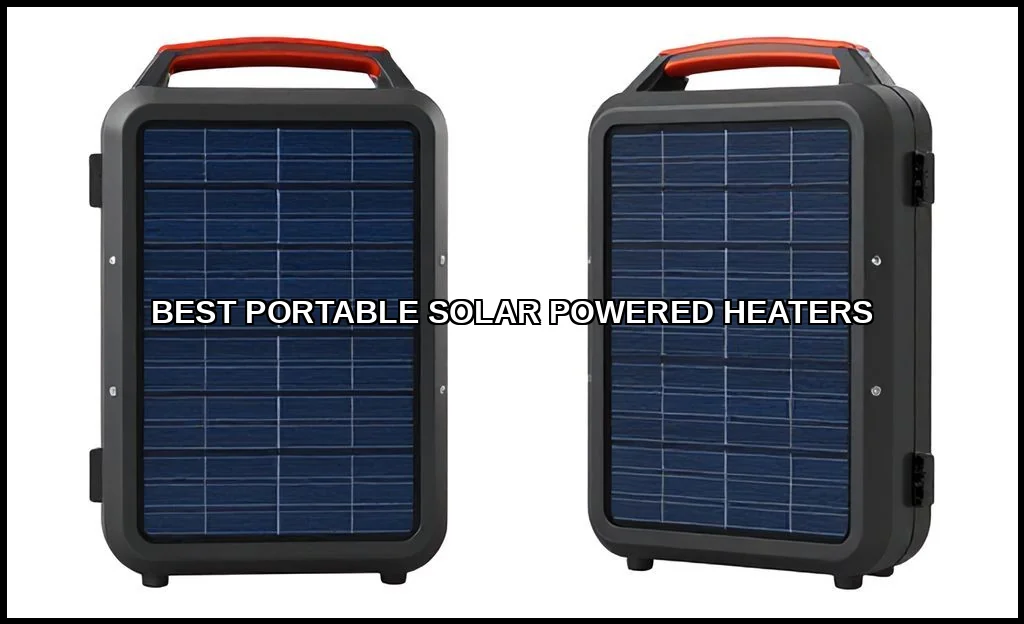
Let’s clarify what we’re talking about. A true portable solar heater isn’t just a standard portable heater you plug in. It’s a system. Typically, it combines a solar panel, a battery bank for storage, and a low-wattage DC electric heater (often a 12V heater). The panel charges the battery during the day, and the battery powers the heater when you need it, day or night. This creates a self-contained, cordless heater loop perfect for off-grid heating scenarios.
It’s important to manage expectations. Solar heating for personal spaces is about supplementing warmth, not replicating a home furnace. Efficiency is key. You’ll often see questions like can a solar panel run a small heater? The answer is yes, but the size of the panel, the battery capacity, and the heater’s wattage must be carefully matched. We’ll dive into that math later.
Top 5 Portable Solar Heater Models Reviewed & Compared
Heres a look at some of the most discussed systems and approaches on the market. Remember, “best” depends entirely on your use case.
1. The All-in-One Solar Generator Kits
Think Jackery, Bluetti, or EcoFlow. You buy a portable power station and solar panels separately. Then, you pair it with a low-wattage 12V DC heating pad or a small ceramic heater. This is the most flexible and powerful option.
- Pros: Massive power, can run other devices, scalable with more panels.
- Cons: High initial cost, multiple pieces to carry.
- Best For: Base camp, van life, emergency home backup.
2. Dedicated 12V Car Heater Fans

These plug directly into a vehicle’s 12V outlet (cigarette lighter). They are low-power fans with a heating element, often under 150 watts. You can run them from a car battery charged by a solar panel via a charge controller.
- Pros: Very affordable, simple, great for warming a car or small tent.
- Cons: Very low heat output (BTU output is minimal), not for serious cold.
- Best For: Taking the chill off in a vehicle or small space.
3. Solar Air Heater Panels (Like the Solar Heater Chicken)
These are passive systems. A dark, insulated box with a clear face collects solar heat. A small fan (often solar-powered itself) circul the warmed air inside. No battery needed, but it only works in direct sunlight.
- Pros: Zero operating cost, completely silent, true eco-friendly heater.
- Cons: No nighttime function, heat output is weather-dependent.
- Best For: Daytime warming of sheds, workshops, or as a supplement.
4. Battery-Powered Heater with Solar Charging
A growing niche. These are integrated units with a built-in battery and the option to connect a solar panel. They look like a standard small space heater but are designed for DC input.
- Pros: Integrated and tidy, designed for the purpose.
- Cons: Limited availability, often lower battery capacity than generator kits.
- Best For: The user who wants a simple, dedicated rechargeable heater.
5. DIY Solar Heater Systems
For the handy person. Building your own system with separate components: solar panel, charge controller, deep-cycle battery, inverter, and a low-wattage AC heater. It offers maximum customization.
- Pros: Can be cost-effective, you control every specification.
- Cons: Requires electrical knowledge, safety is on you.
- Best For: Tinkerers and those with specific, unchanging power needs.
| Model Type | Avg. Heat Output | Portability | Nighttime Use | Relative Cost |
|---|---|---|---|---|
| Solar Generator Kit | Medium-High | Medium | Yes | $$$ |
| 12V Car Heater | Very Low | High | Yes (with battery) | $ |
| Solar Air Panel | Low-Medium | Low | No | $$ |
| Integrated Battery Heater | Low | Medium | Yes | $$ |
Key Features to Consider Before Buying
Don’t just buy the first thing you see. Your success with solar powered heaters hinges on these specs.
Power Match: Panel, Battery, and Heater
This is the core equation. A 100W heater running for 1 hour uses 100 watt-hours (Wh). If you want 5 hours of heat (500Wh), your battery must store that much, and your solar panel must be able to replenish it. A 200W panel in full sun might take 2.5+ hours to recharge that, not accounting for efficiency losses. Always oversize your solar input.
Battery Capacity & Chemistry
Measured in watt-hours (Wh) or amp-hours (Ah). For a 12V system, Wh = Ah x 12. Lithium-ion (LiFePO4) batteries are lighter, last longer, and discharge more fully than lead-acid. They’re worth the investment for a battery powered heater setup. Check the battery capacity first.
Heat Output & Efficiency
Look at wattage, not just “size.” A 150W heater is a gentle warmth. A 400W heater is more substantial but will drain a battery fast. Understand the BTU output if listed (1 watt 3.41 BTU). Ceramic and fan-forced heaters are generally more efficient for small spaces than oil-filled radiators in these setups.
Portability & Durability
Weight matters for a camping heater. Are you carrying this a mile to a site? Foldable solar panels are a game-changer. Also, consider the heater’s buildcan it handle being jostled in a car?
Charge Time & Input Options
Solar charge time is variable. Can you also charge from a wall outlet or a car? This redundancy is crucial for multi-day cloudy weather. Look for systems with multiple input ports.
Safety Tips & Ideal Use Cases
Heat, electricity, and batteries require respect. The official source for heater safety is a must-read. Key takeaways for off-grid use:
- Never leave unattended: This is non-negotiable for any portable heater, especially in a tent or vehicle.
- Clearance is crucial: Keep all heaters at least 3 feet from combustiblessleeping bags, tent walls, gear.
- Battery safety: Use a proper charge controller. Don’t puncture or overcharge batteries. Store in a dry, ventilated area.
- Carbon monoxide is NOT the issue: A plus for electric! But fire risk remains.
Where These Heaters Shine (And Where They Don’t)
Ideal Use Cases:
- Three-Season Camping: Taking the edge off chilly autumn nights.
- Ice Fishing Shacks & Hunting Blinds: Small, enclosed spaces are perfect.
- Van/RV Life: Supplementing existing heat with solar power.
- Remote Workspaces: Warming a tool shed or off-grid office.
- Emergency Preparedness: A silent, fuel-free heat backup at home.
Poor Use Cases:
- Primary heat in sub-freezing temps: You’ll need a propane buddy heater or wood stove. The debate of solar heater vs propane for tents is won by propane in deep cold.
- Heating large, uninsulated areas: You’re fighting physics.
- When you need immediate, high heat: Solar is about slow, sustained energy.
Pros, Cons & Final Recommendations
Let’s be brutally honest about the value.
The Advantages
- True Energy Independence: No fuel to buy, no fumes, no noise (from the power source).
- Safety: No open flame or combustion gasesa major win for indoor/ tent use.
- Low Operating Cost: After the initial investment, sunlight is free.
- Versatility: The power station can run lights, phones, a kettle.
- Eco-Conscious Choice: It’s a clean, renewable application of solar tech.
The Drawbacks & Realities
- High Upfront Cost: A reliable kit can cost several hundred dollars.
- Weather Dependence: Cloudy days mean less power. You need a backup plan.
- Limited Runtime: Physics dictates energy limits. How efficient are solar powered heaters? They are efficient at converting sun to electricity, but heating air simply takes a lot of energy.
- Not Instantaneous: It’s a system you managecharging, monitoring battery levels.
Our Final Verdict
Portable solar heaters are a brilliant solution for a specific set of problems. They are not a magic bullet for arctic camping. For most people, a mid-sized solar generator kit (500-1000Wh) paired with a small 12V heater offers the best balance of power, flexibility, and reliability. It’s a fantastic supplement.
For simpler needs, a focused outdoor heater like a 12V fan or a solar air panel might be perfect. And always, always prioritize safety. For more traditional home heating options, you can explore our guides on the best space heaters or efficient gas wall heaters.
Start by calculating your actual watt-hour needs for a night. Then double it. Match your battery and solar panel to that number. That’s the recipe for staying warm, powered by the sun.