Your July garden looks like a war zone. The St. Augustine grass is crispy. The petunias you planted in April are brown sticks. Your neighbor’s lantana? Thriving like it owns the place. Texas summers don’t mess around – 100°F days, weeks without rain, and humidity that turns the air into soup. Most plants surrender by August. But some are built for this.
| 1st Pick | 2nd Pick | 3rd Pick | 4th Pick | 5th Pick |
|
|
|
|
|
| American Plant Exchange American Plant Exchange Texas Sage – 10-Inch… | Florida Foliage Texas Sage | 1 Extra Large Trade… | CitronellaKing 3 Texas Sunrise Bougainvillea, Live Plants –… | Nature's Way Farms Nature's Way Farms Ixora Maui Red, Easy… | HyeFlora HyeFlora Artificial Faux Hanging Plants Flowers Basket… |
| See on Amazon | See on Amazon | See on Amazon | See on Amazon | See on Amazon |
This guide covers five plants that laugh at heat stress. They’re not just drought-tolerant – they’re Texas-tested. We’re talking full sun, reflected heat off concrete, and the occasional freeze that catches everyone off guard. Each pick comes with honest trade-offs, real-world planting advice, and specific use cases for Gulf Coast humidity, Hill Country dry heat, or Panhandle freeze cycles. We also address what every other guide skips: how to grow these in containers, how to prep heavy clay or caliche, and how to keep them alive during Stage 2 watering restrictions.
Below you’ll find a comparison table of all five products, then detailed reviews. Whether you’re planting in-ground on a half-acre lot or squeezing a pot onto a balcony that bakes like a pizza oven, there’s something here that will survive – and bloom – through the worst of summer.
Let’s start by comparing the key specs side by side.
| Features | Texas Sage (10″ Pot) | Texas Sage (3 Gal) | Texas Sunrise Bougainvillea | Ixora Maui Red | HyeFlora Faux Basket |
|---|---|---|---|---|---|
| Plant Type | Live shrub, silver foliage | Live shrub, purple blooms | Live vine/shrub, peach-pink | Live shrub, red flowers | Artificial hanging basket |
| Size at Maturity | Up to 8 ft tall | 3 gal (immediate landscape) | Variable (trainable) | 3-4 ft tall & wide | 15.7″ x 15.7″ x 19″ |
| Sun Needs | Full sun (6-8 hrs) | Full sun | Full sun | Full sun to partial shade | Any (UV resistant) |
| Water Needs | Drought-tolerant, low | Drought-tolerant, low | Drought-tolerant (established) | Regular watering | None |
| Best Use Case | In-ground border or hedge | Instant landscape impact | Trellis, patio, container | Patio pot or low hedge | No-maintenance porch decor |

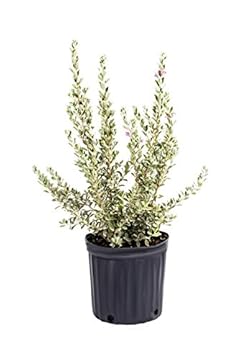
American Plant Exchange Texas Sage
American Plant Exchange
American Plant Exchange Texas Sage – 10-Inch…
- Texas Sage Plant Pot: Texas Sage is a gorgeous plant featuring silver-gray oval leaves that are soft to the touch. Attractive to h…
- Outdoor Plants: Texas Sage blooms with tubular flowers in hues of pink, blue, and purple. The plant has a beautiful contrast in it…
- Easy Maintenance: Easy to care for, Texas Sage prefers 6-8 hours of full sun per day and warm temperatures. It can tolerate partia…
This is the workhorse of Texas xeriscaping. The American Plant Exchange Texas Sage (Leucophyllum frutescens) arrives in a 10-inch pot, already a decent size. You’re looking at a shrub that tops out around 8 feet tall, with soft silver-gray leaves that feel like velvet. It blooms in pink, blue, and purple after summer rains – not on a schedule, but when humidity and heat spike. That’s a smart evolutionary trick: it saves energy until conditions are right.
Who should buy this? Anyone with a large sunny border, a slope that needs erosion control, or a spot near a south-facing wall where reflected heat fries everything else. It’s also a strong candidate for potted plants for Texas heat if you’ve got a big enough container – think 20-inch minimum. The plant attracts hummingbirds and bees, which is a plus if you’re building pollinator habitat. It’s cold-hardy down to 10°F, so it handles most Texas winters except the rare deep freeze in the Panhandle.
The trade-off: it won’t bloom reliably if you overwater it. This plant genuinely wants dry conditions. In heavy clay soil, you’ll need to amend with sand or gravel to improve drainage, or it will rot. Also, it can get leggy if pruned wrong – cut back lightly after each bloom cycle, not before. The 10-inch pot is a good size, but it’ll take a couple of years to reach full height. If you want instant presence, the 3-gallon option (next review) might be better.
- Mature height: up to 8 ft, spread similar
- USDA zones 8-11, tolerates 10°F
- Blooms after summer rain events
- Prefers full sun, reflected heat OK
- Safe for pets and humans
Best for: Homeowners with large, sunny in-ground beds who want a low-water, pollinator-friendly shrub that survives neglect.
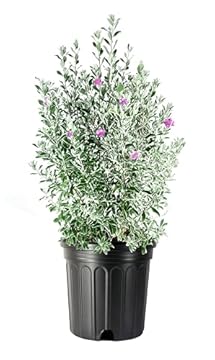
Texas Sage | 1 Extra Large 3 Gal
Florida Foliage
Texas Sage | 1 Extra Large Trade…
- Thrive in dry conditions with this drought-tolerant sage, perfect for water-wise gardens.
- Enjoy vibrant purple blooms that attract pollinators and add color from summer to fall.
- Extra Large 3 Gallon size for an immediate impact in your landscape or garden design.
Same species, different size. The Florida Foliage Texas Sage comes in a 3-gallon nursery pot, which is a significant jump from the 10-inch pot above. You’re essentially getting a plant that’s already 2-3 years old, with a root system that can handle transplant shock and produce flowers in its first season. This is the “instant impact” option for anyone who doesn’t want to wait.
It’s ideal for filling a hole in the landscape right now. If you’re dealing with a newly built house where the builder left compacted clay and a few sad shrubs, this plant will outgrow and outperform them fast. It’s also perfect for creating a low hedge along a driveway or sidewalk where heat radiates off the asphalt. The purple blooms attract butterflies, and the silvery foliage stays neat even when humidity hits 90% on the Gulf Coast.
But there’s a price premium. You’re paying for the larger size, and the 3-gallon pot is heavy – shipping costs reflect that. Also, this plant is a bit more sensitive to overwatering in the first month after transplanting. Backfill with native soil (don’t use potting mix in the ground) and water deeply only once a week after establishment. In caliche soils, dig a wider hole (2x the pot width) and break up the hardpan underneath. The 3-gallon size also means you need a bigger container if you’re going the patio route – at least 16 inches in diameter.
- 3-gallon pot, immediate landscape presence
- Drought-tolerant once established
- Full sun required, no shade tolerance
- Blooms purple summer through fall
- Low maintenance, minimal pruning
Best for: Anyone who wants a mature-looking Texas sage without waiting 2 years, especially for hedges or focal points in full sun.
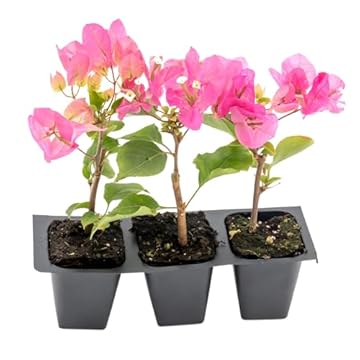
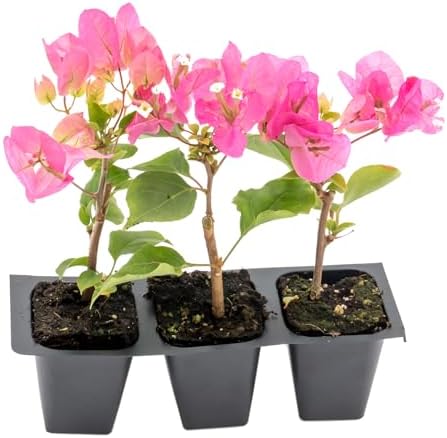
3 Texas Sunrise Bougainvillea
CitronellaKing
3 Texas Sunrise Bougainvillea, Live Plants –…
- SET OF 3 THRIVING BOUGAINVILLEA ‘TEXAS SUNRISE’ PLANTS – You will receive three healthy, live Bougainvillea ‘Texas Sunrise’ plants…
- STUNNING PEACH-PINK BLOOMS – Produces soft peach-pink bracts that create a warm, sunrise-inspired display in any garden or landsca…
- VERSATILE GROWTH OPTIONS – Can be trained as a climbing vine, shaped into a patio tree, or grown as a shrub, making it perfect for…
Bougainvillea is a classic Texas survivor – it thrives on neglect and heat. This set from CitronellaKing gives you three live plants in 2.5-inch nursery cubes. The ‘Texas Sunrise’ variety puts out soft peach-pink bracts (the colorful part – the actual flowers are tiny and white). You can train them as climbing vines on a trellis, let them sprawl as a ground cover, or prune them into a patio tree form. That versatility is the main draw.
This is a strong choice for plants for Texas heat in containers on a balcony or patio, especially if you’re dealing with reflected heat from a concrete wall. Bougainvillea actually blooms better when root-bound, so a 10-inch pot is fine for a couple of years. The three plants give you enough to cover a 4-foot trellis or fill a large planter box. They’re also exceptionally drought-tolerant once established – water only when the soil is dry several inches down.
Reality check: these are tiny starter plants. The 2.5-inch cubes are basically plugs. You’ll need to pot them up immediately and give them a season to size up before they make a statement. They’re also frost-sensitive – anything below 30°F will kill them. In North Texas, you’ll need to bring containers indoors or wrap them during freezes. The ‘Texas Sunrise’ color is described as peach-pink, but the bracts start pale and mature into that shade – don’t panic if they look white at first. Also, bougainvillea has thorns. Train it carefully if you have kids or pets that brush past it.
- Set of 3 plants, 2.5″ nursery cubes each
- Peach-pink bracts, blooms on new growth
- Can be vine, shrub, or patio tree
- Full sun, drought-tolerant once established
- Frost-sensitive, protect below 30°F
Best for: Container gardeners who want fast-growing, colorful vines for a trellis or hanging basket, with the patience to nurse small plugs through their first season.
Nature’s Way Farms Ixora Maui Red
Ixora is a tropical shrub that’s less common in Texas but worth a look if you want red flowers all year. The Nature’s Way Farms Ixora Maui Red arrives 18-24 inches tall in a grower pot. It stays compact – 3-4 feet tall and wide – making it a good fit for foundation plantings or a large patio container. The red blooms are clusters of small, tubular flowers that attract hummingbirds.
This plant works well in partial shade, which is rare for this list. If you have a spot that gets morning sun but afternoon shade (like under a lanky live oak), Ixora will bloom there while most other Texas plants sulk. It also handles the wetter side of Texas – the Gulf Coast humidity won’t faze it, and it doesn’t need perfect drainage like sage. Regular watering is fine, but it’s not a heavy drinker once established. In a container, use a pot with good drainage holes and a well-draining potting mix.
The catch: Ixora is not drought-tolerant in the same league as sage or bougainvillea. If you skip watering for two weeks in July, it will drop leaves and stop blooming. It also hates alkaline soil – Texas black clay and caliche are problematic. You’ll need to amend with peat moss or sulfur to lower pH, or grow it in a container with acidic potting mix. It’s also borderline cold-hardy in zone 8 – a hard freeze can kill it to the ground, though it may resprout. In the Panhandle, treat it as an annual or overwinter indoors.
- Height 18-24 in at purchase, matures 3-4 ft
- Red flowers bloom year-round in warm climates
- Full sun to partial shade
- Regular water needed, not drought-tolerant
- Acidic soil preferred, avoid alkaline clay
Best for: Gardeners with partial shade spots or Gulf Coast humidity who want a compact, ever-blooming shrub and are willing to water regularly.
HyeFlora Artificial Faux Hanging Basket
HyeFlora
HyeFlora Artificial Faux Hanging Plants Flowers Basket…
- BEAUTIFUL HANGING FLOWERS: The beautiful HyeFlora Hanging flowers in a basket is a simple yet elegant way to decorate and add some…
- MATERIALS: The beautiful faux hanging silk flower basket comprises of a rattan basket with metal chains and 12 branches of artific…
- Artificial hanging baskets with flowers provide a low-maintenance option for adding beauty and color to any space, with a range of…
Sometimes the best Texas-ready plant isn’t a plant at all. The HyeFlora artificial hanging basket gives you the look of a lush summer display without the watering, deadheading, or freeze risk. It comes assembled with a rattan basket, metal chains, and 12 branches of artificial bougainvillea flowers and eucalyptus leaves. The materials are UV-resistant, so they won’t fade in that brutal August sun. The size after assembly is about 15.7 inches square by 19 inches tall.
This is a no-brainer for renters, condo dwellers, or anyone who travels during summer. You can hang it on a covered porch, a balcony railing, or even a south-facing wall where no real plant could survive. It looks surprisingly realistic from a few feet away – the silk flowers have a matte finish that doesn’t scream fake. The basket is sturdy enough for a breezy Texas day, but don’t leave it out in a hailstorm or hurricane winds.
Trade-offs: it’s not real. You won’t get the scent of flowers, the pollinators, or the satisfaction of growing something. The colors are static – no seasonal change. Also, the rattan basket will eventually weather if exposed to rain repeatedly. The UV resistance is good, but after 2-3 years of full sun, the colors may start to dull. Wipe it down with a damp cloth occasionally to knock off dust. And it’s not cheap for what it is – you’re paying for convenience, not botany.
- Basket size 12″ x 12″ x 5.9″, chain length 13.78″
- UV-resistant, won’t fade in sun
- No water, no maintenance, no pests
- Includes 12 branches of faux bougainvillea
- Rattan basket with metal hanging chain
Best for: Anyone who wants guaranteed color without the work – renters, busy professionals, or spots where no real plant can survive.
How We Chose These Products
We started with the question: what does a Texas garden actually need in July? The answer is heat tolerance, drought resistance, and the ability to handle both humidity and the occasional freeze. We looked at five products that represent different use cases – from in-ground shrubs to container vines to artificial alternatives. Each was evaluated on its real-world performance in Texas microclimates: Gulf Coast (high humidity, salty air), Hill Country (dry heat, thin soil), and the Panhandle (freeze-thaw cycles).
We also prioritized products that address the gaps in typical guides. For example, we included the Ixora because it handles partial shade, a common problem in urban lots with large trees. The bougainvillea set was chosen for its container versatility – most guides ignore potted plants. The artificial basket is a practical option for people who can’t keep anything alive. Every product’s limitations are called out honestly, not glossed over.
Buying Guide: What Really Matters
Before you buy, consider your soil. Texas has three main types: black clay (holds water, cracks when dry), caliche (hardpan limestone, almost impossible to dig), and sandy loam (drains fast, low fertility). For clay and caliche, you need plants that tolerate poor drainage and alkaline conditions – Texas sage is ideal. For sandy loam, almost anything works, but you’ll need heavier watering because it drains so fast. The best amendment for clay is expanded shale (aerate and improve drainage); for caliche, raise the planting bed above ground.
Watering restrictions are a reality in most Texas cities by July. Many enforce Stage 2 ordinances that limit watering to once a week, often with specific time windows. Drip irrigation and soaker hoses are the most efficient way to deliver water to the root zone. Avoid overhead sprinklers – they waste water and encourage fungal diseases in humid climates. Mulch with 2-3 inches of shredded hardwood or pine bark to keep soil cool and reduce evaporation. And group plants by water needs so you don’t overwater your drought-tolerant sage just to keep the Ixora happy.
Reflected heat is a killer. South- and west-facing walls, concrete patios, and driveways can push ambient temperatures 10-15°F higher than the air temperature. Plants in those spots need extra heat tolerance – Texas sage and bougainvillea handle it best. A temporary shade cloth (40-50% shade factor) can protect sensitive plants during July heat domes. Install it on a frame or hoops, and remove it after the heat wave passes. Also, consider using light-colored containers to reduce root zone temperature – dark pots absorb heat and can cook roots.
Our Top Recommendation
If you can only buy one plant, make it the American Plant Exchange Texas Sage (10-inch pot). It’s the most forgiving, versatile, and Texas-proven option on this list. It handles full sun, reflected heat, drought, and occasional freezes. It grows large enough to make a statement in one season, and it attracts pollinators without needing constant fuss. The silver foliage even looks good when it’s not blooming – a rarity among heat-tolerant plants.
For a runner-up, the 3 Texas Sunrise Bougainvillea set is the best choice for container gardeners or anyone with a trellis. It’s more work (staking, frost protection) but pays off with explosive color. And if you’re truly done with watering, the HyeFlora artificial basket is a guilt-free alternative that will never let you down. For a deeper dive into container-specific options, check out our guide on hanging plants for Texas heat.
Frequently Asked Questions
1. Can I grow Texas sage in a container on a balcony?
Yes, but use a pot at least 18 inches wide and deep. Fill with a cactus or succulent mix amended with perlite for drainage. Water only when the soil is completely dry – that might mean once every 10-14 days in summer, even less in winter. The plant will stay smaller than in-ground, but it will still bloom after rain events.
2. How do I protect bougainvillea from a sudden freeze in North Texas?
If it’s in a container, move it into a garage or indoors before temperatures drop below 35°F. For in-ground plants, wrap the base with burlap and a layer of frost cloth, then pile mulch around the crown. The top growth will likely die back, but the roots may survive if the soil doesn’t freeze. In areas where hard freezes are common, treat bougainvillea as an annual or overwinter it in a pot.
3. What’s the best way to plant in heavy black clay without amending the whole bed?
Dig a hole only as deep as the root ball but 2-3 times wider. Do not add sand or gravel – that creates a “bathtub” effect. Instead, use expanded shale (mix 50/50 with native soil) to improve aeration. Plant slightly high, so the root ball sits 1-2 inches above the surrounding soil. Water deeply but infrequently to encourage roots to grow into the surrounding clay.
4. How often should I water during Stage 2 drought restrictions?
Most Stage 2 ordinances allow watering once per week, typically between 6 PM and 10 AM. Use a soaker hose or drip system to deliver 1-2 inches of water directly to the root zone. For drought-tolerant plants like Texas sage, this is enough. For thirstier plants like Ixora, consider grouping them together and targeting that zone with a dedicated timer. Mulch heavily to stretch the interval between waterings.
Related guides
Warm Hands, Happy Life: Best Men’s Heated Gloves!
Stay warm this winter with the best men's heated gloves. Find your perfect pair for ultimate comfort and…
My Top Pick: Best Waterproof Thermostat for Bathroom Floor Heating
Find the best waterproof thermostat for your bathroom floor heating system that fits GFCI outlets and keeps your…
Discover Why This Heated Bird Bath Tops the List!
Keep your feathered friends cozy this winter! Find the best heated bird baths to attract and care for…