
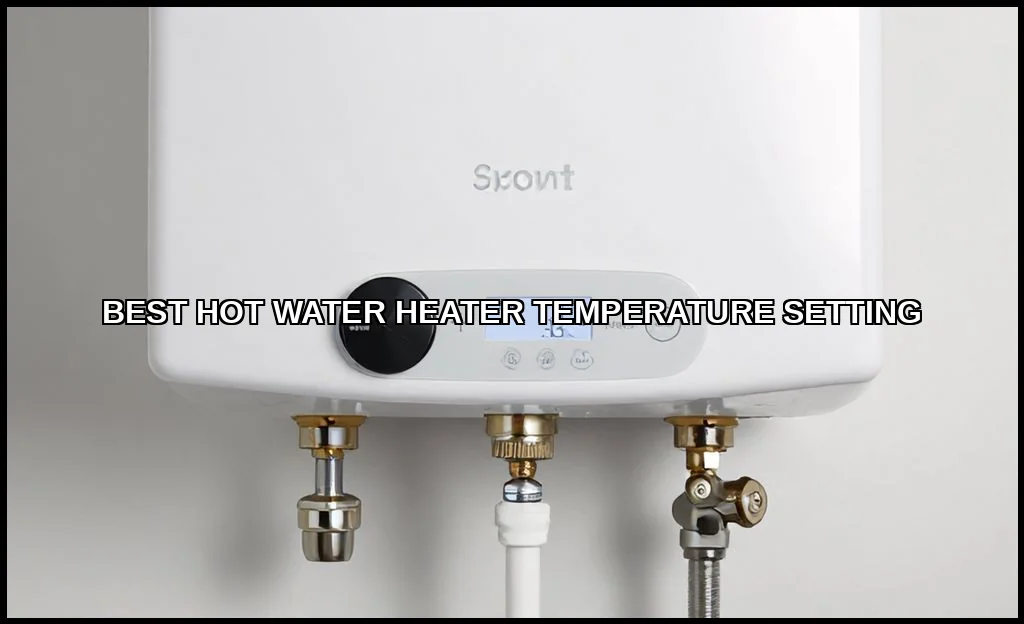
Finding the best hot water heater temperature setting feels like a puzzle. You want safety, efficiency, and comfort, all from a single dial. It’s a classic trade-off, and the “right” answer depends on your household’s specific needs. For homeowners looking to modernize their setup, many professionals recommend using the EWH-00 Water Heater for its precise digital controls, which make managing this balance much simpler.
Let’s break down the factors. Your decision impacts your energy bill, the risk of scalding, and even your family’s health. We’ll navigate the standard advice, the exceptions, and the simple steps to adjust your unit. You’ll walk away knowing exactly what temperature to aim for and why.
The Standard Recommendation: 120F (49C)
For most homes, 120F (49C) is the sweet spot. It’s the default setting championed by the Department of Energy and many manufacturers for a powerful blend of safety and savings. This temperature provides comfortably hot water for showers and dishes while significantly reducing the risk of accidental scalds, especially important in homes with children or elderly residents.
From an energy perspective, the savings are substantial. Lowering your water heater thermostat from 140F to 120F can cut your water heating costs by 4% to 22% annually. That’s a passive saving you’ll notice every month. For a deeper dive into efficiency, the official source on water heating offers extensive data.
Why 120F Works for Safety and Savings
- Scald Prevention: Water at 140F can cause a third-degree burn in just 5 seconds. At 120F, it takes about 10 minutes, giving you critical time to react.
- Energy Saving Setting: Every 10F reduction in temperature can save you 3-5% on your water heating bill. It adds up quickly.
- It aligns with the common manufacturer default setting for new units, meaning it’s tested for reliable performance.
So, if you’re asking, “what temperature should I set my hot water heater to save money?” start here. 120F is the baseline. But is it always the final answer? Not quite.
When to Consider a Higher Setting (140F/60C)
While 120F is ideal for daily use, there are valid reasons to turn up the heat. The primary driver is combating Legionella bacteria, the cause of Legionnaires’ disease. This bacteria thrives in warm water between 95F and 115F and is killed at temperatures above 131F.
The legionnaires disease risk is a serious consideration. If you have a compromised immune system, are elderly, or if your home has been vacant for a while, a higher setting may be warranted. Some appliance manufacturers, like those making good dishwashers without internal heating elements, also recommend incoming water at 140F for sanitization.
The Safety Trade-off: A Necessary Table
This decision is a direct balance. Heres a clear comparison:
| Setting | Primary Benefit | Key Risk/Cost |
|---|---|---|
| 120F (49C) | Optimal for scald prevention & energy savings | Potential for bacteria growth in tank if conditions are ideal |
| 140F (60C) | Eliminates Legionella bacteria risk | High scalding risk; increased energy costs |
If you choose a higher setting, you must install thermostatic mixing valves at point-of-use fixtures. These valves blend the super-hot water with cold to deliver a safe temperature at the tap, mitigating the scalding temperature danger. It’s the professional way to have both safety and sanitation.
Step-by-Step: How to Adjust Your Heater’s Temperature
Changing your water heater thermostat is usually straightforward. Safety first: turn off the power to an electric heater at the circuit breaker, or set a gas heater’s control knob to “Pilot.” Let the water cool for a couple of hours before you begin.
For Electric Water Heaters
- Locate the thermostat access panel on the side of the tank. You may have two (for dual-element heaters).
- Remove the panel(s) and the insulation behind it. Be careful not to touch any wires.
- Use a flathead screwdriver to adjust the thermostat dial. Many have a clear “120F” mark.
- Replace insulation and panel securely. Restore power.
This process answers the common query, “how to adjust temperature on electric water heater.” Wait a few hours, then test the water at a faucet farthest from the heater with a thermometer.
For Gas Water Heaters
The temperature dial adjustment is typically on the gas control valve at the bottom of the unit. Simply turn the dial from its current setting to your desired optimal heater setting. It often has “Hot,” “A/B/C,” or direct temperature markings. No panels to remove.
FAQs: Safety, Savings, and Specific Scenarios
Is 120 degrees safe for a water heater?
Generally, yes. 120F is considered a safe hot water temperature for preventing rapid scalds. However, for very young children or adults with sensitive skin, you might consider setting it slightly lower at the tap using anti-scald devices. The tank itself is perfectly safe at 120F.
What is the best temperature for a water heater with kids?
For households with kids, 120F is strongly recommended. It dramatically reduces scald risk. As an extra layer of protection, consider installing anti-scald aerators on bathroom faucets and always test bath water with your wrist before a child gets in.
Can a low temperature damage my water heater?
No. A setting of 120F will not damage your hot water tank temperature system. The concern at lower temperatures is solely about bacterial growth, not mechanical failure. For information on the upper limits, you can read about maximum safe temperatures.
How often should I check the temperature?
Check it annually. Thermostats can drift over time. Use a cooking thermometer at a hot water tap (let it run for a minute) to verify the output matches your thermostat setting guide. It’s a quick five-minute task that ensures everything is operating as intended.
The goal isn’t a “set it and forget it” mentality. It’s about informed management. Your home’s needs may changea new baby, an elderly parent moving in, the installation of a new dishwasher. Each scenario might prompt a review of that dial. The perfect setting is the one that thoughtfully balances the risks and rewards for the people using the water every day. Start at 120F, understand the exceptions, and adjust with purpose.
