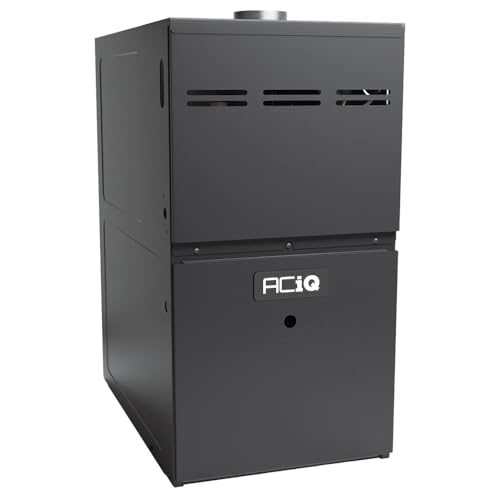
The best pick for most readers is the ACiQ 60,000 BTU 80% AFUE gas furnace because it is the only true space-heating option here and it gives you a clear efficiency number you can compare. If you want whole-home heat, start there; if you need hot water instead, a tankless unit is the better match.
Key takeaways
Match the rating to the job: AFUE for furnaces, UEF and GPM for tankless water heaters.
For room heat, the ACiQ furnace is the relevant pick in this group.
For whole-house hot water, the Rinnai has the biggest flow rate and the highest output here.
Indoor gas appliances need proper venting and a working CO alarm; do not guess at clearance or exhaust.
If you only need one bathroom or a smaller house, the ThermoMate is easier to size than the larger tankless unit.
A natural gas heater only looks efficient if the rating matches the job. AFUE tells you how well a furnace turns gas into room heat, while UEF and GPM matter for water heaters, so the first step is picking the right machine for the problem in front of you.
For a quick sanity check, 80% AFUE means about 80 cents of every gas dollar becomes heat in the house. The other 20 cents leaves through the vent, which is why venting, sizing, and run time matter just as much as BTU on the box.
Best Natural Gas Heater Picks
#1Best For Space Heat
ACiQ Gas Furnace 60,000 BTU
Best for Whole-home heating with a central forced-air system
Product 3 is the only true space-heating option here, with 60,000 BTU output and a clear 80% efficiency rating. Its upflow or horizontal setup suits basements and attics, while the 9-speed ECM blower supports central forced-air heating.
Best for Large homes running several hot-water fixtures at once
Product 2 delivers up to 9.8 GPM and 199,000 BTU, giving larger homes more flow for showers, laundry and a dishwasher at the same time. Its non-condensing design heats water only when needed and mounts indoors to save floor space.
Flow rate Up to 9.8 GPMInput 199,000 BTUType Non-condensing natural gas tanklessInstallation IndoorDesign Wall-mounted
Why it made the cut
Highest listed flow and BTU output
Supports multiple fixtures at once
Compact indoor wall-mounted design
Good to know
Professional installation is recommended
Sizing depends on groundwater temperature and climate
Skip it if Skip it if your goal is room or whole-home space heating rather than hot water.
Best for Whole-home hot water for two or three simultaneous showers
Product 1 supplies 7.0 GPM at a 35°F temperature rise and produces 160,000 BTU/hr, enough for two to three simultaneous showers according to the product data. Its 0.82 UEF, built-in freeze and flame-failure protection, and LeakGuard detection fit an indoor whole-house installation.
Flow rate 7.0 GPM at 35°F temperature riseOutput 160,000 BTU/hrEfficiency 0.82 UEFInstallation Indoor with direct vent systemControl Digital LED panel with ±1°F adjustments
Why it made the cut
7.0 GPM at a 35°F temperature rise
LeakGuard detects and helps prevent internal leaks
Digital control adjusts temperature in 1°F increments
Good to know
Non-condensing design needs a direct-vent system
Its listed flow is lower than Product 2
Skip it if Skip it if your home regularly needs more than three hot-water points running together.
Best for Smaller homes needing up to two simultaneous showers
Product 4 provides up to 5 GPM and 113,000 BTU, with the product data specifying two simultaneous showers at a 65°F inlet temperature. Its compact 21-by-13-by-7-inch body, 0.81 UEF and 90–140°F temperature range suit space-limited indoor installations.
Flow rate Up to 5 GPMInput 113,000 BTUEfficiency Up to 98% thermal efficiency; 0.81 UEFDimensions 21 in H × 13 in W × 7 in DTemperature range 90–140°F
Why it made the cut
Compact 21 × 13 × 7-inch design
Up to 98% thermal efficiency and 0.81 UEF
Temperature range from 90°F to 140°F
Good to know
5 GPM is the lowest listed flow
The two-shower claim depends on a 65°F inlet temperature
Skip it if Skip it if several bathrooms and appliances commonly need hot water at the same time.
For natural gas heating efficiency, the ACiQ 60000 BTU 80% AFUE Gas Furnace is the clearest match for heating rooms and whole homes. The most efficient natural gas heater depends on the job, though: furnace ratings use AFUE, while tankless water heaters use UEF. A search for the best rated most efficient natural gas wall heater usually means you want a room-heating appliance, and this furnace is the closest fit among the listed products.
Term
What it tells you
Higher number means
AFUE
How much furnace gas input becomes useful heat over a year
Less gas lost through the vent
UEF
How efficiently a water heater delivers hot water, including standby loss
Less energy wasted while waiting
BTU
Heat energy used to describe input or output
A larger capacity, not automatically better efficiency
GPM
Gallons of hot water delivered per minute
More simultaneous shower and fixture capacity
Use AFUE for space heat; use UEF and GPM for tankless hot water.
80% AFUE
The ACiQ furnace rating
With 100,000 BTU of gas input, about 80,000 BTU becomes useful furnace heat before distribution losses; roughly 20,000 BTU leaves through combustion venting.
Higher AFUE means less gas is lost up the furnace vent. Higher UEF means less energy is lost while a water heater waits and supplies hot water. The Rheem RTG Series 7.0 GPM, Rinnai RE199iN, and ThermoMate CZ422NG are hot-water appliances, so their GPM figures describe flow, not room-heating ability.
Read the rating for the job
A 199,000 BTU tankless water heater can have a large gas input and still be the wrong product for a cold room. Its burner heats water moving through the heat exchanger; it doesn’t circulate warm air through your house.
In short
Pick the ACiQ when the goal is space heat and compare its 80% AFUE rating with other furnaces. Pick a tankless unit when the goal is hot water, then compare UEF and GPM.
Choose The Right Type For The Job
Choose a furnace for room heat, a tankless unit for continuous hot water, and a heat pump when you need the most efficient way to heat a house without natural gas. The right choice depends on local electricity and fuel rates, climate, available service, and the load your home actually has.
Need
Right appliance
Why
Whole-home or ducted room heat
Gas furnace
It sends heated air through the home’s distribution system.
Showers and faucets without a storage tank
Natural gas tankless water heater
It heats water as it flows, with capacity measured in GPM.
House heat without a gas line
Heat pump
It moves heat rather than burning fuel; local climate and electric rates decide the result.
Existing oil-heated home
Oil furnace or boiler comparison
Compare delivered fuel cost, efficiency, service, and venting before changing systems.
A water heater and a furnace solve different problems, even when their BTU numbers look similar.
A quick buying split
Say the house needs warm rooms through winter and already has ductwork. The ACiQ is the relevant product category. If the house has reliable heat but two showers compete for hot water, the Rheem RTG Series 7.0 GPM or another tankless model is the more useful purchase.
Room heatChoose a furnace
Continuous hot waterChoose tankless
No natural gas serviceCompare a heat pump
Natural gas vs oil efficiency is a local comparison, not a universal winner. Natural gas often burns more cleanly and costs less per delivered BTU in many areas, while oil equipment, fuel prices, and service costs vary by region. Compare fuel price divided by usable heat after the appliance’s efficiency, rather than comparing the raw BTU number on the label.
Myth
A bigger BTU rating makes a water heater a better house heater.
Fact
BTU input tells you how much fuel the burner uses, not where the heat goes. A tankless unit sends that heat into water; a furnace sends useful heat into the home’s air system.
No listed product is a rated natural-gas wall heater; for space heat, the ACiQ 60000 BTU 80% AFUE Gas Furnace is the clearest efficient choice here because it gives you a published AFUE figure. The most efficient natural gas heater depends on the job, though: tankless units are sized by water flow, while furnaces are sized by heat loss.
Product
Published rating
Best match
ACiQ gas furnace
60,000 BTU; 80% AFUE
Room or whole-home heat
Rinnai RE199iN
9.8 GPM; 199,000 BTU
Several hot-water draws at once
Rheem RTG Series
7.0 GPM
Moderate simultaneous hot-water demand
ThermoMate CZ422NG
Up to 5 GPM; 113,000 BTU
Fewer fixtures or a smaller load
Flow and BTU ratings sort the jobs; they don’t guarantee a particular home’s capacity.
1
Match the job
Choose the ACiQ for heated rooms. Choose a tankless unit for domestic hot water, then compare its GPM with the fixtures you may run together.
2
Check simultaneous demand
A shower, sink and washing machine can draw hot water at the same time. The Rinnai’s 9.8 GPM and 199,000 BTU suit a larger home with several simultaneous draws; the ThermoMate’s up to 5 GPM and 113,000 BTU fit fewer fixtures at once.
3
Allow for the house
A 60,000 BTU furnace may suit one building and miss the mark in another. Insulation, climate, windows and air leakage determine the actual heating load.
Before You Choose
Count the hot-water fixtures that may run together.
Check the manufacturer’s flow rating at your incoming-water temperature and desired temperature rise.
Use a heat-loss calculation rather than room size alone for the furnace.
Confirm the gas line can supply the selected appliance.
Undersizing a tankless unit can mean a cold shower when another tap opens; undersizing a furnace leaves rooms cold. Oversizing a furnace can cause short cycling, which wastes fuel and makes temperatures swing. Bigger is capacity, not automatically efficiency.
Check Venting And Installation Costs
Natural gas heater efficiency starts with a correctly installed appliance: indoor gas equipment needs the venting, combustion air, gas line and clearances required by its manual and local code. The ACiQ, Rinnai, Rheem and ThermoMate products covered here are indoor vented appliances, not outdoor patio or construction heaters.
Check Local Code First
Vent-free gas heaters are restricted or banned in some states and cities. Don’t buy one based on an efficiency label alone; confirm local code, required ventilation and carbon-monoxide alarm rules before purchase.
Gas-line work, venting and combustion setup belong to a licensed professional in most places. A quote should cover the gas connection, vent materials, termination, condensate needs where applicable, startup checks and any permit required by your area.
How To Compare Fuel Use
A larger BTU rating isn’t cheaper by itself. Fuel use depends on the input rate, runtime and your local gas price, while AFUE shows how much furnace input becomes useful heat over a season.
Pick For Whole-House Hot Water Or Space Heat
Natural gas heater efficiency depends on the job: choose the ACiQ 60000 BTU 80% AFUE Gas Furnace for space heat, and choose a tankless unit for whole-house hot water. Natural gas heating efficiency is easiest to compare on the furnace because its 80% AFUE rating tells you how much fuel energy becomes usable heat.
Best match
ACiQ for rooms and whole-home space heating
Rinnai for a larger household with heavier hot-water demand
ThermoMate for a smaller household seeking natural-gas tankless hot water
Choose something else if
A furnace won’t supply domestic hot water
A tankless water heater won’t heat rooms
Tankless output depends on incoming water temperature and simultaneous flow
Best for room heating
ACiQ 60000 BTU 80% AFUE Gas Furnace
Pick the ACiQ 60000 BTU 80% AFUE Gas Furnace when the job is heating the house; its published AFUE gives you a clear efficiency figure instead of making you guess from a burner size.
Rinnai RE199iN Non-Condensing Natural Gas Tankless Water Heater
Pick the Rinnai RE199iN Non-Condensing Natural Gas Tankless Water Heater for stronger hot-water demand and a detailed digital display; that makes it the best smart-controls-style option here, though it controls water heating rather than room temperature.
ThermoMate CZ422NG, Natural Gas Tankless Water Heater Indoor, Up to 5…
Pick the ThermoMate CZ422NG, Natural Gas Tankless Water Heater Indoor when your household’s hot-water demand is lighter and you don’t need the Rinnai’s larger-output focus.
Confirm the appliance is rated for indoor installation and that local code allows the setup.
Check the manual for gas-line, venting, combustion-air and clearance requirements.
Look for flame-failure protection, such as a thermocouple or equivalent shutoff, on an indoor gas appliance.
Keep a working carbon-monoxide alarm nearby; freeze protection helps protect the unit but doesn’t replace the required installation and winter precautions.
Read the Rinnai warranty registration rules carefully: its 15-year heat-exchanger warranty is long on paper, but only when the required registration conditions are met.
For a broader hot-water comparison, see our guide to an efficient residential hot water heater. A thermostat can improve furnace control, but it won’t turn a tankless water heater into a room heater.
Frequently Asked Questions
What does natural gas heater efficiency actually mean?
For a gas furnace, efficiency usually means AFUE: the share of yearly fuel energy that becomes useful heat. An 80% AFUE furnace turns 80 BTU of gas input into usable heat under its test conditions; the rest leaves through the vent or is lost. That figure doesn’t include duct losses or a poorly adjusted installation.
Is a gas furnace more efficient than a tankless water heater?
Neither is automatically more efficient because they do different jobs. A furnace’s AFUE describes space heating, while a tankless water heater’s UEF describes heating water over a standardized use cycle. Choose the furnace for indoor heat and the tankless unit for domestic hot water, then compare each type with its own efficiency rating.
How do I compare AFUE, UEF, BTU, and GPM?
AFUE is a furnace efficiency percentage, and UEF is a water-heater efficiency rating. BTU per hour describes an appliance’s input or output rate, while GPM describes a tankless unit’s water flow; its usable GPM falls as the required temperature rise increases. A larger BTU number alone doesn’t prove lower operating cost.
Is vent-free natural gas heat efficient enough for a home?
Vent-free gas heaters can convert much of their fuel into room heat, but they also release combustion byproducts and water vapor indoors. Local codes restrict or ban them in some places, so check your jurisdiction before buying. Use only an indoor-rated model exactly as its manual specifies, with required ventilation and a working carbon-monoxide alarm.
What size natural gas heater do I need for a house?
A heat-load calculation is the reliable way to size a furnace; floor area alone can leave you with the wrong BTU rating. Insulation, windows, air leakage, climate, duct condition and the home’s design temperature all affect the result. Oversizing can cause short cycling, so have a qualified HVAC professional calculate the load before installation.