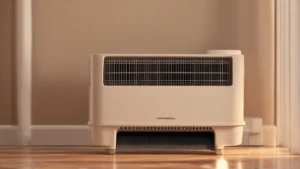
The DREO 25 Inch Electric Space Heater is the best pick for warming a 1000 sq ft room because it combines powerful 1500W heating, wide 70° oscillation, and quiet operation to distribute heat evenly and efficiently across large spaces.
What to remember
A 1500 watt electric heater typically covers about 200-300 sq ft effectively; heating 1000 sq ft requires multiple units or a model with strong airflow and oscillation.
PTC ceramic heaters heat quickly and distribute warmth efficiently with forced air, making them ideal for large rooms when paired with wide oscillation.
Oil-filled radiators provide silent, radiant heat but warm slowly and are better for supplemental rather than primary heat in large spaces.
Running a 1500 watt heater continuously for 8 hours costs about $2.04 at 17¢/kWh; consider ECO modes and timers to reduce energy use.
Look for safety features like tip-over protection, overheat cutoff, and ETL certification, especially in homes with children or pets.
Heating a 1000 square foot room effectively with electric heaters means balancing power, coverage, and running cost. Most single 1500 watt heaters cover only 200 to 300 square feet, so a model with smart airflow and oscillation is key for larger rooms.
This guide helps you choose heaters that warm 1000 sq ft spaces by explaining how wattage, heating element types, airflow, and thermostat accuracy affect comfort and efficiency. You’ll also find top picks suited to different needs and budgets.
Best Electric Heaters for Warming a 1000 Sq Ft Room
#1Best for Large Rooms
DREO 25 Inch Electric Space Heater
Best for Large rooms up to 270 sq ft with quiet, wide heat distribution
The R.W.FLAME heater uses ceramic PTC technology to warm up quickly and quietly, making it a great choice for bedrooms and offices. It covers up to 200 sq ft effectively and includes safety features like child lock, tip-over, and overheat protection, all ETL certified.
Best for Heating large rooms with adjustable precise temperature control
EdenPURE’s CopperPLUS uses copper PTC elements for efficient infrared heat that transfers warmth steadily. It offers 24 precision heat settings from 40°F to 90°F and includes a washable filter to cut maintenance costs. Safety sensors and tip-over protection make it safe around kids and pets.
Best for Large rooms needing infrared plus PTC heating with quiet blower
The DR Infrared DR-968 combines an infrared quartz tube with PTC heating for up to 5200 BTU, covering large spaces efficiently. It features an electronic thermostat, tip-over and overheat protection, and a quiet 39dB blower. Caster wheels add portability for moving around big rooms.
Best for Rooms needing multi-directional heat distribution with precise thermostat
This SAYDSI heater offers 1500W ceramic heating with 3D oscillation—90° horizontal and vertical swings—for even warmth in all corners. A digital thermostat adjusts from 59°F to 99°F, and a 1-24 hour timer automates operation. Safety features include overheat and tip-over protection plus flame-retardant materials.
Best for Heating rooms up to 200 sq ft with quick, quiet ceramic heat
The R.W.FLAME heater heats up in 2 seconds with 1500W ceramic PTC technology, ideal for small rooms or offices up to 200 sq ft. It runs quietly at 35dB and includes a thermostat with ±1℉ precision, 24-hour timer, and child lock. Its compact size and handle make it easy to move around.
Most 1500 watt electric heaters cover about 200 to 300 square feet effectively, so warming a full 1000 square foot room with one heater is usually unrealistic. You’ll often need multiple heaters or a specialized high-output model to reach comfortable temperatures across that much space.
Wattage alone doesn’t guarantee even heat distribution. A single 1500 watt heater might keep the area near it warm but leave corners cold. Good insulation reduces the total wattage needed, while poor insulation means you’ll need more power to maintain warmth.
Worked example
Say your 1000 sq ft room is moderately insulated and you want to heat it all evenly. Since 1500 watts cover about 250 sq ft, you’d need about four such heaters working together or one powerful heater with strong airflow to avoid cold spots.
Room size1000 sq ft
Heater coverage per unit250 sq ft
Number of units needed4
Insulation matters
If your walls, windows, or ceiling have gaps or poor insulation, your heating needs can increase by 20-30%. This means you might require closer to 1800-2000 watts per 300 sq ft of space.
In short
One 1500 watt heater won’t cover 1000 square feet well. You’ll need multiple units or a heater designed for large spaces with effective heat circulation.
Best Heating Elements for Large Rooms
Electric heaters come with different heating elements, and the best choice depends on how fast and evenly you want to heat a large room. PTC ceramic, infrared, and oil-filled radiator elements each have strengths and limits for spaces around 1000 square feet.
PTC ceramic heaters warm air quickly using a fan to spread heat widely. This forced-air method helps cover large areas faster and reduces cold spots. They’re good when you want instant warmth and active heat distribution.
Infrared heaters warm objects and people directly by radiating heat, rather than heating the air. While this can feel cozy nearby, large rooms often have cold spots because the heat doesn’t circulate evenly. Infrared units suit smaller zones or spot heating better than whole large rooms.
Oil-filled radiators provide quiet, silent radiant heat that lingers after the heater turns off. They warm slowly but hold temperature longer, making them ideal if you want a steady, dry heat without fan noise. However, they take time to raise the room temperature initially.
Heating Element
How It Works
Best For
Limitations
PTC Ceramic
Heats air quickly with fan
Large rooms needing fast, even heat
Fan noise; dries air slightly
Infrared
Radiates heat to objects
Spot heating or small areas
Cold spots in large spaces; slower air warming
Oil-Filled Radiator
Radiates stored heat silently
Quiet, steady heat over time
Slow heat-up; less effective for instant warmth
Comparison of common electric heating elements for large rooms
Myth
Infrared heaters are best for whole-room heating in large spaces
Fact
Infrared heaters primarily warm objects nearby and can leave distant parts of large rooms colder, so they’re less suited for evenly heating 1000 sq ft areas.
Choosing the right heating element means balancing how quickly you want heat delivered, how evenly it spreads, and whether you prefer silent operation or active airflow. For 1000 square feet, PTC ceramic heaters usually offer the best mix of speed and coverage, while oil-filled radiators excel at quiet, steady warmth.
If you want to see a model that combines these features, the DREO 25 Inch Electric Space Heater uses a PTC ceramic element with wide oscillation and a quiet fan, making it a strong candidate for large rooms.
How Oscillation and Airflow Affect Heat Distribution
Oscillation angle and airflow speed are critical for heating large rooms evenly. A heater with a wide oscillation, ideally more than 70°, spreads warm air farther across a 1000 sq ft area. This prevents heat from pooling near the unit and reduces cold spots.
Vertical airflow also matters. Heaters that blow air both horizontally and vertically, or offer 3D oscillation, distribute heat to different heights and corners. This covers the room better than a fixed-direction heater, especially in rooms with high ceilings or furniture that blocks airflow.
Fan speed, measured in cubic feet per minute (CFM), affects how quickly warm air circulates. A higher CFM means the heater moves more air and heats the space faster. For large rooms, a forced-air PTC ceramic heater with strong airflow is usually more effective than an infrared heater, which warms objects directly but can leave distant spots cold.
3D oscillation combines horizontal and vertical movement to maximize coverage. This feature is common in tower heaters designed for large rooms. It ensures warm air reaches areas behind obstacles and balances temperature more evenly through the space.
Check Oscillation Specs
Look for heaters specifying oscillation angles wider than 70°, vertical airflow options, and CFM ratings above 100 for large rooms.
Heat Distribution Features to Confirm
Oscillation angle over 70° for wide horizontal coverage
Vertical or 3D oscillation to reach different heights
Fan airflow speed (CFM) sufficient to move warm air quickly
Heater type suited for forced-air circulation in large spaces
Running Costs and Electrical Needs
Running a 1500 watt electric heater for 8 hours uses 12 kWh of electricity. At a typical rate of 17 cents per kWh, that adds up to about $2.04 per day. This cost can vary with your local electricity price and how long you run the heater.
Many modern heaters include ECO modes and timers to reduce running costs. ECO modes lower power consumption by cycling the heater on and off to maintain temperature without wasting energy. Timers let you run the heater only when needed, avoiding unnecessary use.
High-output heaters often draw up to 12.5 amps at 120 volts, which is near the limit of a standard 15 amp household circuit. Using a heater on a circuit shared with other heavy loads like kitchen appliances can trip breakers, cutting heat when you need it most.
Circuit Load Warning
Avoid plugging a high-wattage heater into a circuit with other large appliances. Overloading the circuit risks tripped breakers and potential electrical hazards.
You generally don’t need a dedicated circuit for a single 1500 watt heater if no other major loads share it. But if you plan to use multiple heaters or other high-power devices on the same circuit, a dedicated line or circuit upgrade may be necessary.
Heater
Watts
Per hour
Per day (8 h)
Per month (30 days)
1500 W space heater
1,500 W
26¢
$2.04
$61.20
Heated blanket
100 W
1.7¢
14¢
$4.08
Calculated at 17¢ per kWh. Typical monthly running costs for common electric heating devices.
Safety Features and Certification to Look For
The safest electric heaters for large rooms always include a tip-over switch and overheat cutoff. These features stop the heater immediately if it falls or gets too hot, preventing fires and burns.
Look for heaters with ETL, UL, or CSA certification. These labels confirm the heater meets electrical safety standards in the U.S. and Canada, reducing risks of electrical faults or shocks.
Cool-touch housing is another key safety feature. It keeps the heater’s exterior surface safe to touch, which matters if you have pets or children around.
Child lock and timer functions add convenience and extra safety. A child lock prevents accidental changes to settings, while a timer can shut the heater off automatically to avoid running too long unattended.
Avoid Unsafe Practices
Never use an electric heater without tip-over and overheat protection indoors. Also, plug heaters directly into a wall outlet—not extension cords or power strips—to prevent overheating and fire hazards.
Essential Safety Features
Tip-over switch that cuts power if the heater tips
Overheat cutoff to stop the heater if it gets too hot
ETL, UL, or CSA certification label
Cool-touch housing to prevent burns
Child lock to avoid accidental setting changes
Timer to limit operating time
Questions People Ask
Can one 1500 watt electric heater warm a 1000 sq ft room effectively?
One 1500 watt heater typically heats 200 to 300 square feet well, so it won’t cover 1000 square feet effectively on its own. To heat a full 1000 sq ft space, you need multiple units or a specialized higher-output heater with strong airflow. Relying on just one risks cold spots and uneven warmth.
Are oil-filled radiators suitable as the primary heater for large rooms?
Oil-filled radiators provide steady, radiant heat that lasts after they cycle off, but they heat slowly and don’t move air around. They can work as a primary heater in large rooms if you have good insulation and time to warm up. Otherwise, they’re better as supplemental heat alongside a fan-forced unit.
How does oscillation improve heating in large spaces?
Oscillation spreads warm air across a wider area, preventing hot spots near the heater and cold zones farther away. A wider oscillation angle—70 degrees or more—and vertical airflow help distribute heat more evenly in large rooms. This is crucial when one heater tries to cover a big space.
What is the typical running cost of a 1500 watt electric heater?
Running a 1500 watt heater for 8 hours consumes 12 kWh of electricity. At a typical US rate of 17 cents per kWh, that costs about $2.04 per day. Monthly, running it daily adds up to around $60, so consider this when planning long-term heating.
Do I need a dedicated circuit for a 1500 watt electric heater?
Most 1500 watt heaters draw about 12.5 amps on a 120V circuit, close to the 15 amp limit of a standard household breaker. If you plan to run the heater alone on a circuit, it’s usually fine. But sharing the circuit with other heavy loads risks tripping breakers, so a dedicated line is safer and more reliable.
Which heater type is best for minimizing dry air in a large room?
Oil-filled radiators and infrared heaters tend to produce less dry air because they heat surfaces and objects directly, not just the air. Forced-air heaters can dry the air more since they circulate warm air rapidly. For less dryness, pick radiant or oil-filled models and consider adding a humidifier.