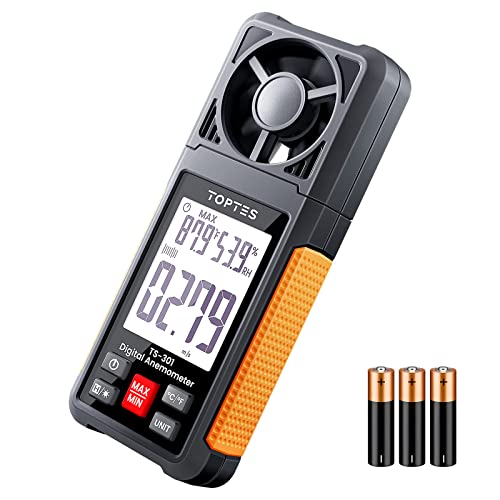
An HVAC system is only as good as its airflow. You can have the most efficient furnace or the quietest AC unit, but if the air isn’t moving correctly, performance plummets. That’s where the right tools come in. An anemometer, or HVAC airflow meter, is the diagnostic key. It translates invisible air movement into actionable data for balancing, troubleshooting, and verifying system health.
Think of it as a stethoscope for your ductwork. Without measuring Air Velocity and calculating CFM (Cubic Feet per Minute), you’re working blind. Whether you’re a seasoned pro or a diligent homeowner, choosing the best anemometer for HVAC work is a critical decision. It impacts accuracy, speed, and ultimately, customer satisfaction.

Top 5 Anemometers for HVAC Professionals Reviewed
We’ve tested and compared popular models based on accuracy, durability, and features that matter in the field. For many technicians seeking a reliable all-rounder, the BTMETER BT-100 Handheld consistently hits the mark. It offers a great balance of a responsive vane for quick checks and a telescoping probe for deep duct readings, making it a versatile choice for daily airflow testing.
1. Fieldpiece STA2 Stick Anemometer
A favorite for its simplicity and rugged design. The long, rigid probe is perfect for reaching into registers and smaller ducts. It’s a dedicated tool that does one job very well: giving you fast, reliable air velocity and CFM readings. Its durability makes it a staple in many toolbags.
2. Testo 405i Smart Probe Anemometer
This is where technology meets practicality. The probe connects via Bluetooth to your smartphone, using a dedicated app for Data Logging and visualization. It’s excellent for creating reports and tracking measurements over time during ventilation testing. The compact thermal anemometer design is minimally invasive.
3. UEi Test Instruments DAFM4 Digital Anemometer
This is a powerhouse for comprehensive ductwork diagnostics. It features a large vane for general measurements and includes a separate telescoping probe for precise spot checks. Its ability to calculate average flow and store readings makes it ideal for detailed system balancing reports.
4. CEM DT-8880 Hot Wire Anemometer
When you need to measure low airspeeds with high accuracy, a Hot Wire Anemometer like this excels. It’s incredibly sensitive, making it the go-to for measuring supply diffuser velocities or subtle return air flows. It’s a specialist tool for when standard vanes aren’t sensitive enough.
5. General Tools CFM-850 AeroFlow Meter
A strong contender for the best budget anemometer for HVAC technicians. It provides the core functionsvelocity, CFM (Cubic Feet per Minute), and temperatureat an accessible price point. It’s a great entry-level meter or a reliable backup for quick jobs.
Key Features to Look for in an HVAC Anemometer
Not all digital anemometer HVAC tools are created equal. Heres what separates a job-site workhorse from a garage-sale gadget.
- Measurement Range & Accuracy: Can it read from a barely-there 0.2 m/s up to a roaring 30 m/s? Accuracy within 3% is the professional standard.
- CFM Calculation: The meter should allow you to input duct dimensions (or use a pre-set area) to automatically calculate airflow volume. This is non-negotiable.
- Probe Type & Length: A telescoping probe (often 30+ inches) is essential for proper Duct Traversing. Some models offer both a vane for quick checks and a probe for deep ducts.
- Data Hold & Logging: The ability to freeze a reading and, on advanced models, store hundreds of data points is crucial for working alone and compiling reports.
- Build Quality: It will be dropped, jostled, and exposed to dust. A rugged, ergonomic casing is a must for any of the best HVAC tools.
Remember, the right tool for a residential retrofit might differ from one needed for large commercial ventilation testing. Just like choosing the best battery heater depends on the specific use case.
How to Use an Anemometer for Common HVAC Tasks
Owning a great duct air velocity tester is only half the battle. Knowing how to wield it properly is what makes you proficient. Let’s break down two fundamental applications.
Measuring HVAC Return Air Flow
A common question is about the anemometer for measuring HVAC return air flow. This is critical for ensuring your system isn’t starved for air. Use the telescoping probe to take multiple readings across the face of the return grille. Calculate the average velocity, then multiply by the free area of the grille (not the duct size!) to get total CFM (Cubic Feet per Minute). Compare this to the blower’s rated capacity.
System Balancing with an Anemometer
How to use an anemometer for HVAC system balancing? It’s a methodical process. You’re essentially tuning the system so each room gets its designed airflow.
- Measure the Air Velocity at each supply register.
- Calculate the CFM for each one.
- Compare these values to the system’s design specifications or to each other for proportionality.
- Adjust dampers in the ductwork to increase or decrease flow to specific branches.
- Re-measure. It’s an iterative process until balance is achieved.
Proper balancing improves comfort, efficiency, and noise levelssimilar to how finding the best space heaters can optimize warmth in specific zones.
Final Verdict & Buying Recommendations
So, what is the best anemometer for residential HVAC work? The answer depends on your primary needs and budget.
For the technician who wants one tool that does it all, a dual-design like the BTMETER BT-100 or the UEi DAFM4 is a superb investment. The combination of a vane and a probe covers 95% of field scenarios. For techs who live in their diagnostic app, the smart probe models from Testo offer unbeatable reporting and trend analysis.
If your focus is on precision in low-flow situations or at diffusers, a dedicated Thermal Anemometer is worth its weight in gold. And for those just starting out or needing a trustworthy backup, a solid budget option like the General Tools model gets the job done without breaking the bank.
The goal is informed airflow management. Your CFM meter for HVAC is the bridge between guesswork and precision. Choose the tool that fits your most common tasks, master its functions, and you’ll turn system diagnostics from a chore into a straightforward, data-driven process. Your clientsand their comfortwill thank you for it.

I am a mechanical engineer and love doing research on different home and outdoor heating options. When I am not working, I love spending time with my family and friends. I also enjoy blogging about my findings and helping others to find the best heating options for their needs.
Related guides

Top 7 Automated HVAC Myths Debunked
Common misconceptions about automated HVAC include the belief that it's too expensive, complicated, and less efficient than traditional…
The Surprising Top Picks for HVAC Air Filters That Pet Owners Swear By
Cheap filters clog quickly—but Premium Picks keep your air clean. Choosing the right HVAC air filter for homes…

Automated HVAC Cost Guide: Smart Climate Control Pricing
You just got a quote for a smart thermostat installation that runs $450, and the contractor says your…