
Two names consistently surface when searching for serious workspace heating: Baotree and Habitio. Both offer 60,000 BTU forced air propane heaters, promising to tackle large, cold spaces from garages to construction sites. They look similar on paper, but the details in their design and operation can make one a better fit for your specific needs. This head-to-head comparison cuts through the noise, analyzing their actual specifications and performance to help you decide.
Choosing the right heater isn’t just about the highest BTU rating. It’s about efficiency, safety, and how the unit integrates into your workflow. Whether you’re heating a drafty three-car garage or keeping a crew warm on a remote jobsite, understanding the nuances between these two popular models is key. Let’s dive into the specifics.
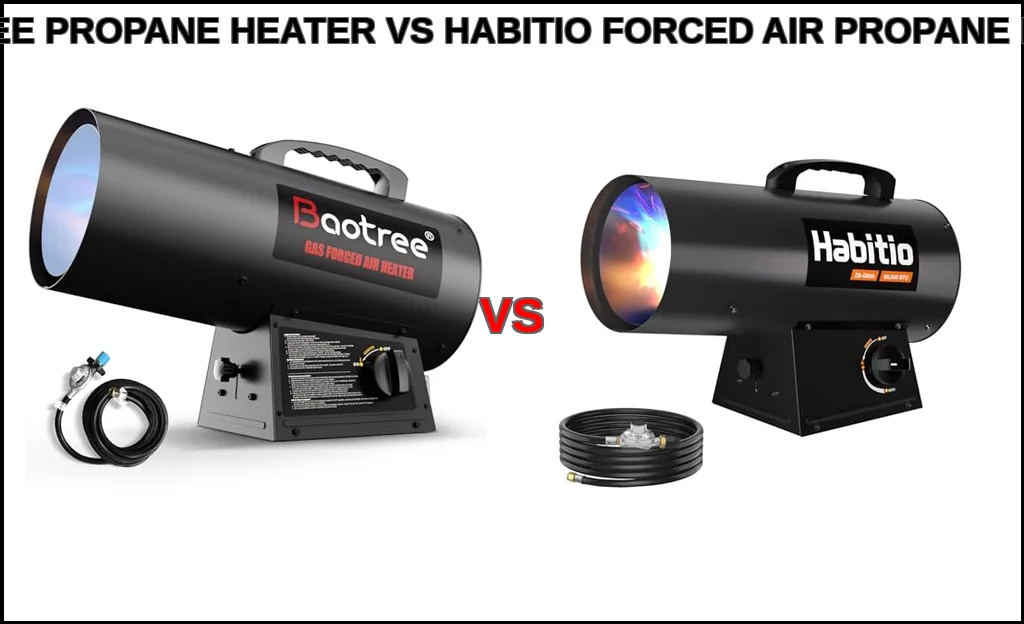
Baotree vs Habitio: A Head-to-Head Look
At first glance, the Baotree and Habitio propane heaters share a core mission. Both are portable, forced-air units with a variable output of 40,000 to 60,000 BTU. This places them squarely in the category of heavy-duty portable heating equipment designed for large-scale environments. The fundamental forced air technology is the same: a powerful fan blows air over a heat exchanger, rapidly distributing warmth. This makes them fundamentally different from radiant heaters, which heat objects directly. For large, open, or drafty spaces, forced air vs radiant heat debates are settled quicklyforced air wins for even distribution.
However, subtle differences in their stated capabilities, safety assurances, and user-focused features begin to paint distinct pictures. One might offer a slight edge in heating coverage, while the other provides more detailed efficiency data. Your prioritybe it maximum square footage or longest runtimewill determine the winner.
Key Specifications & Technical Comparison
Heres where we lay out the hard facts. The table below compares the Baotree heater specs and Habitio forced air heater details side-by-side, using only the data provided by the manufacturers.
| Feature | Baotree 60,000 BTU Forced Air Heater | Habitio 60,000 BTU Forced Air Heater |
|---|---|---|
| BTU Output | Variable 40,000-60,000 BTU | Variable 40,000-60,000 BTU |
| Heating Coverage | Up to 2,497 sq. ft. | Up to 2,195 sq. ft. |
| Ignition System | Pulse ignition | Pulse ignition |
| Primary Safety Features | Overheat protection, automatic shutdown on power outage | Overheat protection, automatic shutdown on power outage, CSA certified |
| Portability Features | Portable handle, adjustable height, 10-ft hose & regulator included | Portable handle, adjustable height, 10-ft hose & regulator included |
| Notable Design Features | Adjustable heating angle (30-45 degrees) | Adjustable fan speed controls |
| Operational Note | Produces an acceptable level of noise. Hose must be tightened with a wrench. | Produces an acceptable level of noise. Hose must be tightened with a wrench. |
| Check current price on Amazon | Check current price on Amazon |
The core specs are closely matched. The most immediate difference is the stated maximum heating coverage, with Baotree claiming about 300 more square feet. Both emphasize critical safety features like overheat protection and outage shutdown, but Habitio explicitly mentions CSA certificationa key standard for indoor safe heaters in North America that provides an extra layer of verified safety assurance. For propane tank compatibility, both include a 10-foot hose and regulator, suitable for standard 20lb to 100lb tanks.
Decoding the Specs: What Matters for You
- CSA Certification: This is a significant point for Habitio. It means the product has been tested and certified by the Canadian Standards Association (or an accredited body) for safety. While both list similar protective functions, this third-party validation is a concrete plus for risk-averse users, especially in semi-enclosed spaces.
- Coverage Area: Baotrees higher square footage claim suggests potentially stronger airflow or design efficiency. For exceptionally large, open areas like warehouses or aircraft hangars, this could be the deciding factor.
- Design Nuances: Baotrees adjustable heating angle allows you to direct the warm air stream upward or downwardhandy for specific tasks. Habitios adjustable fan speed gives you direct control over airflow and noise level, which can impact propane consumption and comfort.
Performance Analysis: Heating Power & Efficiency
Raw BTU numbers tell only part of the story. True performance is measured in how quickly and efficiently that heat is delivered and sustained.
Both heaters promise rapid heating, with Baotree noting a significant temperature boost within 10 minutes thanks to a “heavy-duty forced-air fan.” This aligns with the core benefit of forced air technology: moving a high volume of air to combat cold spots fast. Its the ideal solution for cold weather heating on a jobsite where you need to take the edge off quickly.
When it comes to propane heater efficiency, Habitio provides a crucial data point the Baotree listing omits: estimated heater runtime. Habitio states it can run for approximately 53 hours on low and 36 hours on high with a 100 lb propane tank. This information is invaluable for planning fuel needs for long projects or extended use, like over a weekend in a workshop. It directly addresses a key concern for workspace heatingoperational cost and logistics. Without a similar claim from Baotree, Habitio holds a clear advantage in this aspect of the propane heater comparison.
Another often-overlooked factor is altitude performance adjustment. While not mentioned in either listing, its a critical entity for users in mountainous regions. Most propane heaters require manual adjustment for efficient combustion at high altitudes. Its wise to consult the manual of whichever unit you choose to understand this procedure, as it affects both efficiency and safety.
Use Cases: Which Heater is Best For Your Needs?
This is the heart of the decision. Your specific application will dictate which model’s strengths are most relevant. Let’s break down common scenarios.
For Large Garages and Workshops
Which is better Baotree or Habitio for garage? For a standard 2-3 car garage, both are more than capable. If your space is particularly large or has high ceilings (exceeding 2,200 sq. ft.), the Baotrees higher coverage claim might be appealing. However, for most residential garages, Habitios CSA certification and detailed runtime data might offer greater peace of mind and easier fuel planning. You know exactly what youre getting in terms of safety and propane consumption.
For Construction Sites and Farming
These environments demand durability, reliability, and efficiency. The question of forced air propane heater vs radiant for large spaces is moot hereforced air is the only practical choice for uneven, drafty, or semi-open areas. For the most efficient propane heater for construction sites, Habitios runtime specs allow a site manager to accurately schedule fuel deliveries. The adjustable fan speed can also help manage noise on sensitive sites. Both are built for portability across rough terrain.
For Factories and Agricultural Facilities
Large, open buildings need consistent, widespread heat. Baotrees adjustable angle could be useful for directing heat toward a specific work area or away from sensitive equipment. Both units are described as suitable for patios, factories, and agricultural use, making them versatile tools. Its worth noting that for any indoor use, proper ventilation is non-negotiable, as highlighted by this official source on occupational heat exposure and air quality.
For other specialized applications, like climate control in a protected environment, you might explore dedicated options such as the best propane heaters for greenhouse use, which prioritize different features.
Final Verdict & Recommendation
So, which heater should you choose? The answer isn’t universal. It depends on what you value most.
Choose the Baotree 60,000 BTU Forced Air Heater if:
Your primary concern is maximizing potential heating area for the dollar. The larger claimed coverage could be decisive for vast spaces. The adjustable heating angle offers a tactical advantage for directing warmth exactly where it’s needed, making it a strong contender for varied Baotree propane heater vs Habitio for workshops scenarios where work zones shift.
Choose the Habitio 60,000 BTU Forced Air Heater if:
Verified safety certification and fuel efficiency transparency are your top priorities. The CSA mark is a tangible trust signal. The detailed runtime estimates (53 hrs low/36 hrs high) are incredibly practical for budgeting and logistics, giving it a clear edge in planned, long-duration applications. The adjustable fan speed is a direct quality-of-life feature for noise and airflow control.
Both are competent, powerful tools that will dramatically improve cold weather heating in large spaces. They share essential safety features and portability. Your decision hinges on whether you prioritize the theoretical maximum reach (Baotree) or the certified safety and calculable efficiency (Habitio). For most users, especially those using the heater in a variety of conditions, the Habitios additional data and certification provide a more confident purchase. It simply leaves less to guesswork.
Before making any purchase, remember that proper setup is crucialalways use a wrench to secure the gas connection, as both manufacturers strenuously warn. And for those considering other forced-air models, reading a detailed thermomate propane heater review can offer another point of comparison in this competitive category.
